


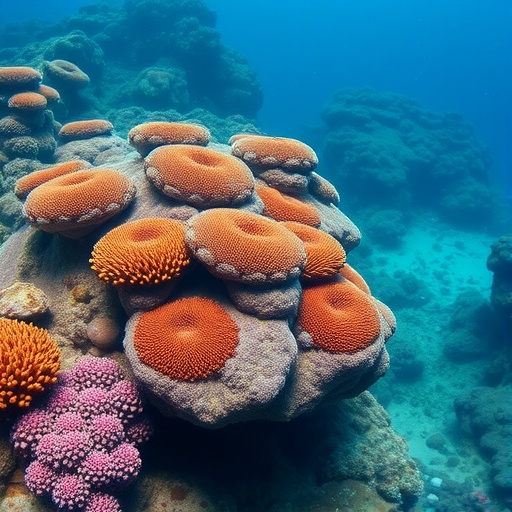
In the quest to understand how coral reefs—the vibrant underwater cities housing nearly a third of all known marine species—might endure the unprecedented challenges of climate change, recent research has uncovered the remarkable resilience found in corals thriving in environments historically deemed too harsh. Marine biologist Sarah Solomon’s groundbreaking work investigates corals inhabiting coastal bays of Curaçao, where fluctuating temperatures, elevated acidity, and diminished oxygen levels create natural laboratories reflecting the future ocean conditions imposed by global warming. Her study offers profound insights into coral physiology, symbiotic relationships, and adaptive strategies that could redefine approaches to reef conservation and restoration worldwide.
Coral reefs are not only biodiversity hotspots, covering less than 0.1 percent of the ocean’s surface but supporting about 32 percent of marine species, but they also serve crucial ecological functions including coastal protection and sustaining fisheries and tourism industries. Yet, these ecosystems are increasingly imperiled by rising temperatures and pollution-induced stresses, leading to widespread bleaching and mass mortalities. Solomon’s focus on coastal bays with exaggerated environmental variability challenges traditional views by highlighting these sites as reservoirs of coral resilience rather than zones of degradation.
Contrasting with the steady, relatively stable fringing reefs nearby, the coastal bays in Curaçao expose corals to extreme diel fluctuations in seawater temperature, pH, and oxygen saturation, alongside elevated nutrient loads from human activity. This environmental instability mimic projections for ocean conditions decades from now, making these bays invaluable “natural laboratories” for observing coral responses to stress in situ. The research underscores that corals inhabiting these dynamic bays exhibit an array of physiological and ecological adaptations, setting them apart from their counterparts on classical, more stable reefs.
Central to the survival advantage observed in bay corals is their metabolic flexibility and dynamic symbiotic partnerships with algae and bacteria. Corals derive energy primarily from photosynthetic symbionts known as zooxanthellae, which vary in heat tolerance among species and strains. In harsher bay conditions, corals associate with more thermally robust algae, a symbiotic reshuffling that enhances survival through sustenance of photosynthesis under thermal stress. Moreover, bay corals demonstrate heterotrophy—actively capturing plankton and organic particles—which supplements energy acquisition when photosynthesis falters, particularly during low-light or bleaching events.
Additionally, microbial communities inhabiting coral mucus and tissues appear to play a pivotal role in promoting coral health and stress resistance. These microbial consortia may facilitate nutrient cycling, bolster immune responses, or mitigate oxidative damage associated with environmental extremes. Solomon’s research highlights that the bay corals’ microbiomes differ significantly from those on reefs in stable waters, suggesting microbiota plasticity is another adaptive layer supporting resilience.
To probe corals’ capacity to cope with environmental shifts, Solomon conducted reciprocal transplantation experiments between bays and reefs, exposing corals to new stress regimes. Remarkably, reef-origin corals acclimatized to the bay’s harsher conditions, maintaining survival and growth, albeit at an energetic cost manifested in reduced physiological health. Conversely, corals native to bays experienced diminished growth on reefs, indicating specialized adaptation to their native extreme environments that compromised performance in stable waters. This specialization underscores trade-offs inherent in coral acclimatization and adaptation strategies.
Heat tolerance assays further revealed pronounced intraspecific variability. Bay corals exhibited superior thermal resistance, a feature likely underpinned by their symbiotic communities and metabolic plasticity. Intriguingly, some reef corals demonstrated inducible heat tolerance after exposure to bay conditions for less than a year, highlighting phenotypic plasticity that could be leveraged in adaptation and restoration initiatives. However, this capacity varied widely across species and exhibited biological limits, suggesting that not all corals possess equal resilience potential.
The implications of Solomon’s findings extend into coral reef restoration frameworks aiming to bolster ecosystem resilience amid accelerating climate stress. By identifying and cultivating stress-resilient coral genotypes from extreme environments, restoration efforts can enhance reef recovery prospects. Coastal bays might serve as “training grounds” or nurseries where corals acclimate to future anticipated thermal regimes before transplantation to degraded reefs, a strategy that springs from the ecological principle of hardening organisms through controlled environmental exposure.
Nonetheless, Solomon emphasizes that such interventionist approaches are not panaceas; without aggressive global mitigation of climate change and reduction of local anthropogenic pressures such as pollution and eutrophication, even the most resilient corals face eventual collapse. The physiological limits of coral tolerance, compounded by the accelerating pace of environmental change, necessitate integrated conservation strategies combining ecosystem protection, restoration, and climate action.
This pioneering research not only sheds light on the complex biological mechanisms enabling coral survival in changing oceans but also challenges marine scientists and policymakers to rethink coral reef resilience paradigms. The natural laboratories of Curaçao’s coastal bays reveal nature’s own blueprint for coping with adversity—a blueprint that may be critical in preserving these underwater cornucopias for future generations.
Sarah Solomon will formally defend her PhD thesis titled “Extreme reef environments as natural laboratories – mechanisms underlying coral acclimatization to future ocean conditions” at the University of Amsterdam on February 19, 2026. Her supervisors Professors J. Huisman and M.J.A. Vermeij, alongside co-supervisors Dr. V. Schoepf and Dr. ir. J.M. de Goeij, have supported this comprehensive investigation into coral resilience mechanisms. The results promise to inform enhanced scientific understanding and practical avenues toward coral conservation in an era of rapid ocean change.
News Publication Date: February 2026.
Web References: University of Amsterdam event page
Cite Scienmag News
Violet Maxwell. (February 12, 2026). Corals Thrive Better in Extreme Coastal Bays Amid Climate Stress. Scienmag. https://scienmag.com/corals-thrive-better-in-extreme-coastal-bays-amid-climate-stress/
Violet Maxwell. "Corals Thrive Better in Extreme Coastal Bays Amid Climate Stress." Scienmag, 12 February 2026, https://scienmag.com/corals-thrive-better-in-extreme-coastal-bays-amid-climate-stress/. Accessed 3 September 2026.
Violet Maxwell. "Corals Thrive Better in Extreme Coastal Bays Amid Climate Stress." Scienmag. February 12, 2026. https://scienmag.com/corals-thrive-better-in-extreme-coastal-bays-amid-climate-stress/


