


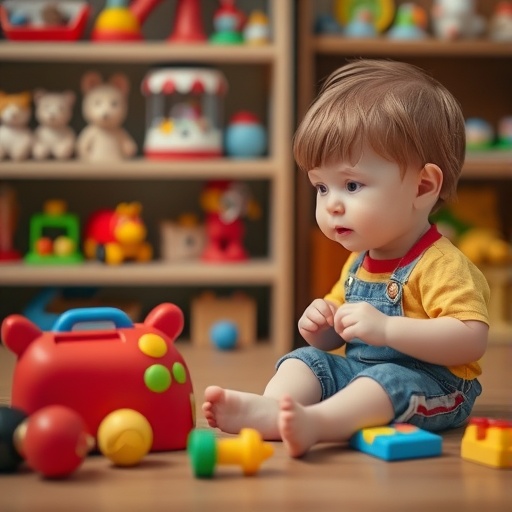
In a groundbreaking study published this month in the Journal of Exposure Science and Environmental Epidemiology, researchers have unveiled a comprehensive assessment of children’s exposure to Bisphenol A (BPA) and its alternatives present in toys using the advanced USEtox model. This research marks a significant step forward in understanding the subtle yet pervasive risks that chemical components in everyday items pose to infant and child health, casting new light on how toxicological modeling can inform regulatory and consumer choices moving forward.
Bisphenol A, widely used for decades in manufacturing plastics and resins, has been the subject of intense scrutiny due to its designation as an endocrine-disrupting chemical (EDC). Despite numerous regulatory efforts to curb BPA use in children’s products, many alternatives have emerged on the market without comprehensive evaluation of their potential health effects. The new study leverages USEtox, a model designed to quantify human exposure and toxicity impacts of chemicals, to analyze not only BPA but also several BPA substitutes found in toys targeted at children under five.
USEtox operates as an advanced fate, exposure, and effect model that integrates chemical emissions, environmental transport, human intake pathways, and toxicological endpoints to compute characterization factors. These factors provide insight into the human health impacts per unit of chemical emissions across various exposure routes—ingestion, inhalation, and dermal contact—particularly relevant for the young population whose behaviors, such as mouthing objects, intensify exposure risks.
The researchers collected extensive data on chemical concentrations from an array of commonly used toys and incorporated usage patterns documented in behavioral studies of toddlers and preschoolers. The quantification of exposure pathways involved nuanced modeling of mouthing frequency, duration, and contact surface areas, which are critical parameters that influence bioavailability of BPA and its analogues via dermal absorption and ingestion of toy residues.
Significantly, the study found that certain BPA alternatives, previously considered safer options, exhibit comparable or even elevated toxicological profiles when evaluated within the USEtox framework. Chemicals like Bisphenol S (BPS) and Bisphenol F (BPF), frequently substituted for BPA to comply with regulatory restrictions, displayed substantial potential for bioaccumulation and endocrine disruption, raising alarming questions about the current practices in chemical replacement.
These findings have profound implications for public health policies and toy manufacturing standards. The conventional approach focusing on banning single substances without rigorous assessment of substitutes risks perpetuating exposure to harmful chemicals by proxy. The study advocates for an integrated risk assessment protocol that not only evaluates known hazardous chemicals but systematically appraises structural analogues prior to widespread commercialization.
Furthermore, the research highlights critical data gaps and uncertainties in exposure assessment models for infants and young children. The variability in child behavior, differences in physiology compared to adults, and the paucity of toxicokinetic data necessitate more targeted studies to refine USEtox parameters and improve prediction accuracy. These refinements are essential for regulatory bodies to formulate science-based safety thresholds that sufficiently protect the most vulnerable populations.
The authors underscore the pivotal role of multidisciplinary collaboration in addressing the complex challenges posed by chemical exposures from consumer products. Integrating toxicology, exposure science, environmental chemistry, and pediatric health perspectives enables a holistic evaluation framework that can guide safer material selection and inform consumers about real-world risks.
This research also stimulates a broader societal discussion about the chemical safety of everyday objects and the ethical responsibilities of manufacturers and regulators. It raises awareness about the importance of transparency in product composition and the need for innovation in safer alternatives that do not compromise functionality or aesthetics while ensuring minimal health impacts.
From a methodological standpoint, the application of the USEtox model in this context represents a novel deployment of its capabilities, extending beyond environmental impact assessments into the domain of individual-level exposure in sensitive subpopulations. This pioneering approach paves the way for similar risk analyses across diverse chemical categories and consumer goods.
The study concludes with actionable recommendations advocating for mandatory chemical disclosure in children’s products, enhanced surveillance of emerging chemical substitutes, and the integration of USEtox-based assessments into regulatory risk frameworks. These measures aim to reduce health disparities stemming from inadvertent chemical exposures and to foster a safer environment for childhood development.
In an era where chemical complexity is rapidly increasing, tools like USEtox offer invaluable insights into understanding cumulative risk factors and prioritizing interventions. This research exemplifies the power of cutting-edge computational models combined with empirical data to advance public health protection in an evidence-driven manner.
Taken together, these findings may drive a paradigm shift in how chemical safety is perceived and managed, putting the wellbeing of children at the forefront of scientific and regulatory agendas globally. By refining risk assessments and promoting informed choices, society can move towards a future with reduced exposure to hazardous substances hidden within commonplace products.
As awareness grows regarding the insidious effects of endocrine disruptors and the limitations of simplistic regulatory approaches, studies like this illuminate pathways for science-led reforms. They show that protecting children against chemical risks requires sophisticated tools, cross-sector collaboration, and unwavering commitment to advancing knowledge for the betterment of public health.
The revelations brought forth by the researchers challenge us to rethink chemical safety in a holistic context and to embrace innovation that aligns consumer protection with sustainable manufacturing. With mounting evidence of the overlooked dangers from BPA alternatives, it becomes imperative to fortify the regulatory landscape with rigorous, science-based evaluations powered by advanced models like USEtox.
Ultimately, this study acts as a clarion call for vigilance and proactive measures to safeguard children’s health against the hidden threats lurking in toys and other everyday items. It exemplifies how modern exposure science can empower stakeholders to make smarter decisions, reduce toxic burdens, and create healthier environments for future generations.
Cite Scienmag News
Ophelia Keating. (February 12, 2026). Modeling Children’s BPA Exposure from Toys with USEtox. Scienmag. https://scienmag.com/modeling-childrens-bpa-exposure-from-toys-with-usetox/
Ophelia Keating. "Modeling Children’s BPA Exposure from Toys with USEtox." Scienmag, 12 February 2026, https://scienmag.com/modeling-childrens-bpa-exposure-from-toys-with-usetox/. Accessed 4 September 2026.
Ophelia Keating. "Modeling Children’s BPA Exposure from Toys with USEtox." Scienmag. February 12, 2026. https://scienmag.com/modeling-childrens-bpa-exposure-from-toys-with-usetox/


