


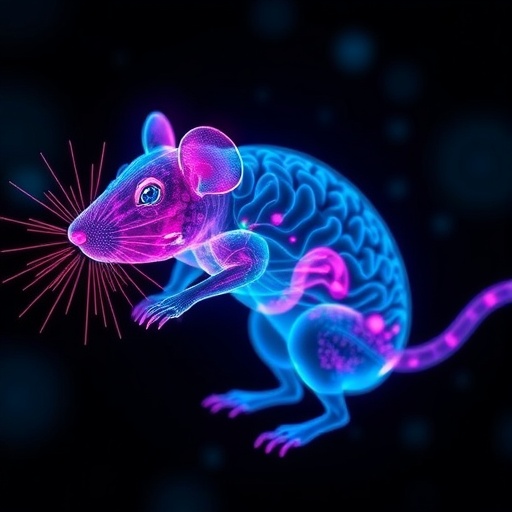
Exercise transforms much more than muscle fibers; emerging evidence demonstrates profound neural adaptations accompanying physical endurance improvements. A landmark study published on February 12 in the prestigious journal Neuron, a flagship Cell Press publication, elucidates the critical role that specific neuronal populations in the brain’s ventromedial hypothalamus (VMH) play in mediating the enhanced stamina from sustained exercise regimens. This research thrusts the brain into focus as a dynamic regulator—not just a passive passenger—in physical conditioning and metabolic efficiency.
Historically, the physiological benefits of exercise have been attributed predominantly to peripheral adaptations within muscles, cardiovascular improvements, and metabolic shifts. However, this new experimental inquiry from the University of Pennsylvania challenges that paradigm by highlighting a persistent activation of steroidogenic factor-1 (SF1) neurons within the VMH following exercise sessions. These neurons appear to orchestrate systemic energy regulation, harmonizing the interplay between cerebral signals and muscle endurance outcomes.
The VMH, a brain center traditionally implicated in energy homeostasis and glucose metabolism, emerges here as a neuronal hub linking exercise stimulus to functional endurance adaptations. Using rodent models subjected to daily treadmill running, the researchers employed advanced neurophysiological recordings and optogenetic manipulations to capture activity patterns and causal relations of SF1 neurons during and after exercise bouts. Remarkably, SF1 neurons exhibited sustained excitatory activity extending at least an hour beyond the cessation of physical exertion.
Over a two-week consistent exercise protocol, mice displayed marked improvements in endurance metrics, including running speed and duration to exhaustion. Correspondingly, the neural activity of SF1 neurons not only increased in number but also reached heightened firing intensities compared to the initial phases of training, signifying a neuroplastic response to repeated physical challenge. This persistent post-exercise neuronal activation suggests a form of neural ‘memory’ or conditioning within the hypothalamic circuits that may underpin systemic adaptations.
Crucially, when the team transiently inhibited SF1 neuronal signaling using chemogenetic silencing techniques, animals failed to exhibit the typical endurance improvements despite maintaining normal physical activity during exercise sessions. This disruption delineates a critical windows post-exercise in which SF1 neurons facilitate physiological adaptations independent of activity during exertion itself. Such findings implicate post-exercise neural activity as a pivotal element in the consolidation of exercise benefits.
This phenomenon challenges conventional views that attribute training adaptations solely to muscle fiber remodeling or cardiovascular efficiency, placing the central nervous system as an active mediator rather than a passive observer. “It turns out we might be building up our brain when we exercise,” mused J. Nicholas Betley, the study’s corresponding author. This perspective introduces a novel dimension to exercise science that integrates central neural plasticity as a cornerstone of physical resilience.
The mechanistic pathways by which SF1 neuron activation translates to peripheral endurance gains remain an open question. Betley speculates that the sustained post-exercise activity of these neurons may optimize glucose utilization, enhancing the metabolic milieu for muscles, lungs, and cardiac tissues to recuperate and adapt more efficiently. This refined energy management post-exercise could accelerate recovery kinetics, thereby enabling the body to bear more demanding future workloads.
Beyond fundamental science, these insights bear promising translational potential. Targeting neural circuits like the SF1 neuronal population might pave the way for novel therapeutic strategies to support populations with diminished exercise capacity such as the elderly, stroke survivors, or individuals recovering from musculoskeletal injuries. Enhancing or mimicking VMH neuron activation pharmacologically or via neuromodulation could shorten the arduous timeline required to garner physical conditioning benefits.
Moreover, elucidating the brain’s role in exercise adaptations could invigorate public health initiatives by redefining motivational paradigms. Understanding that neuronal changes reinforce the benefits of exercise post-session offers an encouraging message to the general public, potentially increasing adherence to fitness regimens through cognitive engagement with the underlying biology of endurance gains.
Previous research has largely focused on peripheral signals such as lactate clearance, mitochondrial biogenesis, and cardiovascular remodeling in explaining endurance improvements. This study compellingly shifts the framework towards a neurocentric model, where the brain functions as a master regulator of metabolic homeostasis and physical performance enhancement.
Future exploration will require deciphering how SF1 neuron activation integrates with other hypothalamic nuclei and systemic endocrine responses. Additionally, the molecular substrates that sustain elevated SF1 neuronal activity and their downstream effector pathways in peripheral tissues are critical targets for ongoing investigations. This research highlights an exciting frontier where neural circuitry interlaces with exercise physiology at molecular, cellular, and systemic levels.
In conclusion, the study heralds a paradigm shift, positing that exercise strengthens neural substrates essential for endurance adaptation, not solely through muscular changes but via sophisticated brain-mediated control over energy utilization and recovery. This integrated neurophysiological perspective deepens our understanding of exercise science and opens novel avenues for improving human health and athletic performance through targeted brain mechanisms.
Cite Scienmag News
Cassandra Pierce. (February 12, 2026). Mouse Brain Endurance Boosted Through Targeted Exercise, Study Finds. Scienmag. https://scienmag.com/mouse-brain-endurance-boosted-through-targeted-exercise-study-finds/
Cassandra Pierce. "Mouse Brain Endurance Boosted Through Targeted Exercise, Study Finds." Scienmag, 12 February 2026, https://scienmag.com/mouse-brain-endurance-boosted-through-targeted-exercise-study-finds/. Accessed 3 September 2026.
Cassandra Pierce. "Mouse Brain Endurance Boosted Through Targeted Exercise, Study Finds." Scienmag. February 12, 2026. https://scienmag.com/mouse-brain-endurance-boosted-through-targeted-exercise-study-finds/


