


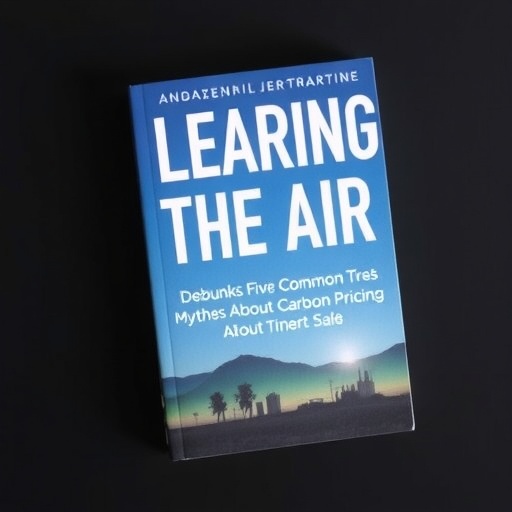
As the world intensifies its efforts to combat climate change, gradually raising the price of fossil fuels is increasingly recognized as a fundamental pillar of effective climate policy. This economic instrument, often encapsulated under the term “carbon pricing,” commands a unique position in the climate policy toolbox, promising to steer market behavior toward sustainability. However, despite its theoretical appeal and growing adoption, carbon pricing remains mired in controversy and misunderstanding. Experts from the Potsdam Institute for Climate Impact Research (PIK) have taken a step toward clarifying these debates through an insightful new publication that bridges the gulf between theory and practice, correcting longstanding misconceptions and emphasizing the nuanced role carbon pricing plays in global climate strategies.
One of the core misunderstandings addressed by the researchers revolves around the perception that carbon pricing lacks a tangible steering effect on consumer behavior. Critics often point to empirical observations where successive fossil fuel price increases have not corresponded with a proportional decline in activities such as driving. This observation has led some to question the efficacy of carbon pricing as a policy tool. However, the PIK experts clarify that such an interpretation oversimplifies complex market dynamics. Instead, they argue that carbon pricing functions most effectively when integrated with complementary measures—such as regulatory bans, performance standards, and targeted subsidies—forming a holistic policy ecosystem that nudges consumers and producers simultaneously towards low-carbon alternatives. Economically, carbon pricing internalizes the negative externality of greenhouse gas emissions, gradually reallocating capital flows by making “dirty” technologies less competitive and “clean” technologies more attractive.
Political feasibility constitutes the second major challenge often cited against carbon pricing. Critics argue that the political will to implement and maintain meaningful carbon prices is lacking, especially in the face of lobbying, electoral cycles, and public opposition. Contradicting this narrative, the PIK team underscores empirical data indicating that nearly 28% of global carbon dioxide emissions are currently priced, with projections suggesting that by 2028, the European Union alone will price approximately 75% of emissions through expanded trading systems covering transport and buildings. This rising prevalence demonstrates that carbon pricing is not an abstruse ideal but an increasingly versatile and politically adaptable instrument. Its structural flexibility—manifesting variously as carbon taxes, cap-and-trade systems, or hybrid models—allows jurisdictions to tailor implementation mechanisms to their unique political and economic contexts, enhancing acceptability and durability.
Equity and social justice concerns form another dimension of skepticism toward carbon pricing. Critics emphasize that without careful design, imposing higher fossil fuel prices can disproportionately burden lower-income households, exacerbating existing inequalities. The PIK researchers acknowledge this risk but contextualize it by highlighting that any stringent climate measure, including bans or standards, has distributive consequences. Significantly, carbon pricing distinguishes itself by generating revenue streams that can be recycled to offset regressive impacts. The authors outline four multimodal compensation frameworks: uniform per capita dividends, climate funds to retrofit buildings for energy efficiency, electricity price reductions, and hardship provisions to protect vulnerable populations. Through these innovative mechanisms, carbon pricing can be embedded within a socially just transition framework, aligning climate objectives with fairness considerations.
The question of the continued relevance of carbon pricing in a future dominated by climate neutrality forms the basis for a fourth common critique. Skeptics question the utility of pricing instruments when fossil fuels and other high-emission commodities are phased out. Here, the PIK experts offer a sophisticated argument centered on the role of atmospheric carbon removal technologies—such as bioenergy with carbon capture and storage (BECCS) and direct air capture (DAC)—which remain critical to obtaining net-zero emissions. Given that some residual emissions are hard to eliminate, carbon pricing schemes become indispensable in balancing supply and demand for both emissions and removals. Pricing mechanisms not only incentivize investment in carbon dioxide removal technologies but also establish sustainable financial flows that underpin their deployment for decades beyond the transition period.
International cooperation dynamics often fuel skepticism about carbon pricing, with detractors claiming it demands a global uniformity that is unattainable without a supranational governing body. The PIK publication dismantles this notion by explaining how carbon pricing can operate effectively even within a fragmented geopolitical landscape. Regional and national pricing systems, while varying in scope and design, collectively contribute to emission reductions. The publication further addresses concerns about carbon leakage—where production shifts to jurisdictions with laxer climate policies—by examining effective regulatory and fiscal mechanisms that mitigate such risks. These include border carbon adjustments and sectoral agreements, which can also act as catalysts for deeper international climate cooperation and strengthened industrial competitiveness aligned with sustainability goals.
Notably, the impending implementation of the EU’s climate tariff system, slated for early 2026, is highlighted as a landmark development that will elevate carbon pricing’s global significance. This novel mechanism is expected to curtail the carbon content of imported goods, encouraging cleaner production standards worldwide and reducing incentives for outsourcing emissions. Moreover, in an era defined by geopolitical tensions, the reduction of fossil fuel revenues—especially from autocratic regimes reliant on oil and gas exports—adds a geopolitical security dimension to carbon pricing initiatives. This evolving interplay underlines how climate policy instruments can transcend environmental benefits, molding international power dynamics and promoting broader stability.
The public debate surrounding carbon pricing also reveals deep-seated concerns about the relationship between market mechanisms and government intervention. Contrary to notions that carbon pricing implies blind faith in the market and the abdication of regulatory oversight, the PIK analysis stresses the necessity of robust public governance. Effective carbon pricing requires a strong governmental framework capable of enforcing rules, managing revenues, and implementing complementary policies that together foster innovation and behavioral change. This balanced approach positions carbon pricing as an instrument embedded within a dynamic policy architecture rather than a standalone solution.
Additionally, from a behavioral economics perspective, the publication discusses how well-designed carbon pricing systems resonate with ethical and social motivations rather than solely financial calculations. Consumers and firms increasingly internalize climate ethics, and transparent pricing structures help signal social responsibility. The market-based approach, when combined with educational campaigns and participatory policy-making, can thus catalyze a broader cultural shift towards sustainability, beyond mere economic incentives.
From a technological standpoint, carbon markets stimulate innovation by creating financial incentives for research and development in clean technologies. This dynamic fosters a virtuous cycle where cost reductions in renewable energy, energy storage, and efficiency improvements further accelerate emission reductions. Pricing schemes also facilitate the integration of sustainable technologies into supply chains and infrastructure investments, underpinning long-term decarbonization trajectories.
In sum, the new PIK publication offers a comprehensive, research-based narrative that dispels myths around carbon pricing and underscores its indispensable role in global climate policy. It advances the dialogue from polarizing ideologies toward informed debate and pragmatic policymaking. The evolution of carbon pricing from a contested concept to a mainstream policy instrument is underway, driven by empirical data, adaptive designs, and growing international collaboration. Understanding and embracing this tool—alongside complementary measures—will be critical to achieving meaningful emission reductions and securing a stable climate future.
News Publication Date:
Web References: http://dx.doi.org/10.1007/978-3-658-50400-7
References: Literature review based on recent research from the Potsdam Institute for Climate Impact Research (PIK) and the Mercator Research Institute on Global Commons and Climate Change (MCC)
Cite Scienmag News
Sloane Callahan. (February 12, 2026). Clearing the Air: Book Debunks Five Common Myths About Carbon Pricing. Scienmag. https://scienmag.com/clearing-the-air-book-debunks-five-common-myths-about-carbon-pricing/
Sloane Callahan. "Clearing the Air: Book Debunks Five Common Myths About Carbon Pricing." Scienmag, 12 February 2026, https://scienmag.com/clearing-the-air-book-debunks-five-common-myths-about-carbon-pricing/. Accessed 3 September 2026.
Sloane Callahan. "Clearing the Air: Book Debunks Five Common Myths About Carbon Pricing." Scienmag. February 12, 2026. https://scienmag.com/clearing-the-air-book-debunks-five-common-myths-about-carbon-pricing/


