


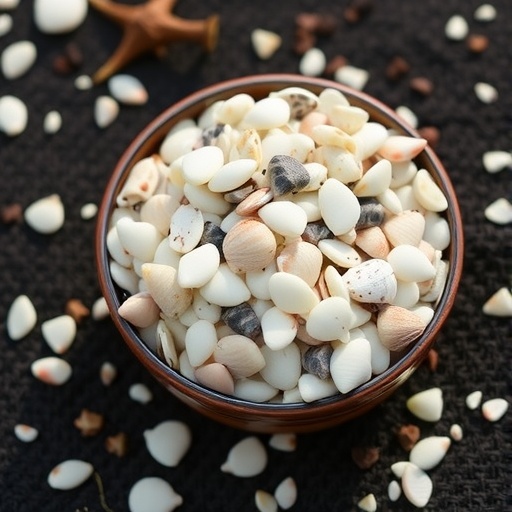
In the vibrant realms of tropical agriculture, a groundbreaking advancement is emerging that promises to reshape the way farmers manage organic waste, particularly the conversion of animal manure into nutrient-rich compost. Researchers at Hainan University have unlocked the potential of a novel calcium-modified biochar, synthesized by combining oyster shells and coconut shells through pyrolysis. This innovative material accelerates the humification process during composting, notably improving the transformation of pig manure and rice straw into stable humus, thereby enhancing soil fertility and environmental sustainability.
Composting, a natural method of recycling organic waste, has long faced challenges due to its slow pace and inefficiency in tropical climates, where rapid decomposition risks nutrient loss. The team at Hainan University has addressed these issues by developing a biochar infused with calcium derived from oyster shells, integrated with the carbonaceous matrix of coconut shells. This synergy not only mobilizes beneficial microbial communities but also introduces critical functional groups that facilitate organic matter stabilization, fostering a more efficient humification pathway.
The process begins by pyrolyzing a blend of oyster and coconut shells at a controlled temperature of 600 °C. During this thermal treatment, calcium ions from the oyster shells chemically bind to the carbon structures originating from the coconut shells, forming a composite abundant in carboxyl and carbonyl functionalities. These chemical groups are crucial as they enhance the structural integrity of the compost and improve the interaction between microbial enzymes and organic substrates, thus catalyzing the breakdown of complex molecules.
Humification—a critical step in compost maturity—refers to the transformation of labile organic compounds into stable humic substances, which are essential for soil health. The biochar developed in this study acts as a scaffold and microhabitat for specialized microbial consortia, predominantly Proteobacteria and Bacteroidetes, whose populations nearly doubled with its addition. These bacteria possess enzymatic capabilities to decompose recalcitrant biopolymers such as lignin, facilitating the conversion into humic acids and fulvic acids that enrich the soil with long-lasting organic carbon.
The introduction of oyster shell-functionalized biochar into the composting system not only speeds up microbial colonization but also elevates the Seed Germination Index by approximately 19%, indicating a substantial reduction in phytotoxic compounds. This improvement is critical for agricultural productivity as it ensures that seedlings are exposed to a safer and more nurturing growing medium, directly translating into enhanced crop yields and healthier plants in downstream applications.
Advanced spectroscopic analyses reveal that the chemical milieu of the compost undergoes significant modification when biochar is present. Protein-like substances, which are typically transient and prone to rapid decomposition, are progressively transformed into more stable humic acid-like molecules. This shift enhances the overall stability and nutrient-retention capacity of compost, effectively reducing nitrogen volatilization and leaching losses, a common environmental concern in tropical farming systems.
This research represents a major stride towards sustainable agricultural practices, particularly in tropical regions where dealing with abundant agricultural residues is both a necessity and a challenge. By converting locally sourced oyster and coconut shells—considered waste products—into a high-value compost additive, the study pioneers a circular economy model that minimizes environmental footprints, maximizes resource efficiency, and fosters climate resilience in farming communities.
The scalability of this technology holds promising prospects for industrial composting operations. The ability to accelerate compost maturation while stabilizing organic matter could reduce the temporal and spatial requirements of composting facilities. This efficiency gain could facilitate broader adoption of organic fertilizers, diminish dependence on chemical inputs, and ultimately support global endeavors to maintain soil health and biodiversity amidst increasing agricultural demands.
Furthermore, the interdisciplinary collaboration between the College of Tropical Agriculture and Forestry and the School of Breeding and Multiplication at Hainan University exemplifies the integration of ecological knowledge and biotechnological innovation. Their shared vision unites the fields of soil science, environmental chemistry, and agricultural engineering to tackle pressing ecological challenges through tailored material science interventions.
The implications of this study extend beyond composting practices; they underscore the vital role that biochar modifications can play in enhancing microbial ecology and biogeochemical cycles in soil environments. By engineering biochar with specific elements like calcium, researchers can design multifunctional soil amendments that not only aid waste decomposition but also support plant nutrition and carbon sequestration, which are pivotal for mitigating climate change.
In essence, this pioneering work harnesses the combined strengths of natural materials from the land and sea, transforming them into a powerful catalyst for environmental sustainability. As the agricultural sector seeks innovative solutions to balance productivity with ecological stewardship, oyster shell-functionalized biochar stands out as a beacon of hope for resilient and regenerative farming systems worldwide.
News Publication Date: 20-Jan-2026
Web References: http://dx.doi.org/10.1007/s44246-025-00249-x
References: He, J., Li, L., Shi, Y. et al. Oyster shell-functionalized biochar enhanced compost humification during the co-composting of pig manure with rice straw. Carbon Res. 5, 7 (2026).
Cite Scienmag News
Alan Morgan. (February 12, 2026). Seashells and Coconut Char: A Coastal Innovation for Supercharged Compost. Scienmag. https://scienmag.com/seashells-and-coconut-char-a-coastal-innovation-for-supercharged-compost/
Alan Morgan. "Seashells and Coconut Char: A Coastal Innovation for Supercharged Compost." Scienmag, 12 February 2026, https://scienmag.com/seashells-and-coconut-char-a-coastal-innovation-for-supercharged-compost/. Accessed 3 September 2026.
Alan Morgan. "Seashells and Coconut Char: A Coastal Innovation for Supercharged Compost." Scienmag. February 12, 2026. https://scienmag.com/seashells-and-coconut-char-a-coastal-innovation-for-supercharged-compost/


