


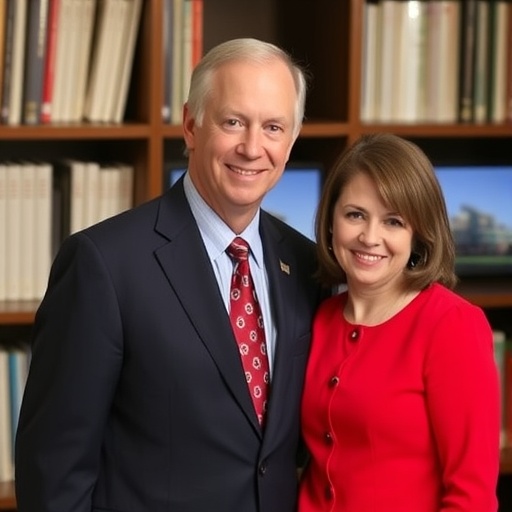
University of Houston engineering professor Venkat Selvamanickam has made remarkable contributions to the field of superconductivity, establishing himself as a pivotal figure in advanced manufacturing processes. His recent election to the National Academy of Engineering, a premier honor in the engineering community, underscores his groundbreaking work in high-temperature superconducting technologies. The NAE recognizes members for their outstanding contributions to engineering research, practice, and education, which marks a significant professional achievement not just for Selvamanickam, but also a proud moment for the University of Houston, where he holds the M.D. Anderson Chair Professorship in Mechanical and Aerospace Engineering.
Selvamanickam’s impressive journey in the domain of superconducting materials spans several decades. He has successfully merged scientific research with industrial applications, effectively bringing innovative ideas from the laboratory to commercial viability. His work primarily focuses on high-temperature superconducting wires, which play a crucial role in enhancing electric power applications. As the director of the Advanced Manufacturing Institute at the Cullen College of Engineering, he aims to accelerate the domestic production of superconductors while fostering partnerships with both federal agencies and industry leaders.
The essence of his research lies in the unique properties of high-temperature superconductors, which can conduct electricity with zero resistance at relatively higher temperatures compared to conventional superconductors. This characteristic allows the development of energy systems that are not only more efficient but also capable of handling the increasing demand for power in modern societies. By innovating in this field, Selvamanickam has helped enhance energy resilience and facilitate the modernization of electrical grids, ensuring they can support the growing energy needs across various sectors.
Profoundly aware of the significance of his contributions, Selvamanickam expresses his gratitude toward his students, colleagues, and industry partners. His collaborative approach reflects a broader trend in engineering, where interdisciplinary teamwork is vital for advancing knowledge and creating impactful technologies. He recognizes that the progress made in superconductivity is not merely the result of individual efforts; rather, it is a collective mission to advance technologies that have the potential to redefine energy infrastructure and apply in various domains, including transportation and medical technologies.
His election to the NAE puts him among the ranks of 130 U.S. members and 28 international members, signifying the global impact of his work. As the 29th NAE member from the University of Houston, Selvamanickam’s achievement proliferates the institution’s reputation as a leader in engineering research and education, especially in the burgeoning field of superconductivity. His efforts have not only elevated the university’s standing but also created opportunities for students to engage with pioneering work that shapes the future of energy technology.
In addition to the accolades, Selvamanickam has secured significant federal funding, specifically an $8 million grant aimed at advancing research related to superconducting magnets for compact fusion reactors. These initiatives are crucial in driving forward the development of next-generation energy systems that promise to be less dependent on fossil fuels and more efficient in harnessing energy from renewable sources. The integration of superconducting technologies into fusion reactors could ultimately revolutionize clean energy generation, bringing us closer to sustainable energy solutions.
The growing emphasis on superconductivity can be attributed to its potential applications in various energy sectors, including the development of maglev trains, efficient energy storage systems, and enhanced medical imaging technologies such as MRI. Each application demonstrates how superconductors can transform everyday systems by improving efficiency, reducing energy loss, and enabling new capabilities that were previously deemed impossible. As such, research into superconducting materials is not just an academic exercise but a pathway to real-world innovations that can benefit society as a whole.
Selvamanickam’s work aligns with the current trends in energy technologies that prioritize both efficiency and sustainability. Engineers and researchers are increasingly challenged to devise solutions that address energy demands while minimizing environmental footprints. By pushing the envelope of what is achievable with superconductive materials, Selvamanickam plays a critical role in guiding future research directions and cultivating a new generation of engineers equipped to tackle these pressing challenges.
The recognition bestowed upon Selvamanickam from the National Academy of Engineering exemplifies how impactful engineering can drive societal change. It is a testament to the importance of innovation in achieving economic development and improving quality of life. The contributions he has made not only elevate his career but also inspire others in academia and industry to pursue excellence in their fields. This interplay between research and practice is vital in creating an ecosystem where innovative ideas can flourish, leading to groundbreaking advancements that resonate on a global scale.
This milestone is also an acknowledgment of the comprehensive educational initiatives at the University of Houston, where students are immersed in an environment that encourages practical learning through collaboration with established professionals like Selvamanickam. Such opportunities at the university bridge the gap between theoretical knowledge and real-world applications, preparing students for fulfilling careers as they step into a rapidly evolving job market that increasingly values expertise in science and engineering.
Selvamanickam’s induction into the National Academy of Engineering will culminate in an official ceremony during the Academy’s Annual Meeting this fall. It is expected to draw attention not only to his achievements but also to the broader implications of his work for the engineering community at large. As leaders in the field gather to celebrate such milestones, it reinforces the mission of organizations like the NAE to recognize and promote the advancement of engineering as a vital pillar of modern society.
Encouragingly, his work will undoubtedly serve as a reference point for ongoing research endeavors in superconductivity and related fields. The advancements made by Selvamanickam open up new avenues of inquiry and encourage a culture of innovation that is necessary for driving technological progress in the face of global energy challenges. It is through such dedicated efforts that the bridge can be built between aspirational research and practical, life-altering applications in energy systems and beyond.
Venturing further into the implications of superconducting technologies, one cannot overlook the broader societal impacts. The transition towards advanced superconducting solutions can enhance industrial capabilities and transform energy generation and distribution methods, propelling society toward a future characterized by sustainable and efficient energy practices. Professor Selvamanickam embodies the archetypal engineer whose contributions resonate beyond borders and redefine how we integrate technology into our lives.
This momentous achievement heralds a future where the coupling of scientific research and engineering proficiency leads to meaningful advancements in energy technologies. The journey that Selvamanickam has embarked upon is not solely an individual path but rather a beacon for aspiring engineers globally to harness the potential of science and apply it for the greater good. As more researchers and students engage in this impactful field, the landscape of engineering is poised for transformative changes that will redefine how we understand and utilize energy moving forward.
Keywords
Superconductivity, electric power applications, engineering innovation, high-temperature superconductors, advanced manufacturing, energy resilience, superconducting magnet research, compact fusion reactors, electrical grid modernization, interdisciplinary collaboration, energy technologies, academic leadership.
Cite Scienmag News
Denise Maddox. (February 11, 2026). University of Houston Professor Inducted into National Academy of Engineering. Scienmag. https://scienmag.com/university-of-houston-professor-inducted-into-national-academy-of-engineering/
Denise Maddox. "University of Houston Professor Inducted into National Academy of Engineering." Scienmag, 11 February 2026, https://scienmag.com/university-of-houston-professor-inducted-into-national-academy-of-engineering/. Accessed 3 September 2026.
Denise Maddox. "University of Houston Professor Inducted into National Academy of Engineering." Scienmag. February 11, 2026. https://scienmag.com/university-of-houston-professor-inducted-into-national-academy-of-engineering/


