


New archaeological insights are transforming our understanding of how seabird guano—the nutrient-enriched excrement of seabirds—played a pivotal role in the rise of the ancient Chincha Kingdom along the arid coast of Peru. Recent biochemical analyses of maize samples excavated from Chincha Valley burial sites reveal that this unlikely resource was central not only to agricultural productivity but also to shaping the sociopolitical and economic fabric of pre-Inca civilizations in the region.
Dr. Jacob Bongers, a digital archaeologist based at the University of Sydney and a Visiting Research Fellow at the Australian Museum Research Institute, spearheaded a multidisciplinary study published in PLOS One that challenges conventional narratives. According to Dr. Bongers, seabird guano’s role in boosting maize production underpinned the Chincha Kingdom’s economic success, enhancing trade networks, population growth, and political influence. His statement underscores an often-overlooked truth in ancient Andean cultures: fertilizer was a form of power with far-reaching consequences.
The research team employed advanced chemical analysis methods on 35 maize specimens spanning centuries, revealing nitrogen concentrations far exceeding typical coastal soil baselines. This isotopic evidence strongly indicates that Chincha farmers systematically utilized seabird guano, harvested from the nearby Chincha Islands, a known locus of high-quality guano deposits. Historical colonial accounts corroborate this finding, describing how coastal Peruvian and northern Chilean communities sailed out on rafts expressly to collect and apply guano to crops.
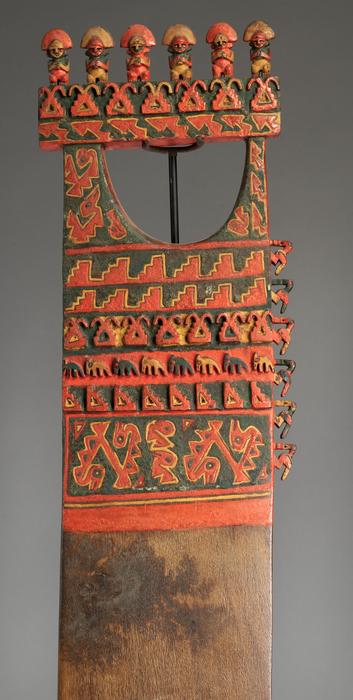
Beyond the chemical data, the research delved into rich archaeological imagery featuring seabirds, sprouting maize, fish, and stepped terrace motifs depicted on textiles, ceramics, and architectural carvings. These cultural artifacts not only confirm the practical importance of guano but reveal a ritualistic and symbolic reverence for the interdependence of marine ecology and agronomy. Such iconography illustrates that ancient peoples actively celebrated and protected the vital ecological nexus that supported their agricultural surplus.
Dr. Emily Milton of the Smithsonian Institution emphasizes the critical role of combining chemical, historical, and iconographic data to reconstruct ancient agricultural practices. She notes that this study not only highlights the geographic spread of guano fertilization but also pushes back the timeline of sophisticated soil management in Peru to at least 800 years ago, affirming its deep roots in pre-Hispanic agricultural innovation.
The coastal ecosystem of Peru is characterized by extreme aridity, making native soil nutrient retention a persistent challenge for agriculture. Nutrient depletion is especially pronounced in irrigated desert soils, where annual nutrient loss can severely limit crop yields. Against this backdrop, guano emerged as a renewable and potent natural fertilizer capable of sustaining intensive maize cultivation. This agricultural surplus generated by guano fertilization supported a specialized economy with merchants, farmers, and fisherfolk, effectively allowing the Chincha Kingdom to become a dominant maritime trading power on the Pacific coast.
Previous archaeological focus often attributed the Chincha Kingdom’s affluence to the lucrative trade in spondylus shells and other marine commodities. However, Dr. Bongers’ findings suggest that guano fertilization was a more foundational driver of economic success. The ability to harness ecological knowledge for sustained agricultural productivity reframed Chincha’s regional prominence, extending beyond mere resource access to mastery of complex ecological interrelations.
The relationship between the Chincha Kingdom and the expansive Inca Empire underscores the broader geopolitical importance of guano. The highland Incas, while culturally enthralled by maize for ceremonial purposes such as chicha (corn beer), faced environmental constraints that limited their maize cultivation. Unable to efficiently access guano resources or navigate maritime routes, the Incas relied on strategic alliances with coastal groups like the Chincha to acquire maize, guano, and other critical resources. Thus, guano not only shaped agricultural productivity but also diplomatic and economic exchanges that structured pre-Columbian Andean societies.
Dr. Jo Osborn of Texas A&M University conceptualizes the Chincha’s wealth as fundamentally ecological rather than purely material. Their sophisticated understanding of marine-terrestrial ecological links—and the agency they exercised in managing these resources—enabled an agricultural surplus that was vital for political power and regional influence. The Chincha’s cultural expressions through art reveal a society deeply embedded in—and empowered by—an intricate ecological wisdom rather than conventional commodities such as gold or silver.
This new evidence complements Dr. Bongers’ parallel research on the enigmatic Band of Holes just south of the Chincha Valley, posited to be an ancient marketplace constructed by the kingdom. Together, these findings offer a nuanced reevaluation of how pre-Hispanic coastal societies balanced resource exploitation, environmental management, and socio-economic complexity.
At a time when contemporary agriculture grapples with sustainability challenges, understanding the success of ancient Andean societies in managing fragile desert ecologies through natural fertilization is particularly resonant. The Chincha Kingdom serves as a powerful example of how ancient ecological knowledge was central to societal resilience and prosperity. This revelation demands a reconsideration of historical narratives and highlights the enduring legacy of ancient peoples’ deep ecological engagement.
The study’s implications extend well beyond archaeology, suggesting that agricultural innovations rooted in natural ecological cycles can drive profound societal transformation. Seabird guano fertilization was not a marginal practice but a linchpin of economic and political power in ancient Peru, anchoring cultural identity and regional diplomacy. Dr. Bongers and his colleagues thus illuminate a critical but previously underexplored aspect of Andean civilization, adding vibrant new layers to our understanding of pre-Inca history.
In sum, the dynamic interplay between seabirds, marine environments, and terrestrial agriculture catalyzed an agricultural revolution that fueled the Chincha Kingdom’s expansion. The legacy of this natural fertilizer, richly documented through chemical evidence and cultural records, underscores the intricate connections between ecology, economy, and power in one of the world’s most challenging landscapes.
News Publication Date:
11-Feb-2026
Web References:
https://journals.plos.org/plosone/article?id=10.1371/journal.pone.0341263
References:
Bongers JL, Milton EBP, Osborn J, Drucker DG, Robinson JR, Scaffidi BK (2026) Seabirds shaped the expansion of pre-Inca society in Peru. PLOS One 21(2): e0341263.
Cite Scienmag News
Courtney Benton. (February 11, 2026). Chincha Kingdom’s Rise Fueled by Bird Guano, Archaeologists Reveal. Scienmag. https://scienmag.com/chincha-kingdoms-rise-fueled-by-bird-guano-archaeologists-reveal/
Courtney Benton. "Chincha Kingdom’s Rise Fueled by Bird Guano, Archaeologists Reveal." Scienmag, 11 February 2026, https://scienmag.com/chincha-kingdoms-rise-fueled-by-bird-guano-archaeologists-reveal/. Accessed 3 September 2026.
Courtney Benton. "Chincha Kingdom’s Rise Fueled by Bird Guano, Archaeologists Reveal." Scienmag. February 11, 2026. https://scienmag.com/chincha-kingdoms-rise-fueled-by-bird-guano-archaeologists-reveal/


