


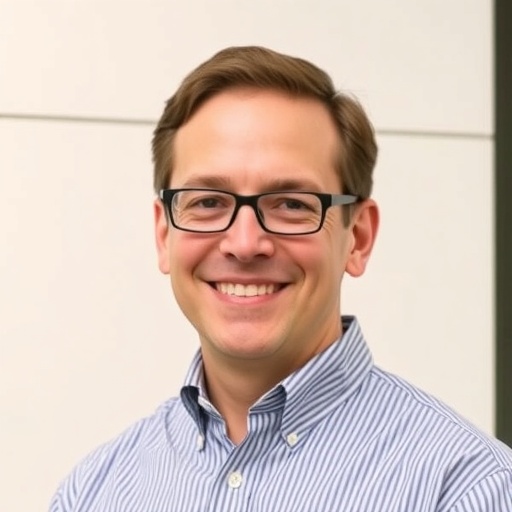
The American Society for Pharmacology and Experimental Therapeutics (ASPET) has honored Dr. Matthew J. Robson, an associate professor at the University of Cincinnati, with its prestigious 2026 Neuropharmacology Early Career Award. This accolade distinguishes Dr. Robson as an emerging leader in the field of neuropharmacology, recognizing early-career scientists who have demonstrated substantial promise and contributions to the understanding of nervous system pharmacology. ASPET’s recognition serves not only as a testament to Dr. Robson’s individual accomplishments but also underscores the collective efforts of his research team and the supportive infrastructure at the University of Cincinnati.
Dr. Robson’s research portfolio is deeply embedded in elucidating the complex molecular mechanisms that underlie neurological dysfunction subsequent to traumatic brain injury (TBI). Traumatic brain injuries are a major public health concern worldwide, leading to persistent cognitive, behavioral, and physiological impairments. Dr. Robson’s laboratory targets the serotonergic system—particularly focusing on serotonin (5-HT) neurotransmission and the fate of 5-HT neurons themselves—recognizing that alterations in serotonin pathways are critical modulators of post-injury neurologic outcomes. His work aims to clarify how neurotrauma affects serotonin signaling at the cellular and synaptic levels, which might reveal new therapeutic targets.
The serotonergic system is intricately involved in modulating mood, cognition, and motor control pathways. Disturbances to 5-HT neurotransmission following TBI can contribute to a spectrum of neuropsychiatric sequelae, including depression, anxiety, and cognitive deficits. Dr. Robson’s approach integrates advanced neuropharmacological techniques such as in vivo electrophysiology, molecular biology assays, and neurochemical profiling to investigate how various forms and severities of brain trauma disrupt 5-HT neuronal circuits. This detailed mechanistic insight is crucial to understanding the neuropathological processes that hinder functional recovery after injury.
Dr. Robson’s academic journey began with a doctoral degree in Pharmaceutical and Pharmacological Sciences from West Virginia University, after which he pursued rigorous postdoctoral training at Vanderbilt University and the Florida Atlantic University Brain Institute. These formative experiences equipped him with a robust foundation in neuropharmacology and neurobiology, facilitating his subsequent independent investigations at the University of Cincinnati. His unique dual appointment both in the College of Pharmacy’s Division of Pharmaceutical Sciences and the College of Medicine’s Neuroscience Graduate Program embodies an interdisciplinary ethos that bridges molecular pharmacology and clinical neuroscience.
Funding support for Dr. Robson’s research has been sourced from diverse entities, including federal agencies like the Department of Defense and the National Institutes of Health, as well as private foundations. Such funding underscores the relevance and potential translational impact of his work. By advancing the understanding of serotonergic dysfunction in TBI, Dr. Robson’s investigations bear relevance not only for civilian populations but also for military personnel, who face significant risk of brain injuries in combat settings.
The ASPET Neuropharmacology Early Career Award is bestowed annually at the society’s flagship meeting and is adjudicated by the Neuropharmacology Executive Committee, a panel of preeminent scientists specializing in neuropharmacology. This rigorous selection process ensures that recipients represent the cutting edge of the field, having demonstrated innovative research approaches, scientific excellence, and strong potential for leadership in pharmacological sciences. For Dr. Robson, receiving this award reflects his emerging influence on neuropharmacological research trajectories.
Within the broader domain of neuropharmacology, Dr. Robson’s work situates itself at the intersection of injury-induced neurochemical dysregulation and neurorestorative strategies. By probing the molecular substrates affected by neurotrauma, such as 5-HT receptor function, transporter dynamics, and synaptic plasticity, his lab methodically maps how serotonergic systems adapt or maladapt post-injury. These insights might pave the way for novel pharmacotherapies aiming to mitigate cognitive and emotional impairments following TBI, thereby addressing a critical unmet medical need.
Understanding the intricate interplay of serotonergic neurons with other neurotransmitter systems also forms a significant aspect of Dr. Robson’s scientific inquiry. Cross-talk between serotonin and other neuromodulators such as glutamate, gamma-aminobutyric acid (GABA), and dopamine is critical to brain function and recovery post-injury. Dr. Robson’s research explores these dynamic interrelationships, contributing to a comprehensive framework that could inform multifaceted therapeutic approaches capable of restoring neural network integrity after trauma.
The clinical translation of Dr. Robson’s findings hinges on his laboratory’s ability to model TBI accurately in preclinical systems while employing sophisticated neuropharmacological tools to dissect molecular changes. This translational aspect gains importance as the burden of TBI—ranging from mild concussions to severe brain damage—is increasingly recognized as a factor in long-term neurodegeneration and mental health disorders. By identifying key serotonergic alterations, Dr. Robson’s work enhances our mechanistic understanding essential for drug development and precision medicine in neurotrauma care.
Dr. Robson emphasizes the collaborative nature of his achievements, expressing gratitude towards the trainees, students, and colleagues contributing to his laboratory’s productivity and scientific breakthroughs. This inclusive approach fosters a robust research environment conducive to innovation and continuous learning, elements that propel the laboratory’s mission and its contributions to neuropharmacology. His remarks highlight the symbiotic relationship between mentorship, teamwork, and scientific progress in early-career research settings.
Looking forward, Dr. Robson is keen on expanding his laboratory’s research portfolio by leveraging emerging technologies such as single-cell transcriptomics, optogenetics, and in vivo imaging to further unravel the serotonergic system’s role in neurotrauma. These advanced methodologies promise to provide unprecedented resolution of neuronal subnetworks, enabling targeted interventions that could ameliorate or even reverse injury-induced serotonergic dysfunction. The ASPET award thus functions as both a recognition and a catalyst for future investigative endeavors.
ASPET, a global society comprising over 4,000 scientists, remains at the vanguard of pharmacological research impacting drug discovery and therapeutic innovation. Through awards like the Neuropharmacology Early Career Award, ASPET highlights pioneering research and fosters the development of future scientific leaders. Dr. Robson’s recognition not only validates his work but also inspires the broader pharmacology community to intensify efforts toward understanding and treating neurological disorders stemming from brain injury.
News Publication Date: Not provided
Web References: Not provided
References: Not provided
Cite Scienmag News
Genevieve Holt. (February 11, 2026). University of Cincinnati’s Robson Honored with ASPET 2026 Early Career Award in Neuropharmacology. Scienmag. https://scienmag.com/university-of-cincinnatis-robson-honored-with-aspet-2026-early-career-award-in-neuropharmacology/
Genevieve Holt. "University of Cincinnati’s Robson Honored with ASPET 2026 Early Career Award in Neuropharmacology." Scienmag, 11 February 2026, https://scienmag.com/university-of-cincinnatis-robson-honored-with-aspet-2026-early-career-award-in-neuropharmacology/. Accessed 3 September 2026.
Genevieve Holt. "University of Cincinnati’s Robson Honored with ASPET 2026 Early Career Award in Neuropharmacology." Scienmag. February 11, 2026. https://scienmag.com/university-of-cincinnatis-robson-honored-with-aspet-2026-early-career-award-in-neuropharmacology/


