


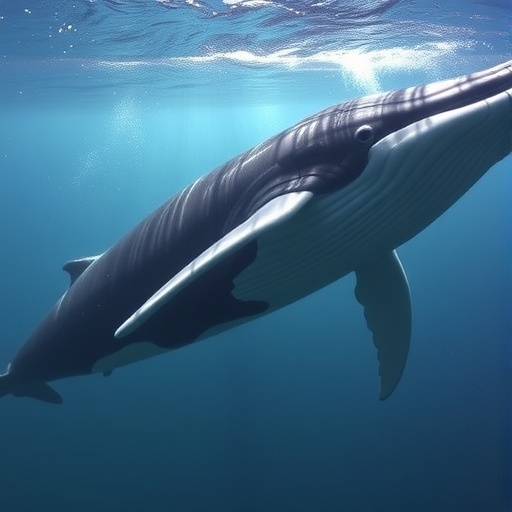
The Southern Right Whale, once a celebrated emblem of marine conservation, is now sounding an urgent alarm about the profound impacts of climate change on marine ecosystems. A comprehensive new study spearheaded by a consortium of international researchers, including experts from Flinders University and Curtin University in Australia, alongside collaborators from South Africa and the United States, reveals troubling declines in the reproductive success of these whales. This downturn serves as a stark indicator of the shifting environmental conditions in the Southern Ocean, directly tied to anthropogenic climate forces.
For over three decades, scientific teams have meticulously gathered photographic identification data at the Head of the Great Australian Bight—a crucial habitat nestled within the Yalata Indigenous Protected Area in South Australia. This extensive longitudinal study, spanning from 1991 to 2024, reveals that the frequency of southern right whale calves has diminished considerably. The lengthening intervals between successful birthing events coincide with marked reductions in Antarctic sea ice extent, shifts in oceanic circulation patterns including sustained positive Antarctic Oscillation phases, and a destabilization of the marine food web, particularly the availability of krill, a key dietary component for these leviathans.
The decline in reproductive output among southern right whales signals an ecological threshold of great concern. As sentinel species, their population dynamics offer a window into the broader health and transformations occurring within Southern Ocean ecosystems. These whales venture into offshore foraging grounds where they rely heavily on dense aggregations of Antarctic krill—small crustaceans whose populations are intricately linked to the extent and stability of sea ice. With the ongoing warming of the planet and resultant marine heatwaves, krill stocks have been observed to wane, thereby limiting vital nourishment necessary for breeding females to sustain pregnancies and nurse calves.
Furthermore, this biological downturn is mirrored in geographically disparate southern right whale populations along the coasts of South America and South Africa, suggesting that the pressures exerted by climate perturbations are continental in scale. The interconnectedness of oceanographic phenomena means that changing wind patterns, temperature gradients, and ice conditions in the Antarctic reverberate throughout the Southern Hemisphere’s marine biomes. Notably, these shifts not only affect southern right whales but also other krill-dependent species such as various whale species and seabirds, all of which are grappling with reduced food availability and habitat alteration.
Despite international protections that followed a near-global decimation due to commercial whaling in the 19th and 20th centuries, southern right whales remain vulnerable. Anthropogenic threats continue to mount, including lethal collisions with commercial and recreational vessels, underwater noise pollution that disrupts communication and navigation, entanglement in fishing gear and aquaculture infrastructure, and habitat degradation from relentless coastal and offshore development. These stressors compound the challenges posed by a changing climate, threatening to undermine decades of conservation progress.
Research further underscores a notable behavioral adaptation within some southern right whale groups. In response to diminishing krill populations and altered ocean conditions, certain whales have shifted their foraging grounds from high-latitude Antarctic coastal waters toward mid-latitude sub-Antarctic regions. Simultaneously, these whales have diversified their diets, supplementing krill with copepods and other zooplankton, indicating a degree of ecological plasticity but also evidence of the stress imposed by environmental changes.
These findings are anchored in rigorous data/statistical analyses of long-term monitoring efforts, leveraging an impressive assemblage of aerial surveys, photographic identification, and environmental data sets. The research, detailed in the article Climate-Driven Reproductive Decline in Southern Right Whales, published in the journal Scientific Reports in February 2026, intertwines biological field observations with climatological metrics to elucidate the mechanistic links between climate variability and reproductive success.
The research emphasizes the critical importance of integrated conservation strategies. While mitigating the global drivers of climate change remains imperative, localized measures to reduce direct human impacts are equally essential. Protection of breeding and migratory habitats, regulation of vessel traffic, management of fishing activities to minimize entanglements, and noise pollution abatement are necessary to bolster population resilience. The study calls for enhanced international cooperation and adaptive management frameworks to safeguard these iconic marine mammals in a rapidly transforming ocean environment.
This sentinel species exemplifies how climate change transcends geographic boundaries, cascading from polar systems to temperate coastal zones where humans and wildlife coexist. The Southern Right Whale’s reproductive challenges serve as an ecological barometer, signaling broader systemic perturbations that warrant urgent scientific attention and policy action. The conservation community must respond with heightened urgency to preserve not only the whales themselves but the intricate Southern Ocean ecosystems upon which global biodiversity and climate regulation depend.
Long-term ecological datasets, such as those amassed from the Great Australian Bight, offer invaluable insights into the dynamic responses of marine species to climate stressors. The ability to detect subtle changes in population parameters over multiple decades highlights the indispensable role of sustained monitoring programs. These data empower researchers and policymakers to anticipate tipping points, evaluate the efficacy of conservation interventions, and refine management tactics to buffer the impacts of ongoing environmental shifts.
In sum, the Southern Right Whale’s story is no longer solely one of recovery from historical exploitation but now a complex narrative of vulnerability amidst unprecedented climatic upheaval. Their declining reproductive rates demand a recalibration of our conservation priorities, underscoring the intertwined fate of marine fauna and the global climate system. The urgent message is clear: safeguarding these marine giants requires a confluence of robust scientific understanding, rigorous environmental protections, and proactive, coordinated action to confront the multifaceted challenges posed by our warming planet.
News Publication Date: 11-Feb-2026
Web References: http://dx.doi.org/10.1038/s41598-026-36897-1
Cite Scienmag News
Sloane Callahan. (February 11, 2026). Australia’s Iconic Whales Threatened by Climate Change Decline. Scienmag. https://scienmag.com/australias-iconic-whales-threatened-by-climate-change-decline/
Sloane Callahan. "Australia’s Iconic Whales Threatened by Climate Change Decline." Scienmag, 11 February 2026, https://scienmag.com/australias-iconic-whales-threatened-by-climate-change-decline/. Accessed 3 September 2026.
Sloane Callahan. "Australia’s Iconic Whales Threatened by Climate Change Decline." Scienmag. February 11, 2026. https://scienmag.com/australias-iconic-whales-threatened-by-climate-change-decline/


