


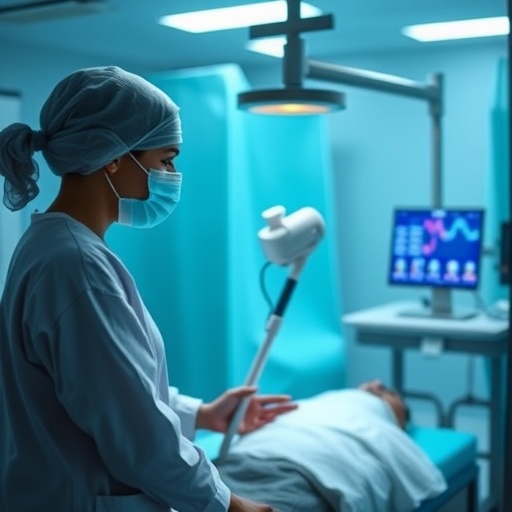
In a groundbreaking development poised to reshape diagnostic medicine, researchers at the University of Southampton and Nottingham University Hospitals NHS Trust have demonstrated that mindfulness techniques can be integrated into endoscopy procedures to enable detailed examinations in fully awake patients. This approach significantly reduces the need for sedation or general anesthesia, which have traditionally been necessary to overcome the gag and cough reflexes that make comprehensive endoscopic assessments challenging in conscious individuals. The implications of this innovation extend from patient comfort and care quality to considerable cost savings for healthcare systems, notably the NHS, by facilitating quicker, safer, and more accessible diagnostic processes.
Endoscopy, a critical tool in diagnosing diseases of the aerodigestive tract—comprising the mouth, throat, voice box, esophagus, and stomach—usually demands a delicate balance between patient safety and comfort. General anesthesia suppresses involuntary reflexes but brings risks, side effects, and logistical challenges, including the need for specialized facilities and personnel. Conversely, awake endoscopy often triggers severe gag and cough responses, limiting the thoroughness of examinations. The novel strategy by Professor Reza Nouraei and his team employs a curated set of mindfulness practices—combining breathing control, relaxation exercises, guided positive imagery, and patient communication—to mitigate these involuntary responses. Their “Mindful Endoscopy” technique empowers patients to regain control over their physiological reactions, which fundamentally lowers the barrier to conducting detailed assessments without sedation.
The clinical study, now published in the British Journal of Nursing, highlighted significant advantages achieved through this mindful approach. Among 231 patients undergoing endoscopies with mindfulness support, an impressive 92 percent reported satisfaction with their experience, far surpassing satisfaction levels documented in previous studies where awake patients experienced a mere 53 percent satisfaction rate. Even compared to sedated patients, who registered an 86 percent satisfaction rate, mindfulness-assisted procedures scored notably higher. These outcomes underscore the psychological as well as physiological benefits of holistic patient care where emotional regulation plays a pivotal role in procedural success and patient well-being.
From a technical standpoint, mindfulness functions by modulating the autonomic nervous system, which governs reflexes such as coughing and gagging. By instructing patients to employ breath control and mental imagery, the mindfulness technique effectively reduces sympathetic nervous system overactivity, thereby diminishing reflexive protective responses that complicate endoscopic navigation. Moreover, physiological parameters such as heart rate and blood pressure demonstrate measurable declines during mindful endoscopy sessions, indicating a broader systemic state of calm and reduced stress, which contributes to a smoother, safer procedure.
The study exposed twelve cancer cases—reflective of a typical incidence rate of approximately five percent—during mindful endoscopy examinations. Remarkably, none of these cases were subsequently found to be missed at a follow-up twelve months later, a testament to the diagnostic accuracy achievable without sedation. Historically, early detection rates for aerodigestive tract cancers have been suboptimal due to limited access to comprehensive awake examination options and reliance on anesthesia-based evaluations for thorough inspection. By enabling awake, full-path endoscopy, this innovation could substantially reduce missed diagnoses and allow for earlier interventions, which are critical in improving patient prognoses.
Beyond diagnostic precision, the mindful approach presents a transformative potential in healthcare workflow optimization. Traditionally, general anesthesia reliance restricts endoscopy to operating theatres or specialized sedation suites, resulting in bottlenecks and elongated patient wait times. Mindfulness-facilitated outpatient endoscopy can shift these procedures into community diagnostic centers or outpatient clinics, reducing procedural complexity, increasing throughput, and alleviating pressure on surgical theaters. Professor Nouraei notes this as a pivotal advancement, especially in light of the NHS’s elective recovery plan aimed at addressing extensive surgical backlogs magnified by the COVID-19 pandemic.
The broader clinical applications of mindfulness within perioperative care extend beyond aerodigestive examinations. At Queen’s Medical Centre, mindfulness interventions have enhanced operative efficiency by allowing a higher daily volume of patients to be treated under less resource-intensive conditions—up to 22 patients in a single session compared to the previous capacity of six or seven when necessitating general anesthesia. This operational scaling achieved through mindfulness stands as a proof-of-concept for integrating holistic patient-centered techniques into various surgical contexts, potentially revolutionizing elective surgical pathways across specialties.
The societal and economic benefits are equally significant. Reducing the dependence on anesthesia addresses safety concerns, lowers healthcare costs associated with anesthesia administration and recovery, and makes endoscopic services more accessible to patients who may be at risk from sedative drugs, such as the elderly or those with comorbidities. Furthermore, patients benefit psychologically as mindfulness confers a greater sense of agency and control, mitigating anxiety often linked to invasive investigations and medical environments. The associated increase in patient satisfaction could improve compliance with recommended surveillance and follow-up, ultimately contributing to better long-term health outcomes.
Implementing mindfulness-based protocols requires training healthcare professionals not only in the technical aspects of endoscopy but also in psychological support and patient engagement techniques. This multidisciplinary approach bridges medicine and mental health, enriching traditional biomedical models with psychosomatic insight. The incorporation of such integrative care models reflects a growing understanding that the mind-body connection substantially influences medical outcomes, particularly in invasive or discomfort-inducing procedures.
Given the promising findings, further research is warranted to explore scalability, long-term impacts on cancer survival rates, and potential applications in other diagnostic and therapeutic interventions where patient cooperation and physiological regulation are crucial. Additionally, integrating mindfulness into digital health platforms could complement the procedural framework with remote preparation and post-procedure support, creating a continuum of care that maximizes patient empowerment and recovery.
In conclusion, the successful use of mindfulness to facilitate detailed, awake endoscopic examinations represents a paradigm shift in medical diagnostics. It epitomizes innovation not just in technique but in reimagining patient care holistically—prioritizing patient well-being, clinical efficacy, and system efficiency simultaneously. As healthcare systems worldwide grapple with resource challenges, the mindfulness-enabled endoscopy model offers a replicable, transformative solution with the potential to elevate standards of care, expedite diagnoses, and improve the patient journey from assessment to treatment.
News Publication Date: 23-Jan-2026
Web References:
https://www.magonlinelibrary.com/doi/full/10.12968/bjon.2025.0053
References:
Mindful endoscopy: holistically supporting patients through awake examinations of the path of swallowing, British Journal of Nursing, DOI: 10.12968/bjon.2025.0053
Cite Scienmag News
Glenn Wilkins. (February 10, 2026). New Study Shows Mindfulness Boosts Effectiveness of Endoscopies in Awake Patients. Scienmag. https://scienmag.com/new-study-shows-mindfulness-boosts-effectiveness-of-endoscopies-in-awake-patients/
Glenn Wilkins. "New Study Shows Mindfulness Boosts Effectiveness of Endoscopies in Awake Patients." Scienmag, 10 February 2026, https://scienmag.com/new-study-shows-mindfulness-boosts-effectiveness-of-endoscopies-in-awake-patients/. Accessed 4 September 2026.
Glenn Wilkins. "New Study Shows Mindfulness Boosts Effectiveness of Endoscopies in Awake Patients." Scienmag. February 10, 2026. https://scienmag.com/new-study-shows-mindfulness-boosts-effectiveness-of-endoscopies-in-awake-patients/


