


Coastal ecosystems rank among the planet’s most dynamic and productive environments, characterized by remarkable biodiversity and the provision of critical ecosystem services. These services include fisheries that sustain livelihoods, carbon sequestration mechanisms integral to climate regulation, and the support of dense human populations alongside vast cultural legacies. However, despite their intrinsic ecological and societal value, coastal zones are increasingly vulnerable to multifaceted threats emerging from anthropogenic pressures, climate change, and habitat degradation. Historically, coastal management strategies have predominantly misconstrued the complexity of these environments, favoring fragmented, short-term interventions grounded in hard engineering or “grey infrastructure,” thereby neglecting the intertwined environmental, social, and economic risks inherent to these systems. This approach has exacerbated biodiversity loss, weakened ecosystem functionality, and escalated both ecological and economic costs.
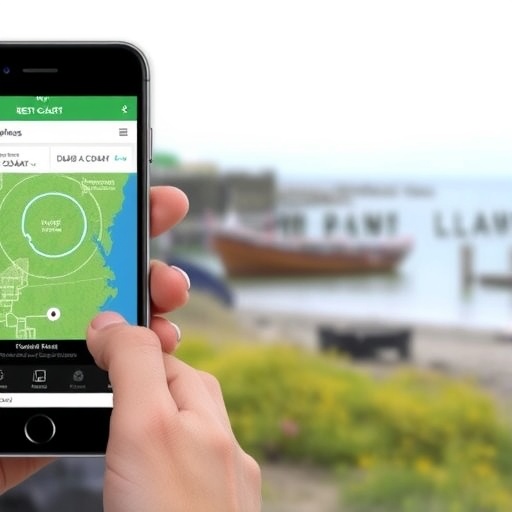
In this context, the Horizon 2020 initiative REST-COAST has introduced a transformative digital instrument: the My REST-COAST mobile application. This innovative platform embodies an interdisciplinary approach that distills intricate scientific insights into an intuitive, interactive digital experience. It empowers users by visualizing authentic climate change impacts and environmental challenges across nine meticulously studied coastal pilot sites encompassing various European nations and Israel. The app highlights how nature-based restoration strategies can systematically bolster biodiversity, enhance climate resilience, and generate socio-economic improvements, thus serving as a vital tool for informed decision-making in sustainable coastal governance.
Technically, the My REST-COAST app integrates geospatial data, ecological modeling outputs, and socio-economic impact assessments into a user-friendly interface. This multilayered data amalgamation enables comprehensive exploration of site-specific environmental threats, biodiversity indices, and potential restoration pathways grounded in empirical, peer-reviewed project findings. The app’s architecture supports scenario analysis, allowing stakeholders to examine a range of threat-measure-outcome permutations. Such simulations reveal the nuanced trade-offs and synergies of different restoration interventions, thereby facilitating evidence-based policy formulation and community engagement.
The application is accessible on both the Google Play Store and Apple App Store, reflecting a broad ambition to democratize access to coastal restoration knowledge. Designed with multilingual support, it spans English and nine national languages to ensure inclusivity and local relevance. Its target audience extends beyond academic and professional spheres to include students, governmental entities, environmental experts, tourism operators, and environmentally conscious citizens. This wide user base reflects the project’s commitment to fostering a holistic coastal stewardship ethic among diverse societal sectors.
Significantly, the app employs gamification techniques to enrich the educational experience. Through an incentivized learning pathway, users are motivated to delve deeper into restoration science by navigating interactive scenarios that explicate the ecological, climatic, and economic ramifications of various nature-based solutions. This approach ensures knowledge retention and engagement are optimized, bridging the gap between abstract scientific concepts and practical, real-world outcomes. Furthermore, the inclusion of a sustainability rating system underscores restoration solutions demonstrating high efficacy in biodiversity recovery, Blue Carbon sequestration, and economic viability, thus encouraging strategic prioritization of interventions.
The spatial coverage of the My REST-COAST app spans nine pilot sites distributed across a diverse set of coastal environments in Bulgaria, France, Italy, Spain, the Netherlands, Poland, and Israel. This geographical breadth underpins the app’s capacity to reveal context-specific restoration challenges and opportunities, accommodating a broad ecological gradient from temperate to Mediterranean and semi-arid coastal zones. Such heterogeneity enriches the scientific robustness of the platform and ensures that lessons learned can be adapted across varying coastal typologies and governance frameworks.
From a technological perspective, the app integrates advanced interactive mapping functionalities combined with ecological and environmental datasets validated through project research. This includes data derived from remote sensing, in situ monitoring, ecosystem service valuation, and climate vulnerability assessments. Such integrative data curation enhances the reliability of restoration scenarios presented within the app, making it a credible resource for both practitioners and policy-makers. By contributing to transparency and accessibility of complex coastal data, the app addresses a critical gap in science communication related to coastal resilience.
At its core, the My REST-COAST app exemplifies a successful synthesis of digital technologies with environmental restoration science. It addresses a fundamental challenge: that of translating multidimensional ecological data into actionable knowledge accessible to non-specialists without diluting scientific precision. This is achieved by focusing on interactivity, user-centered design, and scientifically rigorous content, setting a precedent for future digital knowledge-transfer tools within ecological and environmental management domains.
The app also plays a pivotal role in promoting ecosystem-based adaptation strategies focusing on Blue Carbon ecosystems such as salt marshes, seagrass meadows, and coastal wetlands. These habitats are recognized for their substantial carbon sequestration capabilities and their role in mitigating climate change impacts. Through the app, users gain insight into how prioritizing restoration of these habitats can simultaneously support biodiversity and deliver measurable mitigation and adaptation benefits. This integrated perspective contributes to shifting the paradigm from traditional hard infrastructure towards nature-based solutions in climate policy frameworks.
Moreover, the project underscores the importance of fostering cross-sectoral collaboration and public engagement for coastal sustainability. By equipping diverse stakeholders with accessible, science-backed restoration knowledge, the app contributes to building social capital and reinforcing community resilience. This democratization of ecological information is vital for enhancing governance transparency and encouraging participatory decision-making processes essential for effective coastal management in the face of complex environmental challenges.
Ultimately, My REST-COAST is not merely a technological platform but a catalyst for reimagining the way societies interact with fragile coastal environments. It embodies a paradigm shift toward interdisciplinary, integrative, and proactive strategies essential for safeguarding the ecological and socio-economic fabric of coastal regions under increasing global stress. As coastal zones continue to confront mounting pressures, such digital innovations will become indispensable in guiding sustainable restoration efforts and inspiring collective action to preserve natural capital for future generations.
News Publication Date: Not provided
Web References:
– My REST-COAST on Google Play: https://play.google.com/store/apps/details?id=com.pensoft.restcoast
– My REST-COAST on Apple App Store: https://apps.apple.com/us/app/my-rest-coast/id6615070189
Cite Scienmag News
Gavin Prescott. (February 9, 2026). New “My REST-COAST” Mobile App Empowers Citizens in Coastal Ecosystem Restoration Across Europe. Scienmag. https://scienmag.com/new-my-rest-coast-mobile-app-empowers-citizens-in-coastal-ecosystem-restoration-across-europe/
Gavin Prescott. "New “My REST-COAST” Mobile App Empowers Citizens in Coastal Ecosystem Restoration Across Europe." Scienmag, 9 February 2026, https://scienmag.com/new-my-rest-coast-mobile-app-empowers-citizens-in-coastal-ecosystem-restoration-across-europe/. Accessed 4 September 2026.
Gavin Prescott. "New “My REST-COAST” Mobile App Empowers Citizens in Coastal Ecosystem Restoration Across Europe." Scienmag. February 9, 2026. https://scienmag.com/new-my-rest-coast-mobile-app-empowers-citizens-in-coastal-ecosystem-restoration-across-europe/


