


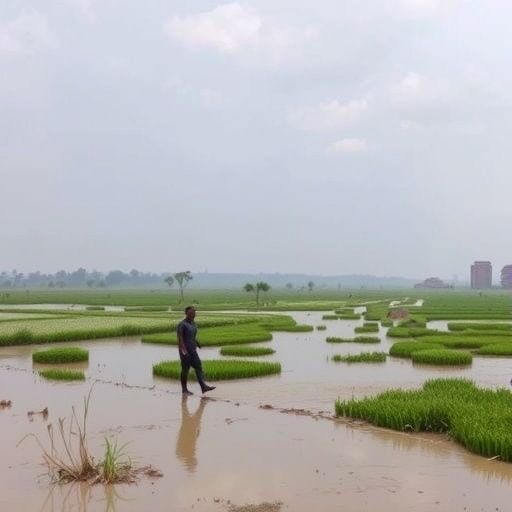
The recent study delving into the flood hazard assessment and the vulnerabilities faced by agropastoral households in the lower Awash River Basin in Ethiopia shines a critical light on the interplay between climatic events and community livelihoods. Flooding remains a recurrent natural disaster in this region, exacerbated by climate change, population pressures, and inefficient land management practices. This comprehensive analysis addresses the complexities of flood risks that threaten both the environment and the socio-economic fabric of agropastoralism, which integrates crop cultivation and livestock raising.
Researchers, led by Tefera and an adept team, undertook an exhaustive investigation of the flood risks encountered by these communities. They meticulously analyzed historical flood data, alongside meteorological patterns, to develop a clearer understanding of the flood dynamics specific to the Awash River Basin. Such an approach goes beyond mere surface-level analysis, delving deep into the historical context of flooding incidents and assessing changes over time. The insights gathered from this research have broad implications for policy-making and resource management in the region.
The study highlights the geographical and socio-economic features contributing to heightened vulnerability among agropastoralists. With the Awash River flowing through the heart of the region, communities have historically depended on its resources for their agricultural and pastoral needs. However, the intensification of agricultural activities, often without sustainable practices, has increased the risk of flooding and soil degradation. This juxtaposition of economic dependence and environmental vulnerability forms a critical backdrop for understanding the resilience—or lack thereof—of these communities.
In analyzing the impacts of flooding on households, the research revealed a stark dichotomy between various socio-economic groups within the agropastoral system. Wealthier households tended to mitigate risks through better infrastructure, access to resources, and diversified income streams. In contrast, marginal households, which often lack these safety nets, faced devastating consequences during flood events, leading to significant losses in crops and livestock. This socio-economic disparity reveals the urgent need for targeted interventions that can equip the most vulnerable households with the necessary tools and resources to enhance their resilience.
The researchers employed advanced modeling techniques to predict future flooding scenarios, taking into account projected climatic conditions. By implementing Geographic Information Systems (GIS) alongside hydrological models, they were able to visualize potential flood zones under varying rainfall scenarios. This data-driven approach provides a compelling foundation for future planning, highlighting areas at risk of flooding and informing land-use decisions. Policymakers can benefit immensely from such detailed forecasting, which aids in the allocation of resources and the development of infrastructure to safeguard communities.
Additionally, the study emphasizes the role of community engagement in disaster risk management. The researchers argue that local knowledge and experiences are invaluable assets in developing effective flood resilience strategies. By including agropastoralists in decision-making processes, interventions can be more closely tailored to the specific needs and realities on the ground. This participatory approach helps to foster ownership and commitment to flood management strategies, ensuring that measures are grounded in local contexts rather than imposed from external entities.
Climate change exacerbates the frequency and intensity of flooding, transforming the landscape that agropastoralists traditionally navigated. With seasons becoming increasingly unpredictable and extreme weather events more common, adapting farming practices has become imperative. The study suggests the integration of climate-smart agriculture as a viable solution, encompassing practices that increase agricultural productivity while minimizing environmental impact. This transition not only addresses food security but also strengthens the community’s resilience against climate shocks.
Economic diversification emerged as another critical strategy for reducing vulnerability among disadvantaged households. By diversifying income sources—such as incorporating small-scale businesses or engaging in non-farm activities—agropastoralists can create additional buffers against economic duress caused by flooding. This insight aligns with broader development goals that aim to reduce poverty and enhance livelihoods in the face of climate-related challenges.
Moreover, the research calls attention to the importance of governmental policies that support infrastructural investments. Building flood-resistant infrastructure, improving irrigation systems, and establishing early warning systems constitute essential steps towards safeguarding communities from the perennial threat of flooding. By channeling resources into these areas, governments can significantly bolster the adaptive capacity of vulnerable populations.
In conclusion, the findings of this research encapsulate the urgent need for an integrated approach to flood hazard assessment and livelihood protection in the lower Awash River Basin. By acknowledging the intricate relationship between environmental risks and socio-economic vulnerabilities, stakeholders can work collaboratively to implement effective strategies that prioritize sustainable development and resilience. Such measures are critical not only for the agropastoral communities of Ethiopia but also serve as a model for addressing similar challenges faced by vulnerable populations around the world.
In summary, this comprehensive study on flood hazards and livelihood vulnerabilities is an important contribution to the existing body of knowledge on climate-related risks and rural livelihoods. By harnessing innovative research methodologies and advocating for inclusive policy approaches, it paves the way for more resilient and sustainable agropastoral systems.
Tefera, S., Thatiparthi, V.L., Tadesse, T.B. et al. Flood hazard assessment and livelihoods vulnerability of agropastoral households in lower Awash river Basin, Ethiopia.
Discov Sustain (2026). https://doi.org/10.1007/s43621-026-02641-y
Cite Scienmag News
Violet Maxwell. (February 8, 2026). Assessing Flood Risks and Livelihood Vulnerability in Ethiopia. Scienmag. https://scienmag.com/assessing-flood-risks-and-livelihood-vulnerability-in-ethiopia/
Violet Maxwell. "Assessing Flood Risks and Livelihood Vulnerability in Ethiopia." Scienmag, 8 February 2026, https://scienmag.com/assessing-flood-risks-and-livelihood-vulnerability-in-ethiopia/. Accessed 3 September 2026.
Violet Maxwell. "Assessing Flood Risks and Livelihood Vulnerability in Ethiopia." Scienmag. February 8, 2026. https://scienmag.com/assessing-flood-risks-and-livelihood-vulnerability-in-ethiopia/


