


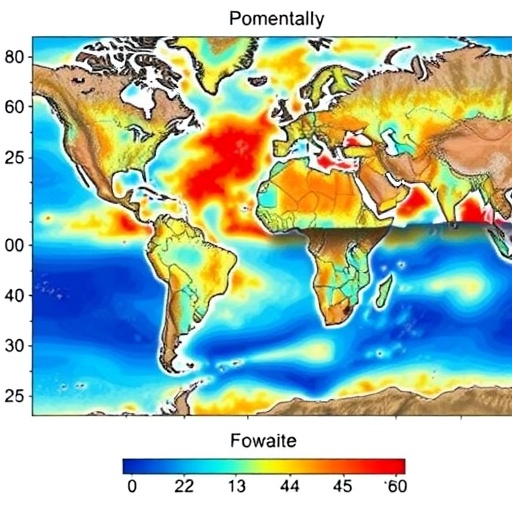
In the realm of hydrogeology, the concept of groundwater renewability has long hinged on the interpretation of aquifer residence times. These times indicate the duration that water remains within an aquifer before being extracted or recharged. Traditionally, longer residence times have been interpreted as evidence of non-renewable, fossil groundwater, fossil waters that may have entered these subterranean reservoirs tens of thousands to millions of years ago. Such assumptions have critical implications for water resource management, suggesting that these fossil aquifers are essentially finite reserves that could be depleted beyond replenishment. However, a groundbreaking study by Ferguson, Cuthbert, Jasechko, and colleagues published in Nature Geoscience challenges this long-standing view, revealing a more nuanced connection between aquifer residence times and the dynamic hydraulic responses of these groundwater systems.
This transformative research reshapes our understanding by demonstrating that aquifers containing fossil groundwater can still be responsive to present-day climate conditions. The core of their investigation lies in disentangling the complex relationship between the apparent “age” of groundwater and the hydraulic response time—the time it takes for water levels to react to changes such as pumping or climatic variations. Where previous analyses may have conflated these metrics, the new findings assert that modern climate influences actively modulate groundwater levels even in aquifers once thought to be hydrologically inert due to their ancient water content.
To comprehend the significance of this insight, it is crucial to differentiate between residence time and hydraulic response time accurately. Residence time primarily measures the age of water molecules, reflecting the physical time elapsed since recharge. In contrast, hydraulic response time refers to the rate at which groundwater levels adjust to changes in external forcings like precipitation shifts or groundwater abstraction. The researchers meticulously analyzed groundwater monitoring data and climatic records from multiple fossil aquifers worldwide, shedding light on how these systems respond to contemporary environmental drivers despite their seemingly ancient waters.
One of the most compelling results surfaced when the team observed that many fossil aquifers exhibit water level fluctuations that correlate closely with modern climate variability. This was counterintuitive, given that fossil groundwater is typically characterized by negligible modern recharge. However, the hydraulic behavior indicates that the aquifers maintain active storage dynamics that are influenced by present-day recharge events, climatic shifts, and human-induced pumping. This challenges the simplistic categorization of fossil groundwater as entirely non-renewable and instead suggests a much more dynamic and interactive aquifer system.
These revelations imply that current water management practices, which often label fossil aquifers as static and depletion-prone, may be neglecting essential hydraulic properties that dictate aquifer sustainability. For instance, the physical connectivity of these aquifers to modern recharge zones and the capacity for aquifer storage change highlight significant opportunities for renewability that were previously unrecognized. These characteristics stress the importance of adopting integrated hydraulic modeling tools alongside geochemical age-dating methods to form a more holistic understanding of groundwater behavior.
Furthermore, the implications extend beyond academic interest into the practicalities of water resource governance. The reliance on aquifer residence time data alone to determine extractive limits and renewal rates could lead to misguided policies and unsustainable exploitation. According to Ferguson and collaborators, a thorough hydraulic analysis that takes into account the response times to abstraction and climate variability is imperative for deriving reliable assessments of renewability. This approach can better inform water managers and policymakers, especially under the pressures of climate change and expanding population demands.
Climate change itself acts as a formidable stressor altering recharge patterns, evapotranspiration rates, and seasonal precipitation extremes. The study underscores that the hydraulic responses of fossil aquifers to these climatic shifts are not trivial. As groundwater levels adjust to modern climate signals, shifts in availability and recharge rates can significantly impact long-term water security. Understanding these feedback mechanisms is vital for forecasting future groundwater availability and ensuring resilient aquifer management in vulnerable regions.
The authors utilized a combination of isotope hydrology, paleoclimate reconstructions, and extensive groundwater level monitoring to build their hydraulic response models. This multidisciplinary approach enabled a clearer separation between water age and aquifer dynamics, revealing that fossil age does not equate to hydraulic stasis. In fact, temporal analyses of water levels indicated that many aquifers replenish faster than previously assumed when the modern hydraulic connectivity is considered rigorously.
Such findings ignite new scientific discussions about groundwater sustainability within the global hydrological cycle. The presence of fossil water in an aquifer should no longer be viewed as a definitive marker of irreplaceability. Instead, these aquifers exist along a continuum where some fossil waters coexist with modern recharge and active hydraulic processes. This continuum perspective advocates for more adaptive and site-specific characterizations of aquifer renewability that can accommodate varying climatic and geological contexts.
Additionally, the research calls into focus how abstraction strategies might need to evolve. Traditional concepts of safe yield often disregard the hydraulic response times and the interplay between fossil and modern waters within an aquifer system. An engineering-based insight into hydraulic storage coefficients, transmissivity rates, and recharge-discharge balances could facilitate more nuanced management frameworks. These frameworks would be robust enough to anticipate changes due to groundwater pumping, climate variability, and ecological requirements without overexploiting seemingly ancient water stores.
Across major aquifer systems spanning arid to temperate regions, the consistency of these hydraulic responses to modern environmental signals suggests that this phenomenon is widespread rather than isolated. It highlights a universal, though underappreciated, dynamic in groundwater systems that links ancient water reservoirs to contemporary hydrological processes. Such universal applicability amplifies the relevance of this study to global water security challenges.
In conclusion, the groundbreaking work by Ferguson, Cuthbert, Jasechko, and their colleagues fundamentally redefines how recharge, renewal, and sustainability of fossil groundwater aquifers should be assessed. By elucidating the critical role of hydraulic response times influenced by present-day climate conditions, they deliver a paradigm shift in hydrogeological science and water resource management. Moving forward, this study encourages researchers and practitioners alike to integrate hydraulic analyses into standard methodologies, thereby enabling more accurate and sustainable approaches to groundwater stewardship amid changing global climatic realities.
This research not only challenges entrenched scientific perspectives but also provides a beacon for pragmatic policy reform. It highlights that even ancient groundwater, preserved beneath the Earth’s surface for millennia, participates in the dynamic patterns of the current hydrological cycle. As pressure on fresh water resources intensifies worldwide, such insights could be invaluable for securing resilient, equitable, and sustainable fresh water access well into the future.
Cite Scienmag News
Violet Maxwell. (February 6, 2026). Fossil Groundwater Renewability Linked to Current Climate. Scienmag. https://scienmag.com/fossil-groundwater-renewability-linked-to-current-climate/
Violet Maxwell. "Fossil Groundwater Renewability Linked to Current Climate." Scienmag, 6 February 2026, https://scienmag.com/fossil-groundwater-renewability-linked-to-current-climate/. Accessed 5 September 2026.
Violet Maxwell. "Fossil Groundwater Renewability Linked to Current Climate." Scienmag. February 6, 2026. https://scienmag.com/fossil-groundwater-renewability-linked-to-current-climate/


