


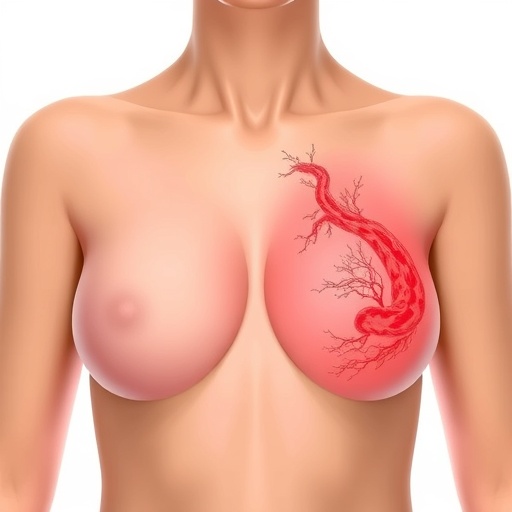
In the United States, breast cancer remains a formidable health challenge, with statistics showing that one in eight women will receive a breast cancer diagnosis during their lifetime. Approximately half of these patients undergo mastectomies, often opting for immediate or delayed breast reconstruction surgery to restore breast contour and improve quality of life. These reconstructions frequently involve the implantation of breast prostheses. However, the clinical journey following such reconstructive procedures is complicated by a notable incidence of infections around these implants, contributing to significant morbidity. Postoperative infections can require prolonged courses of intravenous antibiotics and, in many cases, the surgical removal of the implant, leading to additional surgeries, interruptions in ongoing cancer treatments, and considerable psychological and financial stress for patients already burdened with a cancer diagnosis.
Recognizing these challenges, researchers at Washington University School of Medicine in St. Louis have developed a novel diagnostic approach aimed at early detection of infections in patients who have undergone breast reconstruction with implants. This pioneering tool leverages the identification of specific biomarkers present in fluid drained from the surgical sites, allowing clinicians to detect infections well in advance of the visible clinical symptoms such as erythema, swelling, and tenderness. By diagnosing infections preemptively, there is the potential to initiate targeted treatments that preserve the integrity of breast implants, reduce the need for disruptive and costly surgeries, and ultimately improve patient outcomes and well-being.
The research initiative was led by Dr. Jeffrey P. Henderson, a professor in the John T. Milliken Department of Medicine at WashU Medicine. Dr. Henderson and his team focused on the discovery of infection biomarkers within postoperative fluid samples collected from reconstruction patients. These biomarkers—small molecules known as metabolites—were analyzed with powerful metabolomic methodologies to identify molecular signatures that reliably predicted infection days or even weeks before conventional clinical signs emerged. This strategy represents a transformative shift from traditional infectious disease diagnostics, which depend heavily on symptomatic presentation that often occurs after infection has become well-established and more difficult to treat.
Metabolomics is a cutting-edge field that examines thousands of small molecules generated or modified by biological processes within the body. During infection, both host immune responses and microbial metabolism produce distinct metabolites that can serve as early indicators of pathogenic invasion and tissue response. By applying sophisticated analytical techniques such as mass spectrometry, the Washington University team was able to detect nuanced chemical changes in the wound exudate. These metabolic fingerprints offered an unprecedented window into the evolving infection status of patients undergoing breast reconstruction, providing a molecular “early warning system” with significant clinical utility.
This research was inspired by observations from Dr. Margaret A. Olsen, a retired infectious disease professor at WashU Medicine, who noted the high occurrence of infections in implant-based breast reconstruction patients across the U.S. Seeking actionable solutions, Drs. Henderson and Olsen engaged with plastic surgeons specializing in breast reconstruction to understand clinical needs and priorities better. Their unanimous request was straightforward yet profound: a reliable, binary diagnostic test—an unequivocal ‘yes’ or ‘no’ result—that could guide treatment decisions swiftly and confidently.
Leveraging combined expertise, the research team gathered postoperative fluid from 50 patients during routine follow-up visits. Among these participants, some eventually developed infections while others did not, affording a direct comparative framework. Comprehensive analysis revealed metabolites strongly correlated with future infection development, sometimes detectable well before any overt clinical manifestations. Notably, certain metabolites also differentiated the severity of infections, thereby informing the potential intensity of therapeutic intervention required, including the possibility of more aggressive antibiotic regimens.
Plastic and reconstructive surgery experts at WashU Medicine, including Dr. Justin M. Sacks, underscored the significance of these findings in clinical practice. Dr. Sacks emphasized that this molecular diagnostic capability aligns with the long-standing goal of proactive infection management. By identifying infected patients early, surgeons can intervene with targeted treatments that reduce implant failure rates and minimize the devastating consequences of infection-related reconstructive failures, ultimately enhancing patient safety and satisfaction.
The prospective application of this technology could materialize as a rapid, point-of-care diagnostic assay adaptable to routine postoperative visits. Dr. Terence M. Myckatyn, a reconstructive surgeon and study coauthor, articulated the dual benefit of such a test: enabling prompt antimicrobial therapy for patients flagged as high risk while simultaneously upholding antibiotic stewardship by sparing uninfected individuals the risks of unnecessary antibiotic exposure. Judicious antibiotic use remains a cornerstone in combating the global crisis of antimicrobial resistance, an issue of paramount concern for all medical disciplines.
Looking ahead, the Washington University team plans further validation studies to solidify the diagnostic accuracy and clinical utility of this metabolite-based test. Subsequent development efforts will focus on translating these research findings into a deployable diagnostic tool subject to rigorous clinical trials. In the longer term, the extensive metabolomic data gleaned from this project could unlock new mechanistic insights into tissue infections, influencing broader surgical infection management paradigms and potentially revealing novel drug targets for prophylaxis or therapy.
Despite advances in surgical techniques and perioperative care, infections remain an intractable challenge in implant-based reconstructions. Conventional methods of infection diagnosis lag behind, often detecting problems only after the inflammatory cascade is well underway. The breakthrough identification of molecular biomarkers that precede symptomatic infection heralds a new era in surgical infectious disease management, offering hope for earlier interventions that can prevent complications before they manifest clinically.
This research exemplifies the power of integrating clinical intuition, surgical expertise, and metabolomic science to solve pressing medical problems. The multi-disciplinary collaboration at Washington University demonstrates how patient-centered innovation can emerge from close interaction between clinicians and researchers. By shifting the paradigm from reactive to proactive infection diagnosis and treatment, this work promises to alleviate the emotional and financial toll on breast cancer survivors and transform the postoperative care landscape.
As the field progresses, the implications of metabolomics may extend beyond breast reconstruction. The principles established here could be adapted to monitor infections related to various implantable devices and surgical sites, enhancing infection control across multiple medical specialties. The molecular signatures uncovered might also serve as blueprints for developing precise therapeutic agents or vaccines tailored to disrupting infection progression at an early stage.
Ultimately, this groundbreaking research underscores the critical importance of early and accurate infection diagnosis in improving reconstructive surgery outcomes. By harnessing the subtleties of metabolite profiles, WashU Medicine researchers have established a promising pathway toward robust, predictive diagnostics that could become standard-of-care, offering tangible benefits to patients, clinicians, and healthcare systems alike.
News Publication Date: 23-Dec-2025
Web References: DOI link
References:
Wildenthal JA, Olsen MA, Tran HD, Robinson JI, Myckatyn TM, Warren DK, Brandt KE, Tenenbaum MM, Christensen JM, Tung TH, Sacks JM, Anolik RA, Nickel KB, Fujiwara H, Mucha PJ, Henderson JP. Small molecule correlates of infection precede infection diagnosis in breast implant reconstruction patients. Journal of Clinical Investigation. Feb. 16, 2026. DOI: 10.1172/JCI192104.
Cite Scienmag News
Nathaniel Bowman. (February 6, 2026). New Technique Detects Early Signs of Infection Following Breast Cancer Reconstruction. Scienmag. https://scienmag.com/new-technique-detects-early-signs-of-infection-following-breast-cancer-reconstruction/
Nathaniel Bowman. "New Technique Detects Early Signs of Infection Following Breast Cancer Reconstruction." Scienmag, 6 February 2026, https://scienmag.com/new-technique-detects-early-signs-of-infection-following-breast-cancer-reconstruction/. Accessed 5 September 2026.
Nathaniel Bowman. "New Technique Detects Early Signs of Infection Following Breast Cancer Reconstruction." Scienmag. February 6, 2026. https://scienmag.com/new-technique-detects-early-signs-of-infection-following-breast-cancer-reconstruction/


