


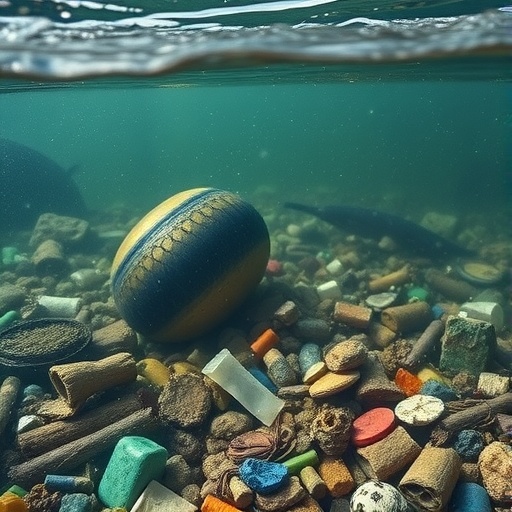
Nearly half of the world’s aquatic environments suffer from significant pollution, revealing a critical global challenge in maintaining the health of our planet’s water systems. A comprehensive study, analyzing data spanning a decade and covering six continents, brings to light that 46% of these environments are categorically “dirty” or “extremely dirty.” This striking finding is the result of an extensive meta-analysis of over 6,000 records detailing waste contamination in rivers, estuaries, beaches, and mangroves worldwide.
Conducted by a team from the Federal University of São Paulo’s Institute of Marine Science (IMar-UNIFESP) in Brazil, the research was coordinated by Ítalo Braga de Castro and led by doctoral candidate Victor Vasques Ribeiro. Their meticulous work involved scrutinizing scientific articles published between 2013 and 2023, employing the Clean-Coast Index (CCI) — a globally recognized metric designed to quantify the density of solid waste in coastal environments. Their observational synthesis was recently published in the Journal of Hazardous Materials, underscoring the urgency of addressing marine litter on a broad geographic scale.
While Brazil emerges as a focal point due to the significant number of monitoring records, this does not equate to better environmental quality. Remarkably, approximately 30% of Brazil’s coastal zones were classified as dirty or extremely dirty based on the rigorous CCI criteria. The mangrove ecosystems of Santos, Brazil, stand out alarmingly as some of the most heavily polluted in the world, emphasizing the vulnerability of these critical ecological zones to anthropogenic impacts.
The study’s global scope reveals a sobering uniformity in the composition of aquatic litter, showing little variation despite vast cultural, economic, and geographic differences. Plastics dominate the waste profile, accounting for a staggering 68% of recorded debris, with cigarette butts making up roughly 11%. The persistence of plastics in the environment is particularly troubling; these materials fragment into micro- and nanoplastics, which are transported by ocean currents to remote locations, thereby perpetuating pollution on a planetary scale.
Cigarette butts present another insidious threat, releasing upwards of 150 toxic substances into aquatic ecosystems. Their prevalence is not only a testament to widespread littering but also poses a significant risk to aquatic flora and fauna, affecting biodiversity and ecological resilience. The rarity of pristine, entirely waste-free aquatic areas further highlights the pervasiveness of this pollution crisis.
A notable aspect of the research is the demonstration of the positive impact of protected environmental areas. Analyzing data from 445 protected territories across 52 countries, the team confirmed that legal protection effectively reduces waste contamination, often by as much as sevenfold. Approximately half of these protected zones were classified as clean or very clean, standing as testaments to the benefits of environmental stewardship and regulated human activity.
Despite these protections, a substantial 31% of protected areas still suffer from dirty or extremely dirty conditions, revealing that boundaries alone are insufficient barriers against pollution’s relentless advance. This fact underlines the growing pressures of human activity within and around safeguarded environments, necessitating more robust enforcement and management strategies.
Perhaps one of the most revealing findings of the study concerns the “edge effect” observed at the periphery of conservation units. By assessing the proximity of contamination sampling points to the boundaries of protected regions, the researchers found that waste accumulates predominantly along these edges. This phenomenon reflects the spillover effects of adjacent urbanization, tourism, and the transport of litter by rivers and ocean currents, indicating that the health of protected areas is deeply interconnected with surrounding human activities.
The vulnerability of these boundary zones suggests a dire need for integrated territorial management strategies, including the establishment of buffer zones and enhanced policy enforcement extending beyond formal conservation borders. Such approaches could mitigate the influx of external pollutants, thus safeguarding the ecological integrity of protected habitats.
Crucially, the study links contamination data with socioeconomic indicators using the Global Gridded Relative Deprivation Index (GRDI). This approach revealed a nonlinear relationship in unprotected areas, where pollution initially increases with economic development but diminishes once nations achieve higher infrastructural and governance capacities. Contrastingly, within protected environments, development paradoxically correlates with increased contamination, signaling that management efforts have yet to match the growing socio-economic pressures.
The implications for global waste governance are profound. Combating waste contamination — particularly that of persistent plastics — demands coordinated interventions across the production chain. This involves curbing manufacturing outputs, optimizing waste collection and recycling infrastructures, and forging binding multilateral agreements to prevent the transboundary movement of refuse. Without systemic reforms in these domains, the conveyance of waste across oceans and borders will only exacerbate.
In this context, the study offers invaluable insights directly pertinent to ongoing international negotiations, including the Global Plastic Treaty and the Kunming-Montreal Global Biodiversity Framework. By providing robust, data-driven evidence, the research equips policymakers and environmental advocates with scientifically grounded arguments essential for effective decision-making and global cooperation.
This investigation was supported by the São Paulo Research Foundation (FAPESP), which provided a regular research grant to Ítalo Braga de Castro, a postdoctoral fellowship to Leonardo Lopes Costa, and a doctoral scholarship to Victor Vasques Ribeiro. Their collaborative work represents a crucial contribution to understanding and addressing the multifaceted challenges of aquatic pollution on an international stage.
News Publication Date: 8-Nov-2025
Web References:
https://agencia.fapesp.br/56473
http://dx.doi.org/10.1016/j.jhazmat.2025.140422
Cite Scienmag News
Courtney Benton. (February 6, 2026). Nearly 50% of Global Aquatic Ecosystems Severely Polluted by Waste, New Report Reveals. Scienmag. https://scienmag.com/nearly-50-of-global-aquatic-ecosystems-severely-polluted-by-waste-new-report-reveals/
Courtney Benton. "Nearly 50% of Global Aquatic Ecosystems Severely Polluted by Waste, New Report Reveals." Scienmag, 6 February 2026, https://scienmag.com/nearly-50-of-global-aquatic-ecosystems-severely-polluted-by-waste-new-report-reveals/. Accessed 4 September 2026.
Courtney Benton. "Nearly 50% of Global Aquatic Ecosystems Severely Polluted by Waste, New Report Reveals." Scienmag. February 6, 2026. https://scienmag.com/nearly-50-of-global-aquatic-ecosystems-severely-polluted-by-waste-new-report-reveals/


