


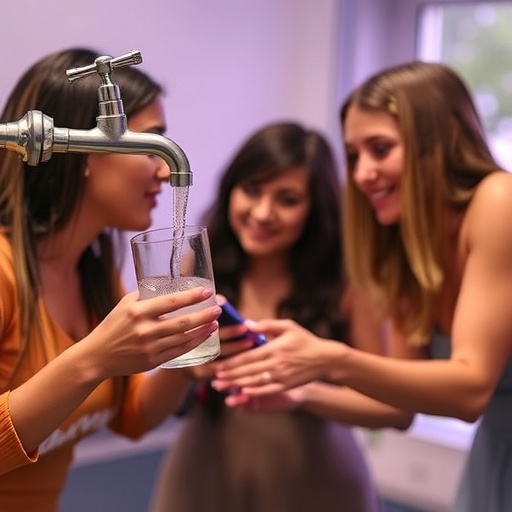
In an era marked by the urgent challenges posed by climate change and the relentless depletion of water resources, delivering safe and sustainable water supplies to sprawling urban centers has become a pressing concern for public authorities worldwide. As populations continue to rise and water scarcity intensifies, traditional approaches to water sourcing and distribution demand significant reevaluation. Within this complex landscape, one solution has emerged as particularly promising yet paradoxically underutilized: the integration of recycled tap water into metropolitan water supply systems. Despite its proven safety and environmental sustainability, recycled tap water encounters a formidable barrier—not in technology or regulation, but in the psychological sphere of consumers’ instinctive resistance.
An international research initiative led by the Universitat Oberta de Catalunya (UOC) has recently brought to light groundbreaking insights into overcoming this resistance. At the heart of this innovation is a marketing strategy often associated with consumer goods rather than public utilities: influencer marketing. The study, spearheaded by Professor Inma Rodríguez-Ardura of the UOC’s Digital Business Research Group (DigiBiz), reveals that influencers on social media platforms, especially Instagram, wield a unique capacity to shape mental images through sensory and emotional content. This technique proves demonstrably more effective than traditional rational appeals when it comes to altering perceptions and encouraging acceptance of recycled tap water within urban contexts.
Recycled tap water, unlike bottled water or freshly sourced tap water, is produced through advanced treatment of wastewater, which is then reintroduced into the municipal water network. This water undergoes rigorous purification processes ensuring its safety and quality. However, an inherent “yuck factor” persists psychologically, rooted in an unconscious association of recycled water with contamination and uncleanliness. The UOC study, incorporating data from 800 Instagram users based in Barcelona and Phoenix, underscores that this visceral rejection is less to do with actual health risks and more closely tied to how the water is perceived and emotionally processed by consumers.
Traditional communication campaigns have typically relied on the dissemination of scientific data, infographics, and logical arguments stressing collective environmental benefits and cost savings. Yet, Professor Rodríguez-Ardura points out that these efforts consistently fall short of fully engaging the public. The abstract nature of sustainability, detached from immediate sensory experience, limits consumer motivation. Herein lies the power of influencer marketing: by transforming abstract concepts into emotionally charged and sensory-rich narratives, influencers help bridge the cognitive-emotional divide, making sustainability tangible and desirable.
The psychological framework underpinning this phenomenon is mental imagery—the mind’s ability to conjure vivid, sensory-rich experiences of events, objects, or feelings without direct external stimuli. Social media influencers harness this by crafting content that prompts spontaneous and elaborated mental imagery. Spontaneous imagery surfaces effortlessly, triggered by simple yet evocative stimuli such as videos showing an influencer enjoying recycled tap water on a sunny day. This content can automatically evoke sensations of freshness and refreshment, bypassing the need for elaborate rationalization. In contrast, elaborated imagery requires conscious reflection, such as calculating the environmental savings yielded by choosing recycled water.
One of the pivotal discoveries of the study is the sheer dominance of hedonic and sensory content over purely informative material in shaping mental imagery. While rational information lays the groundwork for understanding, emotional and sensory cues ignite desire and behavioral change. The strategic deployment of such content by influencers effectively dismantles psychological barriers by repositioning recycled tap water as a satisfying, refreshing, and enjoyable choice rather than a last resort born of necessity.
Further psychological depth in the study is provided through the concept of “transportation”—a state where individuals become deeply immersed in a narrative, experiencing it as though they are present within the story itself. Mental imagery serves as a critical trigger for this immersive experience. When consumers are transported into the influencer’s narrative, critical defenses are lowered, making them more receptive to the message and cultivating an enduring emotional connection. This immersive engagement enables consumers to metaphorically “taste” the benefits of recycling water, fostering favorable attitudes even before any actual physical consumption.
This interplay between mental imagery and transportation is especially vital, given the sensitive nature of recycled tap water as a societal issue. The emotional storytelling approach activates the consumer’s senses and feelings, creating a transformative experience that transcends mere information absorption. As a result, emotional resonance replaces skepticism, paving the way for sustainable shifts in water consumption habits.
Public institutions responsible for water supply and management stand to gain substantially by incorporating these insights into their outreach and education strategies. The research strongly advises moving beyond fact-based communication towards crafting campaigns that emphasize sensory appeal and emotional engagement. By deploying influencers skilled in evoking positive sensory experiences—highlighting the crisp taste, the refreshing quality, or the vitality associated with drinking recycled tap water—authorities can drive deeper acceptance and behavioral change.
Professor Rodríguez-Ardura emphasizes that public bodies must actively help consumers to envision and feel the positive properties of recycled tap water. This might take the form of influencer-generated content featuring idyllic outdoor activities, healthy lifestyles, and moments of refreshment centered around drinking water. The goal is to make the consumption experience emotionally attractive, seamlessly integrating the idea of recycled water into the consumer’s daily life and aspirations.
Beyond the domain of urban water management, the implications of this research extend into numerous other areas characterized by psychological resistance to beneficial public health or environmental measures. The UOC research team is expanding investigations into factors such as the authenticity and credibility of influencers, audience identification, and the balance between informative and hedonic messaging. Early indications suggest that activating mental imagery and transportation mechanisms may also prove effective in campaigns to encourage vaccination, recycling, climate action, and other socially critical behaviors.
The essence of this communication paradigm lies in making the intangible palpable and the abstract concrete. Instilling sustainable behavior, whether related to water, health, or environmental conservation, turns on the ability to evoke positive sensory experiences that trigger emotional buy-in. This shift from logic to feeling marks a new frontier in public engagement strategies.
Aligned with the UOC’s mission on digital transition and sustainability, the research contributes directly to the achievement of key United Nations Sustainable Development Goals, specifically SDG 6 (Clean Water and Sanitation) and SDG 12 (Responsible Consumption and Production). Strategically harnessing the power of mental imagery and influencer narratives offers a compelling template for future sustainability efforts worldwide.
The UOC’s interdisciplinary research ethos, encompassing over 500 researchers across digital, social, and environmental domains, reflects the pressing need for innovative approaches that marry technology, psychology, and societal challenges. Platforms such as the UOC’s Hubbik initiative further foster knowledge transfer and entrepreneurship, accelerating the translation of research insights into impactful, real-world applications.
This pioneering study not only reframes recycled tap water from a source of consumer hesitation to a symbol of desirable and responsible consumption but also underscores the potential of digital media and emotional storytelling as transformative tools in sustainability and public health communication.
News Publication Date: (Not explicitly provided in the text)
Web References:
- Universitat Oberta de Catalunya (UOC): https://www.uoc.edu/en
- UOC Digital Business Research Group (DigiBiz): https://recerca.uoc.edu/grupos/37376/detalle?lang=en
- DOI link to research article: https://doi.org/10.1108/BFJ-07-2025-0882
- British Food Journal: https://www.emerald.com/insight/publication/issn/0007-070X
References:
Rodríguez-Ardura, I., Meseguer-Artola, A., Ammetller, G. (2025). “Influencer marketing, mental imagery, and the sustainable consumption of recycled tap water.” British Food Journal. DOI: 10.1108/BFJ-07-2025-0882.
Cite Scienmag News
Sloane Callahan. (February 4, 2026). Leveraging Influencers to Promote Tap Water Consumption: A Science Perspective. Scienmag. https://scienmag.com/leveraging-influencers-to-promote-tap-water-consumption-a-science-perspective/
Sloane Callahan. "Leveraging Influencers to Promote Tap Water Consumption: A Science Perspective." Scienmag, 4 February 2026, https://scienmag.com/leveraging-influencers-to-promote-tap-water-consumption-a-science-perspective/. Accessed 4 September 2026.
Sloane Callahan. "Leveraging Influencers to Promote Tap Water Consumption: A Science Perspective." Scienmag. February 4, 2026. https://scienmag.com/leveraging-influencers-to-promote-tap-water-consumption-a-science-perspective/


