


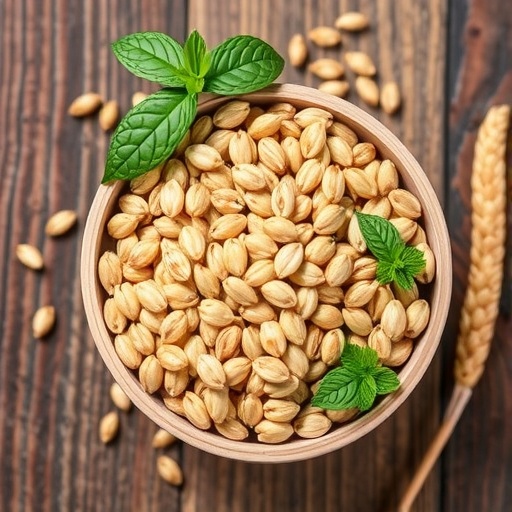
In an era where global malnutrition continues to loom as a profound health challenge, particularly in developing nations, researchers are intensifying efforts to enhance the nutritional profile of staple crops. New findings have emerged that offer a breakthrough in the battle against micronutrient deficiencies, particularly concerning the essential minerals iron and zinc, which are vital for various physiological functions in the human body. The focus of this groundbreaking research lies in phytic acid (PA), a major phosphorus storage compound found in cereal grains, including globally significant crops like rice and wheat.
Phytic acid is notorious for its ability to chelate, or bind, essential minerals, thereby inhibiting their absorption in the gastrointestinal tract. As a result, individuals consuming diets high in PA-rich grains often experience inadequate mineral intake, which can lead to serious health issues such as anemia, impaired cognitive function, and increased susceptibility to infections. This chemical interaction underscores the importance of addressing phytic acid content in agricultural crops, aiming to enhance the bioavailability of crucial micronutrients.
One enzyme, in particular, has emerged as a pivotal player in the biosynthesis of phytic acid: myo-inositol 3-phosphate synthase 1 (INO1). As the first key enzyme in the PA biosynthetic pathway, INO1 effectively dictates the levels of phytic acid present in grains. Through the regulation of this enzyme, researchers can theoretically modulate PA levels, potentially alleviating the adverse effects associated with excessive phytic acid content. However, traditional genetic modification approaches to downregulate INO1 often result in reduced seed germination rates and impaired early plant growth, posing a significant hurdle to the cultivation of viable crops.
In response to these challenges, a pioneering study has utilized a plant chemical biology approach that targets INO1 with the goal of decreasing phytic acid levels in rice and wheat without sacrificing seedling vigor. The research team embarked on an ambitious screening program, evaluating over 1,000 distinct chemical compounds for their ability to inhibit INO1 function. This strategic methodology aimed not only to find effective inhibitors but also to maintain or enhance the overall growth and reproductive success of the plants involved.
The researchers meticulously conducted biophysical and biochemical assessments to hone in on candidate compounds capable of modifying INO1 activity. The positive outcomes from these screenings were encouraging. When applied to developing seeds in the reproductive structures—panicles in rice and spikes in wheat—the selected compounds demonstrated a remarkable capacity to significantly reduce PA content in the grains, indicating a promising pathway toward breeding low-PA crops.
The significance of this research extends beyond mere scientific curiosity; it represents a tangible leap toward mitigating nutritional deficiencies on a global scale. By producing cereals with reduced phytic acid content, the availability of essential minerals like iron and zinc is enhanced, offering a potential solution to malnutrition that can be adopted widely across food systems. This study not only sets a precedent within the realm of agronomic research but also aligns with broader efforts, both public and private, to improve farmer livelihoods and foster food security.
Furthermore, the innovation represented in this study may catalyze a shift in agricultural practices. As countries grapple with feeding growing populations while simultaneously addressing health concerns linked to nutrition, the successful implementation of low-PA crops could spur changes in crop breeding methodologies. Supporting farmers in transitioning to these modified crops could lead to increased acceptance of agri-tech solutions within rural communities, empowering them to make choices that enhance both harvest quality and health outcomes.
Additionally, the findings underscore the versatility and efficacy of utilizing chemical biology as a tool for crop improvement. There’s potential for extending these methodologies to other food crops beyond rice and wheat, offering a roadmap for the future of agricultural biotechnology focused on human health. The impact of such advancements can be profound, unlocking pathways to healthier diets and, ultimately, improved community health outcomes.
This research reflects the confluence of science, agriculture, and public health, collectively aiming at eradicating global micronutrient deficiencies. As governments and international organizations recognize the importance of nutritional security, research endeavors such as these contribute crucially to developing innovative solutions tailored to the needs of vulnerable populations worldwide. The potential benefits of reduced phytic acid content go beyond individual dietary health—they signify a strategic move toward a more resilient agricultural landscape.
Public advocacy for nutrition-rich crops will play a critical role in driving awareness and ensuring the adoption of these new technologies. Collaborative partnerships among farmers, scientists, and health professionals will be essential for maximizing impact. By continuing to foster interdisciplinary dialogues, stakeholders can harness the combined expertise to ensure that the strides made in laboratories translate effectively into the fields where they are most needed.
In conclusion, the chemical inhibition of INO1 represents a promising avenue for reducing phytic acid in rice and wheat grains, thus enhancing the bioavailability of essential minerals. This research not only provides a potential groundbreaking solution to prevalent micronutrient deficiencies but also emphasizes the importance of integrating scientific innovation into agricultural practices. As the narrative around nutrition continues to evolve, initiatives like these remind us that the intersection of crop science and nutritional health holds the key to sustainable food systems that nurture both people and the planet.
Akabane, T., Kamino, S., Okamura, T. et al. Chemical inhibition of INO1 reduces phytic acid in rice and wheat grains for enhanced micronutrient bioavailability.
Nat Food (2026). https://doi.org/10.1038/s43016-026-01295-3
Cite Scienmag News
Daisy Hatcher. (February 4, 2026). Chemical INO1 Inhibition Boosts Micronutrients in Grains. Scienmag. https://scienmag.com/chemical-ino1-inhibition-boosts-micronutrients-in-grains/
Daisy Hatcher. "Chemical INO1 Inhibition Boosts Micronutrients in Grains." Scienmag, 4 February 2026, https://scienmag.com/chemical-ino1-inhibition-boosts-micronutrients-in-grains/. Accessed 3 September 2026.
Daisy Hatcher. "Chemical INO1 Inhibition Boosts Micronutrients in Grains." Scienmag. February 4, 2026. https://scienmag.com/chemical-ino1-inhibition-boosts-micronutrients-in-grains/


