


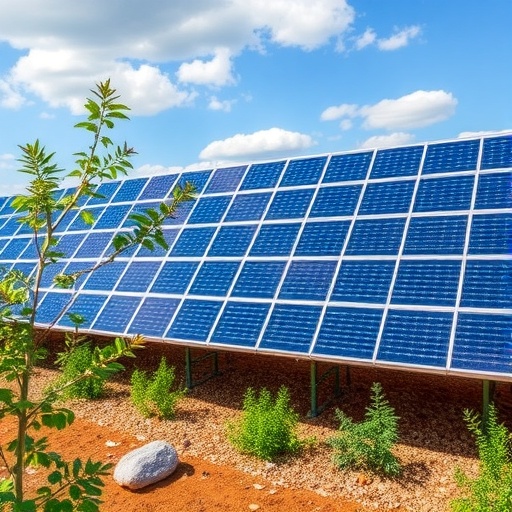
As the global urgency to combat climate change intensifies, the role of renewable energy technologies, particularly silicon photovoltaics (PV), has never been more critical. In a groundbreaking study set to reshape the energy landscape by 2035, researchers Willis, Rigby, Pain, and their collaborators have rigorously analyzed how we can maximize environmental savings through the manufacturing excellence of silicon-based solar panels. Their work, published in Nature Communications, offers a visionary roadmap to enhance the sustainability of solar energy, spotlighting innovation potential in every step of the production chain.
Silicon photovoltaics remain the cornerstone of global solar power generation, owing to their relative efficiency, scalability, and cost-effectiveness. However, the manufacturing process carries substantial environmental footprints, from high energy consumption to the use of hazardous chemicals and significant material waste. The study examines how anticipated advances in manufacturing technologies, material efficiencies, and circular economy principles could drastically reduce these impacts, thus magnifying the net positive effects of solar PV deployment.
A central innovation described in the research is the transition from conventional energy-intensive processes to next-generation manufacturing techniques powered predominantly by renewable energy sources. By 2035, the silicon solar industry is predicted to shift fundamentally toward green manufacturing plants, utilizing self-generated solar and wind power to operate wafer production, doping, metallization, and module assembly. This decarbonization of manufacturing energy inputs forms the cornerstone of the environmental savings strategy.
Material efficiency emerges as an equally important factor. The team reveals that advancements in silicon wafer thickness optimization and improved crystal growth methods can significantly reduce raw material consumption. Thinner wafers, produced without compromised performance or durability, imply less polysilicon usage, which is notoriously energy-intensive to extract and purify. This reduction not only curtails carbon emissions linked to material production but also minimizes the volume of chemical waste.
In the chemical processing stages, the study underscores the potential of substituting hazardous solvents and etchants with eco-friendlier alternatives. Novel chemical formulations with lower environmental toxicity are already under development, promising major strides toward safer, less polluting manufacturing lines. Additionally, process recycling and solvent recovery systems are highlighted to close the loop on chemical usage, significantly reducing emissions and effluents.
Recycling of end-of-life photovoltaic modules represents a transformative opportunity. The researchers emphasize the importance of designing panels with recyclability in mind, facilitating the extraction and reuse of silicon, glass, and metal components. By 2035, the deployment of sophisticated recycling facilities is projected to enable substantial recovery rates, drastically lowering the need for virgin materials and diminishing landfill waste. This circular economy approach promises a virtuous cycle reinforcing environmental sustainability.
Another focal point is the integration of lifecycle assessment (LCA) frameworks tailored to the evolving manufacturing landscape. The research team proposes dynamic LCA models that account for future technology learning curves, policy changes, and evolving energy grids. Such models provide granular insights enabling manufacturers and policymakers to identify hotspots and optimize environmental outcomes proactively throughout the entire supply chain.
The interplay between technological innovation and regulatory incentives is critically explored. Strategic policy mechanisms, including carbon pricing, green manufacturing subsidies, and end-of-life mandate regulations, are identified as essential enablers for scaling these environmental improvements. This policy-technology nexus is crucial in overcoming economic barriers and accelerating adoption of sustainable manufacturing practices across the industry.
Energy storage and system integration advances also indirectly contribute to maximizing environmental savings from silicon PV manufacturing. The study suggests that improvements in module reliability and efficiency reduce the frequency of replacements and degradation-related waste, amplifying savings. Furthermore, integrating smart manufacturing systems capable of real-time monitoring helps optimize resource use and reduce operational emissions.
Economic modeling within the study reveals a compelling business case for early investment in sustainable manufacturing enhancements. Savings derived from lower energy costs, reduced material consumption, and waste handling expenditures significantly offset initial technology transition expenses. This economic viability promotes a self-reinforcing dynamic where environmental responsibility aligns with profitability.
The researchers draw attention to regional disparities, noting that environmental gains will vary based on geographical factors such as energy grid composition, labor cost, and regulatory frameworks. Tailored strategies for different countries and manufacturing hubs are recommended to harness local strengths while addressing unique challenges. This localized approach ensures equitable and efficient global progress toward cleaner silicon PV production.
Emerging trends in automation and digitization also feature prominently as enablers of environmental savings. Advanced process controls, AI-driven optimization, and predictive maintenance promise to minimize resource waste and energy overuse. The integration of Industry 4.0 principles into silicon PV manufacturing can revolutionize efficiency paradigms, enabling real-time adaptation and rapid learning.
The projected impact of scaling these combined technologies and strategies is staggering. The report forecasts a potential reduction of up to 80% in carbon emissions associated with silicon PV manufacturing within the next decade and a half. This dramatic decrease enhances the overall lifecycle sustainability of solar energy significantly, making it an even more powerful lever in the global clean energy transition.
Importantly, the study calls for intensified collaboration across academia, industry, and government sectors to realize these environmental savings. Multidisciplinary partnerships are deemed essential to overcoming technical barriers, standardizing best practices, and driving widespread implementation. Increased investment in research and innovation is highlighted as a vital catalyst.
Finally, this comprehensive vision for silicon photovoltaics manufacturing to 2035 not only elevates environmental performance standards but also invites a broader philosophical shift. It challenges the renewable energy sector to consider the entire value chain’s ecological footprint, promoting a holistic sustainability paradigm that balances accelerated deployment with responsible production.
As the solar revolution unfolds, Willis, Rigby, Pain, and colleagues have charted a path that harmonizes technological progress with ecological stewardship. Their findings illuminate the immense potential for silicon photovoltaics to lead not only in clean energy generation but also in environmentally responsible manufacturing, setting a new benchmark for industries worldwide committed to sustainable futures.
Cite Scienmag News
Denise Maddox. (February 3, 2026). Maximizing Environmental Gains in Silicon PV Manufacturing by 2035. Scienmag. https://scienmag.com/maximizing-environmental-gains-in-silicon-pv-manufacturing-by-2035/
Denise Maddox. "Maximizing Environmental Gains in Silicon PV Manufacturing by 2035." Scienmag, 3 February 2026, https://scienmag.com/maximizing-environmental-gains-in-silicon-pv-manufacturing-by-2035/. Accessed 5 September 2026.
Denise Maddox. "Maximizing Environmental Gains in Silicon PV Manufacturing by 2035." Scienmag. February 3, 2026. https://scienmag.com/maximizing-environmental-gains-in-silicon-pv-manufacturing-by-2035/


