


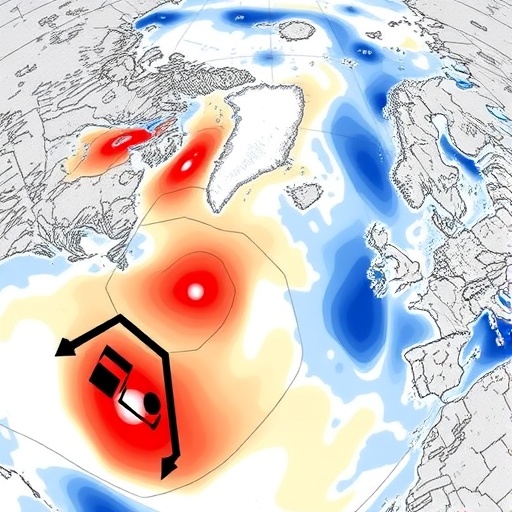
In a groundbreaking study, researchers have unveiled compelling evidence suggesting that the El Niño-Southern Oscillation (ENSO) was significantly intensified by the discharge of icebergs from the North Atlantic during Heinrich stadial 1. This phenomenon, which occurred roughly 15,000 years ago, has been thrust into the spotlight through the collaborative work of a team led by prominent scientists including Yseki, Turcq, and Gutiérrez. The results of the research not only deepen our understanding of historical climate dynamics but also raise crucial questions about the interplay between fresh water discharges and global climate systems.
The study highlights a pivotal moment in Earth’s climatic history when massive amounts of freshwater from melting icebergs dramatically altered oceanic currents, thereby affecting atmospheric conditions. This research offers a fascinating glimpse into how past climate events can inform current climate models, particularly in understanding the multifaceted interactions of ocean and atmosphere driven by similar processes. By utilizing a combination of sediment core samples and advanced paleo-climatic reconstructions, the research team was able to correlate iceberg discharges with alterations in ENSO patterns, illustrating a complex web of interactions that have long been the subject of scientific inquiry.
ENSO is one of the primary drivers of global climate variability, influencing weather patterns across the globe. When warm and cold phases of ENSO, known respectively as El Niño and La Niña, engage with external forces such as increased freshwater from melting ice, the consequences can cascade through various climate systems. The researchers in this study meticulously documented how the introduction of fresh water from the North Atlantic during Heinrich stadial 1 intensified these oscillations, resulting in amplified weather events, shifts in rainfall patterns, and extended climatic anomalies.
The discharge of icebergs, primarily resulting from the melting of the Laurentide Ice Sheet, acted as a major driver of ocean stratification, which subsequently influenced the Atlantic Meridional Overturning Circulation (AMOC). Changes in the AMOC’s strength and position played a critical role in orchestrating the climatic responses evaluated in this research. By examining historical data, the team established a robust linkage between iceberg discharges and periods of heightened El Niño activity, prompting a reevaluation of assumptions about past and contemporary climate processes.
Climate scientists have long debated the underlying mechanisms that govern the relationship between freshwater discharges and broader climate systems. This study aids in clarifying these mechanisms while bringing to light the more extensive implications they hold for today’s climate challenges. With ongoing concerns about modern ice melt and potential shifts in currents caused by climate change, findings from this research provide a historic lens through which the consequences of similar scenarios can be anticipated.
Further, the investigation underscores the importance of integrating paleo-climate data into current climate models. The historical context provided by this study illuminates how similar processes could emerge in today’s context, providing vital information for predicting potential weather extremes under future warming scenarios. The research team’s advancement of methodologies for analyzing sediment cores has opened new avenues for probing the intricacies of past climate events, positioning their work as a monumental contribution to the field of climate science.
A fundamental aspect of their findings is the discussion surrounding the lasting effects of Heinrich stadials, characterized by significant iceberg discharges. Such events serve as valuable case studies, illustrating how temporary climatic aberrations can have enduring consequences. The researchers argue that understanding these historical patterns can offer crucial insights into assessing the anthropogenic changes affecting oceanic environments today.
This landmark study also raises critical questions about human influence on similar mechanisms. As current events such as glacial retreat and Arctic ice melt continue to evolve, implications for ENSO intensification driven by freshwater inputs are of paramount concern. With the stakes higher than ever, scientists must take heed of historical data to chart a path forward that considers the complexities of these climate interactions.
The significance of the findings cannot be overstated. Climate scientists are grappling with unprecedented levels of greenhouse gas emissions and the resulting consequences on global temperatures and weather patterns. By establishing a deeper understanding of past climate phenomena, researchers aim to mitigate the impact of current developments that could otherwise spiral into environmental catastrophe. Recognizing the historical parallels provides a framework for developing strategies that address both immediate climate concerns and those anticipated in the coming decades.
In examining the broader implications of this research, it’s clear that interdisciplinary collaboration is essential in addressing climate change. Bringing together paleo-climatologists, oceanographers, and atmospheric scientists ensures a comprehensive approach to understanding and modeling the myriad factors influencing our planet’s climate systems. The insights gained from the intersections of these domains can facilitate improved predictions of how similar dynamics may unfold due to ongoing climate alterations.
Ultimately, the innovative research presented by Yseki, Turcq, and Gutiérrez serves as a clarion call for the scientific community and policymakers alike. To navigate future climate scenarios responsibly, we must harness the lessons of our planet’s past. The exploration of how iceberg discharges bolstered ENSO in previous epochs reveals the intricate and often precarious balance of our climate systems. As we continue to face unprecedented challenges in a warming world, this study illuminates the necessity for informed action grounded in comprehensive climate understanding.
In conclusion, as humanity advances into a future marked by climate volatility, it is essential that we draw lessons from the historical interplay between freshwater discharges and climatic patterns, as elucidated in this study. The research not only enhances our grasp of ancient climate dynamics but also serves as a wake-up call to remain vigilant about the ongoing transformations occurring on our planet. By leveraging historical knowledge, we can better prepare for the uncertain climate realities that lie ahead, ensuring a more sustainable future for generations to come.
Yseki, M., Turcq, B., Gutiérrez, D. et al. El Niño–Southern Oscillation strengthened by North Atlantic Iceberg discharge during Heinrich stadial 1.
Commun Earth Environ (2026). https://doi.org/10.1038/s43247-026-03247-y
Cite Scienmag News
Violet Maxwell. (February 3, 2026). North Atlantic Icebergs Boost El Niño During Heinrich Stadial. Scienmag. https://scienmag.com/north-atlantic-icebergs-boost-el-nino-during-heinrich-stadial/
Violet Maxwell. "North Atlantic Icebergs Boost El Niño During Heinrich Stadial." Scienmag, 3 February 2026, https://scienmag.com/north-atlantic-icebergs-boost-el-nino-during-heinrich-stadial/. Accessed 4 September 2026.
Violet Maxwell. "North Atlantic Icebergs Boost El Niño During Heinrich Stadial." Scienmag. February 3, 2026. https://scienmag.com/north-atlantic-icebergs-boost-el-nino-during-heinrich-stadial/


