


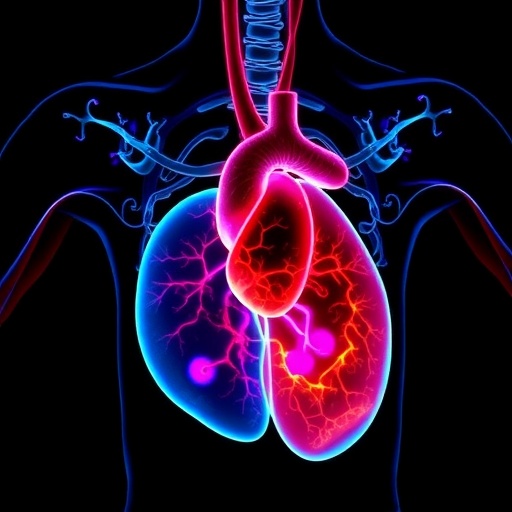
In the realm of pediatric cardiology, the quest to enhance the outcomes and quality of life for children with congenital heart disease has taken a revolutionary turn. A recent study led by Prasad et al. has emerged, integrating advanced machine learning techniques with radiomics to predict Fontan failure and evaluate the severity of Fontan-associated liver disease. This innovative research raises the bar for non-invasive diagnostic methodologies and signals a significant advancement in our understanding of these complex medical conditions.
Fontan surgery, developed for patients with single ventricular physiology, has provided hope for many, allowing them to lead relatively normal lives. However, it comes with its own set of complications, notably Fontan failure and liver disease. These conditions not only challenge the longevity of patients but also complicate their quality of life. The study highlights the urgent need for pioneering predictive tools that would allow clinicians to make proactive decisions, rather than reactive ones, regarding patient care.
Utilizing multi-parametric abdominal MRI, the researchers explored how radiomic features—essentially quantitative data mined from medical images—can serve as robust predictors of clinical outcomes. By applying sophisticated machine learning algorithms, the team was able to analyze vast amounts of data and identify correlations that would likely stay hidden under traditional analytical methods. This approach opens new avenues for early intervention and personalized treatment plans that could significantly impact patient outcomes over time.
The study incorporated a diverse cohort of patients who had undergone the Fontan procedure, emphasizing the importance of a well-rounded dataset. By examining imaging features in conjunction with clinical parameters, the researchers were able to develop models that more accurately reflect the multidimensional aspects of Fontan physiology. This dual focus on imaging and clinical data represents a paradigm shift in how clinicians can assess risk and determine treatment strategies for their patients.
One of the standout findings of Prasad and colleagues was the correlation between specific radiomic features and liver disease severity. In particular, the study noted that certain parameters could predict advanced liver disease long before traditional clinical markers would raise alarms. The implications of this discovery could be far-reaching, allowing for timely interventions that could prevent the progression of liver complications in vulnerable populations.
Moreover, the integration of machine learning has been highlighted as a game-changer in the field of pediatric imaging. The algorithms are not only capable of processing vast datasets but are also constantly refining their predictions as new data becomes available. This adaptability positions machine learning as an invaluable asset in clinical settings where rapid, informed decision-making is crucial.
As the research community delves deeper into this innovative approach, we can expect to see more institutions adopting machine learning as a standard practice for analyzing medical imaging. The potential for these techniques to enhance diagnostic accuracy and the precision of therapeutic interventions cannot be overstated. The traditional methods that have long dominated the field are now increasingly being recognized as insufficient in the face of rapid technological advancements.
In addition to its clinical implications, this research raises important questions regarding the future of personalized medicine. With machine learning algorithms capable of predicting patient-specific outcomes, the healthcare landscape may soon witness a shift towards treatments tailored to individual patient profiles. Such an evolution could democratize high-quality care, making it accessible to a broader spectrum of patients and allowing for more nuanced management of congenital heart diseases.
In a broader context, the collaboration between disciplines—merging imaging, data science, and clinical practice—illustrates the potential benefits of interdisciplinary approaches in healthcare. By fostering environments where specialists in different fields can work together, there is a greater likelihood that innovative solutions will emerge, addressing some of the most pressing challenges facing pediatric cardiology today.
As we await further developments stemming from this research, the findings bridge a significant gap in the current methodologies used in clinical settings. They suggest a future where predictive analytics will support clinicians in managing complex conditions more effectively. With continued research and advancements, the potential to transform the management of Fontan patients and mitigate associated risks appears more promising than ever.
In summary, Prasad et al.’s study illuminates a path forward in the prediction of Fontan failure and liver disease severity through machine learning and advanced imaging techniques. As the fields of artificial intelligence and medical imaging converge, the hope remains that patients’ lives will improve through earlier detection, tailored treatments, and better quality of care. The ongoing dialogue in this area signifies a commitment to accomplish what was previously deemed complex, with the ultimate goal of enhancing patient outcomes.
With continued emphasis on research initiatives and technology integration in clinical practices, the future of pediatric cardiology seems poised for remarkable advancements. The attention garnered by studies like this one highlights not only the significance of technological innovation but also the persistent need for clinical vigilance in the management of congenital heart disease.
As we look ahead, we can expect the impact of these findings to ripple through the healthcare landscape, encouraging a new generation of tools and practices designed to improve the lives of patients facing chronic conditions. The collaboration of technology with expert clinical insight is indeed a thrilling prospect, one that promises a brighter future for children living with congenital heart disease.
Prasad, A., Opotowsky, A., Trout, A. et al. Prediction of Fontan failure and correlates of Fontan-associated liver disease severity using machine learning and radiomic features from multi-parametric abdominal MRI.
Pediatr Radiol (2026). https://doi.org/10.1007/s00247-025-06506-w
Cite Scienmag News
Ophelia Keating. (February 3, 2026). Machine Learning Predicts Fontan Failure and Liver Disease. Scienmag. https://scienmag.com/machine-learning-predicts-fontan-failure-and-liver-disease/
Ophelia Keating. "Machine Learning Predicts Fontan Failure and Liver Disease." Scienmag, 3 February 2026, https://scienmag.com/machine-learning-predicts-fontan-failure-and-liver-disease/. Accessed 4 September 2026.
Ophelia Keating. "Machine Learning Predicts Fontan Failure and Liver Disease." Scienmag. February 3, 2026. https://scienmag.com/machine-learning-predicts-fontan-failure-and-liver-disease/


