


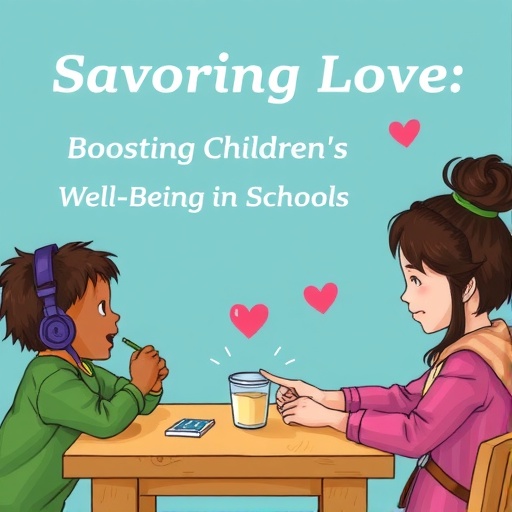
Promoting well-being in children is a critical challenge facing educators, caregivers, and mental health professionals today. A recent study by Camacho et al. seeks to address this by developing an innovative savoring-based intervention tailored for elementary school students. In a world increasingly aware of the mental health crisis among young people, this intervention aims to equip children with the tools necessary to cultivate positive emotions and resilience, fostering an environment where they can thrive academically and socially.
The concept of savoring involves fully experiencing and appreciating positive events or moments, enabling individuals to maximize the feelings of happiness and fulfillment associated with these experiences. The research by Camacho and colleagues is groundbreaking, focusing on how imparting these skills to children can enhance their emotional regulation and overall well-being. The study underscores the importance of harnessing joy and gratitude as foundational elements of a child’s developmental trajectory, potentially transforming the landscape of child mental health interventions.
In developing their intervention, the researchers conducted extensive evaluations of existing psychological frameworks to identify which components were most effective in fostering positive outcomes. They drew from a rich tapestry of psychological research that highlights the benefits of practices such as mindfulness, gratitude, and emotional intelligence. This multidisciplinary approach allowed the authors to create a program that is not only scientifically grounded but also practical for implementation in real-world classroom settings.
One of the most compelling aspects of this study is the incorporation of playful, engaging activities designed to encourage children to savor joyful experiences. These activities include storytelling, arts and crafts, and cooperative games intended to foster social interaction and connection among peers. By embedding savoring techniques into these playful experiences, children are motivated to engage with their emotions while developing stronger bonds with their classmates, thereby creating a supportive academic environment.
The intervention’s structure includes progressively challenging exercises, beginning with simpler tasks designed for younger children and gradually evolving into more complex savoring techniques for older students. This scaffolding approach not only aligns with developmental psychology principles but also allows for differentiation in the classroom, ensuring that all students, regardless of their emotional maturity, can participate and benefit from the intervention. The researchers believe that this adaptability is essential for achieving widespread success across varied educational contexts.
In preliminary trials, the savoring-based intervention has shown promising results in enhancing students’ emotional well-being. Participants reported increased feelings of happiness and less anxiety, with educators observing improved classroom behavior and engagement. These findings underscore the potential efficacy of savoring as a psychological tool in reducing stress and promoting resilience among young learners. The researchers highlight that by fostering an emotional connection to positive experiences, students can enhance their coping strategies, which is particularly crucial in navigating the pressures of contemporary education.
To ensure the sustainability of the intervention, the study includes recommendations for training teachers and parents in savoring techniques. Empirical studies have repeatedly highlighted the importance of the adult-environment in modeling positive emotional behaviors. By empowering educators and caretakers with the skills to reinforce these practices at home and school, the intervention is positioned to create a lasting impact on the emotional development of children.
Moreover, this initiative aligns with national and global efforts to prioritize mental health in educational policy. As educational institutions begin to recognize the integral role psychological well-being plays in learning and academic success, the need for effective interventions like this is more critical than ever. This research could serve as a blueprint for educational reforms aimed at creating healthier, happier learning environments, thereby improving academic outcomes on a broader scale.
Another intriguing dimension of the study is its exploration of cultural factors that influence how children savor their experiences. The authors are cautious to note that while their intervention is grounded in universal psychological principles, cultural contexts shape how emotions are expressed and appreciated. Future research will investigate these cultural nuances, allowing for the potential adaptation of the intervention to cater to diverse student populations and create inclusive practices that resonate across various backgrounds.
The ultimate goal of this study extends beyond individual student success; it seeks to cultivate a generation that values emotional intelligence as much as academic achievement. As children learn to appreciate the good moments in life intentionally, they can foster a lifelong habit of gratitude and mindfulness, equipping them with tools that benefit their overall mental health. This proactive approach promises to nurture happier, more resilient adults, reversing the alarming trends in mental health issues observed among adolescents.
In conclusion, Camacho et al.’s research represents a significant step toward addressing the growing mental health crisis among children. Their savoring-based intervention not only provides an exciting new tool for educators and mental health professionals but also places emotional well-being at the forefront of childhood development strategies. As society grapples with increasing rates of anxiety and depression among young people, initiatives such as this one are essential for nurturing not only well-adjusted students but also compassionate future leaders.
As this intervention begins to roll out in schools, it will be crucial to monitor its effectiveness and adapt it based on feedback from participants. Ongoing research will also be necessary to evaluate its long-term impact and scalability, ensuring that as many children as possible benefit from these transformative practices. This study marks a hopeful turning point in how we address children’s mental health in educational settings, with potential implications that could resonate for generations to come.
In summary, the integration of savoring techniques into educational curricula emphasizes the essential role of emotional learning. By proactively teaching children how to appreciate life’s joyful moments, this intervention sets the foundation for a healthier, more emotionally intelligent generation equipped to face life’s challenges with resilience.
Through continued exploration and implementation of research-based interventions like the one developed by Camacho and her team, the future of child mental health looks increasingly promising. The time is ripe for educators and policymakers to embrace innovative strategies aimed at bolstering children’s well-being. With evidence-backed approaches, we can significantly improve the educational experience, ensuring that it is not just about academic excellence but also about nurturing healthy, well-rounded individuals.
Cite Scienmag News
Glenn Wilkins. (February 3, 2026). Savoring Love: Boosting Children’s Well-Being in Schools. Scienmag. https://scienmag.com/savoring-love-boosting-childrens-well-being-in-schools/
Glenn Wilkins. "Savoring Love: Boosting Children’s Well-Being in Schools." Scienmag, 3 February 2026, https://scienmag.com/savoring-love-boosting-childrens-well-being-in-schools/. Accessed 3 September 2026.
Glenn Wilkins. "Savoring Love: Boosting Children’s Well-Being in Schools." Scienmag. February 3, 2026. https://scienmag.com/savoring-love-boosting-childrens-well-being-in-schools/


