


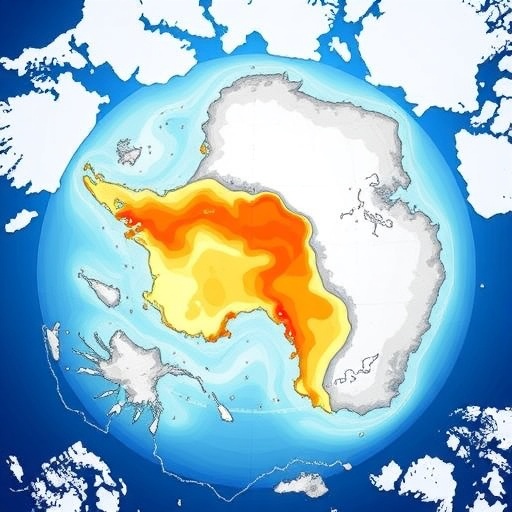
In recent years, the scientific community has been captivated by the dynamics governing the Antarctic ice mass balance. A groundbreaking study published by Kolbe et al. in Commun Earth Environ brings to light compelling evidence that atmospheric rivers, coupled with winter sea ice conditions, have instigated a reversal in the longstanding trend of ice mass loss in Antarctica. This phenomenon is pivotal, as it allows for a deeper understanding of both climatic shifts and the broader implications for global sea levels.
Antarctica has been a focal point of climate research, drawing attention to its vast ice sheets and their role in global sea-level rise. Traditionally, the narrative has revolved around the continuous loss of ice mass from the continent due to the impacts of warming temperatures. However, recent observations challenge this assumption, suggesting that certain climatic events, specifically atmospheric rivers and variations in sea ice, could be playing a counteracting role.
Atmospheric rivers—long, narrow regions in the atmosphere that transport moist air—have been increasing in frequency and intensity. These systems are capable of dumping vast amounts of precipitation over regions like Antarctica. The study by Kolbe and colleagues identifies how these rivers, by delivering moisture, can precipitate significant snowfall over the ice sheets, thus contributing positively to ice mass. This influx of snow, particularly during critical winter months, is crucial for countering the effects of melting in the warmer seasons.
Furthermore, winter sea ice plays a vital role in insulating the ice sheets from warmer ocean waters. When sea ice forms, it provides a barrier that can reduce the rate of melting from the ocean side, which is a critical factor influencing overall ice stability. The researchers found that the increase in sea ice extent during certain winters has provided an unexpected protective influence on the ice shelves surrounding Antarctica, effectively slowing the rate of ice loss during those periods.
The implications of this study stretch far beyond the icy continent itself. As melted ice from Antarctica contributes to rising sea levels, understanding the mechanisms that could mitigate these losses is crucial. The reversal of ice mass loss, even if temporary, offers a glimmer of hope in the fight against climate change, suggesting that natural variability can still play a role in this dire narrative.
However, it is important to note the temporal nature of these findings. The processes that Kolbe et al. highlight bring attention to the idea that while certain climatic phenomena may offer short-term gains, the overarching trend of global warming continues unabated. The interplay between atmospheric rivers and sea ice, while impactful, may not be sufficient to counteract the broader warming trends driven by anthropogenic influences.
In addition to the immediate implications for ice mass, this research contributes to a growing body of literature that stresses the complex interconnectivity of climatic systems. Researchers anticipate that ongoing studies will elucidate how these atmospheric phenomena interact with other climatic elements, such as ocean currents and temperature changes, further refining our understanding of how to model future ice mass trends.
The study’s findings also call into question previously held assumptions about the direct relation between temperature rise and ice loss. While it remains clear that temperatures will continue to rise due to climate change, recognizing that there are periods where natural systems can act to mitigate some of these losses is a vital aspect of climate resilience strategies.
Importantly, these discoveries underscore the essential nature of continued atmospheric and cryospheric research. As scientists work to develop predictive models, understanding how atmospheric rivers might evolve due to climate change is imperative. The future work in this area will need to consider how the frequency and intensity of these moisture-laden systems might influence ice dynamics as warming continues.
The study by Kolbe and colleagues provides a refreshing perspective amidst a concerning narrative. It illustrates that although climate change presents formidable challenges, there are elements within the natural system that can contribute to counteracting some of the negative impacts. This research not only serves to enhance our understanding of Antarctic ice dynamics but also emphasizes the importance of continued observational and modeling efforts.
Expectations now push forward towards international collaborations, where scientists worldwide can pool their resources and data. Such cooperative efforts could prove instrumental in developing comprehensive models that reflect both local and global climatic interactions. By sharing their findings, researchers aim to promote better-informed policy decisions regarding climate action and mitigating strategies.
Ultimately, this research paves the way for more nuanced dialogue surrounding climate resilience and adaptation. As we stand at the precipice of potential ecological tipping points, studies like Kolbe et al.’s can guide us in navigating the complex challenges presented by climate change. With ongoing technological advancements and agile research methodologies, the scientific community is better equipped than ever to tackle these pressing issues.
As this study garners attention, it will likely galvanize discussions around the importance of observing and understanding regional climatic phenomena. For policymakers, the findings may serve as a clarion call to prioritize funding and support for climate research, ensuring that understanding atmospheric dynamics is as much a part of the climate agenda as reducing greenhouse gas emissions.
The dynamics of the Antarctic ice sheets will remain a crucial battleground in the fight against climate change. As we witness the interplay of atmospheric rivers and winter sea ice, we must remain vigilant and agile in our response strategies, ensuring that humanity adapts and mitigates to forge a sustainable future.
In conclusion, Kolbe et al.’s findings provide a refreshing reminder that while the narrative around climate change is often filled with despair, there are moments of complexity and even hope. The multifaceted nature of climate systems is a reflection of our planet’s resilience, one we must strive to understand and protect, particularly as we move into an uncertain climatic future.
Kolbe, M., Torres Alavez, J.A., Mottram, R. et al. Atmospheric rivers and winter sea ice drive recent reversal in Antarctic ice mass loss.
Commun Earth Environ (2026). https://doi.org/10.1038/s43247-026-03242-3
Cite Scienmag News
Russell Cooper. (February 3, 2026). Antarctic Ice Mass Loss Reversal: Atmospheric Rivers & Sea Ice. Scienmag. https://scienmag.com/antarctic-ice-mass-loss-reversal-atmospheric-rivers-sea-ice/
Russell Cooper. "Antarctic Ice Mass Loss Reversal: Atmospheric Rivers & Sea Ice." Scienmag, 3 February 2026, https://scienmag.com/antarctic-ice-mass-loss-reversal-atmospheric-rivers-sea-ice/. Accessed 3 September 2026.
Russell Cooper. "Antarctic Ice Mass Loss Reversal: Atmospheric Rivers & Sea Ice." Scienmag. February 3, 2026. https://scienmag.com/antarctic-ice-mass-loss-reversal-atmospheric-rivers-sea-ice/


