


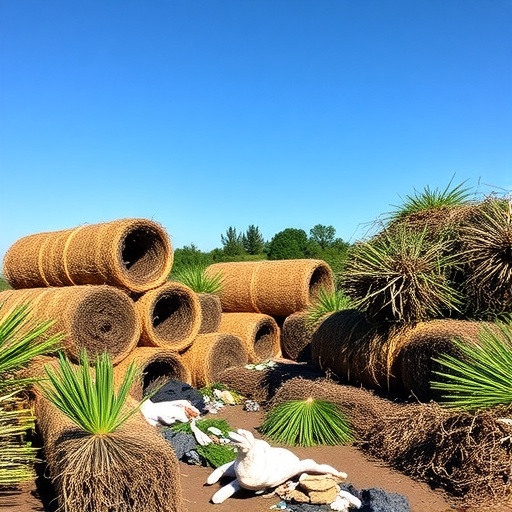
In recent years, the world has witnessed a growing concern over sustainability and waste management, especially in the context of construction and engineering sectors. One innovative approach to addressing these issues is the utilization of agricultural waste as a resource for board and panel engineering. In a groundbreaking bibliometric review published in 2026, researchers Sharma, Kishore, and Nakkeeran have shed light on how these sustainable material transitions can revolutionize the industry. Their work not only delves into the ecological and economic ramifications of using agricultural by-products, but it also underscores the importance of interdisciplinary collaboration in achieving sustainable development goals.
The study highlights that agricultural waste, often regarded as a nuisance, possesses an abundance of potential. Materials such as straw, husks, and wood residues have long been discarded or incinerated, leading to environmental degradation. However, the review elucidates how these materials can be converted into valuable resources by employing innovative engineering techniques. By transforming what was once considered waste into usable materials, the construction industry can significantly reduce its carbon footprint while promoting a circular economy.
One of the critical findings of the review is the efficacy of various processing techniques that can be applied to agricultural waste. The authors provide a comprehensive analysis of methods such as pyrolysis, gasification, and mechanical compaction, all of which play vital roles in processing waste into high-quality materials for board and panel production. Pyrolysis, for instance, not only serves to decompose the organic material but also produces biochar, a substance that can enhance soil quality—a dual benefit that aligns with environmental conservation objectives.
Furthermore, the authors emphasize the importance of standardization in the production processes of these sustainable materials. They argue that to achieve widespread adoption within the construction industry, there must be established guidelines and standards that dictate the quality and safety of products derived from agricultural waste. This standardization will not only facilitate acceptance among consumers but also ensure compliance with regulatory frameworks, creating a smoother pathway for innovations in sustainable material development.
The review also sheds light on the economic implications of utilizing agricultural waste in board and panel engineering. By leveraging waste material, companies can potentially reduce their raw material costs significantly. This cost-effectiveness is crucial in a market that frequently faces fluctuations in material prices. Additionally, the research indicates that engaging in sustainable practices may enhance brand reputation, thereby attracting environmentally conscious consumers and investors. These financial incentives can serve as a catalyst for industries to pivot toward more sustainable practices.
Moreover, the authors discuss the rising market trends for bio-based composites. As consumers become more aware of environmental issues, there is a growing demand for eco-friendly products. The study provides evidence that products made from agricultural waste not only meet stringent environmental standards but also perform competently compared to traditional materials. This shift could lead to substantial market opportunities for manufacturers willing to innovate and embrace sustainability as a core value.
In terms of social impact, the article discusses how the transition to using agricultural waste can benefit rural communities. By integrating local agricultural practices with industrial processes, farmers can create new income streams by selling their crop residues. This integration can foster economic resilience and rural development, addressing issues of poverty and unemployment that frequently plague agricultural communities. In essence, the authors argue that the circular economy model proposed could be a game-changer not just for the environment, but for socio-economic landscapes as well.
However, the article does not shy away from discussing the challenges faced in the transition to sustainable materials. One significant barrier is the existing mindset within the engineering and construction sectors, which are often resistant to change. The authors highlight the need for education and awareness campaigns aimed at dismantling the preconceived notions that agricultural waste is inferior to traditional materials. By fostering a culture of innovation and receptiveness, stakeholders can be encouraged to explore the potential of these new materials.
To further support their findings, the researchers employed bibliometric analyses to track the growth of academic and industrial research focused on agricultural waste utilization. They identified key themes and leading researchers in this evolving field, showcasing a vibrant community dedicated to advancing sustainable practices. The insights gleaned from this analysis not only underscore the significance of collaboration but also map out future research directions that may influence policy and industry standards.
As the world increasingly prioritizes sustainability, Sharma, Kishore, and Nakkeeran’s review serves as a clarion call for stakeholders across sectors to recognize the potential of agricultural waste in board and panel engineering. It offers a hopeful vision of a future where products are not merely created but are born from intelligent resource management, emphasizing that the path toward sustainability is paved with innovation, cooperation, and a commitment to holistic solutions.
Ultimately, the article by Sharma et al. is informative and timely, highlighting a practical approach to tackling waste management in a sector that is historically linked to resource consumption and environmental impact. By adopting agricultural waste as a viable material, the construction industry can forge ahead toward a more sustainable, efficient, and economically viable future. The study encapsulates a transformative vision that aligns with global sustainability targets, demonstrating that even in the face of challenges, opportunities abound when we shift our perspective on waste from liability to resource.
A comprehensive understanding of the use of agricultural waste in board and panel engineering sets the stage for future developments and enhancements in material science. The convergence of technology and sustainability heralds a new era of innovation characterized by responsible resource utilization and reduced environmental impact. As the research community continues to explore and document these advancements, the hope remains that the construction industry will emerge not only as a leader in sustainability but also as a cooperative force for global change.
In conclusion, the bibliometric review by Sharma, Kishore, and Nakkeeran marks a significant milestone in the discourse surrounding sustainable material transitions in engineering. Their work exemplifies the interplay between innovation, environmental responsibility, and economic viability. This paradigm shift presents stakeholders with a unique chance to rethink their approach to materials, fostering an industry poised for resilience, growth, and sustainability in the coming decades.
Sharma, P., Kishore, B., Nakkeeran, G. et al. Sustainable material transitions in board and panel engineering through agricultural waste utilization: a bibliometric review.
Discov Sustain (2026). https://doi.org/10.1007/s43621-026-02684-1
Cite Scienmag News
Sloane Callahan. (February 2, 2026). Transforming Boards: Agricultural Waste Drives Sustainability. Scienmag. https://scienmag.com/transforming-boards-agricultural-waste-drives-sustainability/
Sloane Callahan. "Transforming Boards: Agricultural Waste Drives Sustainability." Scienmag, 2 February 2026, https://scienmag.com/transforming-boards-agricultural-waste-drives-sustainability/. Accessed 3 September 2026.
Sloane Callahan. "Transforming Boards: Agricultural Waste Drives Sustainability." Scienmag. February 2, 2026. https://scienmag.com/transforming-boards-agricultural-waste-drives-sustainability/


