


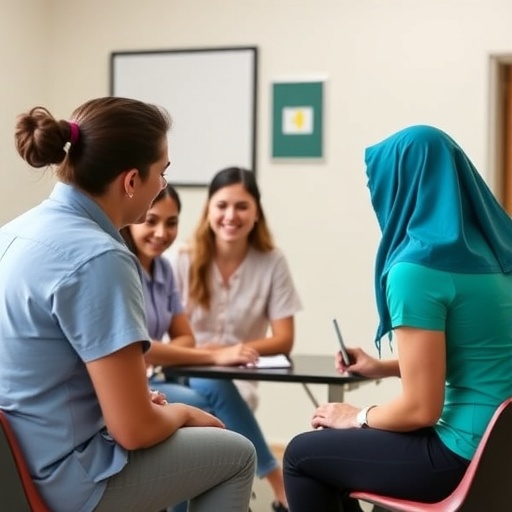
In the realm of medical education, the importance of peer support cannot be overstated. The training of peer supporters in medical schools has emerged as an effective method to enhance student wellbeing, academic performance, and emotional resilience. Recent research conducted by a team from a single-centre medical school provides a comprehensive evaluation of the implementation of peer support training through the lens of Kirkpatrick’s Four-Level model. This innovative approach not only assesses the training process but also highlights the profound impact that peer supporters can have on the educational environment.
The study in question, published in BMC Medical Education, employed a mixed-methods evaluation to understand the efficacy of peer supporter training. The authors—Bovornchutichai, Rojsirikulchai, Puapornpong, and their collaborators—sought to explore both quantitative and qualitative aspects of the training program. By integrating various methodologies, they aimed to capture the nuances of the peer support experience, shedding light on what makes such initiatives successful and how they can be improved.
At its core, Kirkpatrick’s Four-Level model serves as a framework for evaluating training programs across multiple dimensions. The first level pertains to participant satisfaction and reaction to the training. In this study, peer supporters reported high levels of satisfaction with their training, indicating that they found the content relevant and engaging. This initial positive feedback is critical as it sets the foundation for deeper learning and application of skills in real-life scenarios.
Moving on to the second level, which measures learning outcomes, the findings were equally promising. The peer supporters exhibited a marked improvement in their communication and support skills following the training. This enhancement is significant, as effective communication is pivotal in providing emotional and academic support to fellow students. The research indicated that participants not only learned theoretical concepts but also acquired practical skills through interactive sessions and role-playing exercises.
The third level of the Kirkpatrick model evaluates behavior change in the workplace. In the context of this study, this level assessed how well peer supporters were able to apply their newly acquired skills in supporting their peers. Observations and feedback from fellow students highlighted a positive shift in the peer support dynamics within the medical school. Many reported feeling more comfortable seeking help and sharing their challenges, indicating that the peer supporters were effectively fostering an open and supportive environment.
The final level of the Kirkpatrick model examines results and overall impact. While the study was limited to a single-centre medical school, the implications of the findings are far-reaching. The peer support initiative contributed to enhanced student wellbeing and reduced feelings of isolation, which are common in rigorous academic settings. Furthermore, the training itself not only benefited the peer supporters but also had a ripple effect on the broader student body, creating a more collaborative and understanding educational community.
Beyond the statistical data, qualitative feedback provided insight into the personal journeys of the peer supporters. Many expressed a profound sense of fulfillment in their roles, noting that assisting their peers not only reinforced their own learning but also instilled a sense of purpose and belonging. This human element underscores the value of peer support in educational contexts and emphasizes the need for continued investment in such programs.
In addition to the direct benefits experienced by participants, the study highlights the potential for scalability. The successful implementation of this training model suggests that similar programs could be rolled out in other medical schools and educational institutions worldwide. As more schools recognize the significance of mental health and peer support, it is imperative that they invest in training programs that empower students and foster a culture of empathy and collaboration.
Interestingly, the findings of this study align with a growing body of literature suggesting that peer support not only benefits those receiving help but also enhances the emotional and social competencies of the supporters themselves. This dual advantage presents a compelling case for institutional support of peer-based programs, as they cultivate skills that are essential for future healthcare professionals.
While the study’s results are promising, it also raises important questions regarding sustainability and long-term impact. Further research is needed to determine how the effects of peer support training might evolve over time and whether ongoing training and support could yield even greater benefits. As medical education continues to adapt to the evolving landscape of healthcare, the integration of peer support models could prove to be a key element in shaping future practitioners who are not only clinically competent but also emotionally intelligent.
The call for a more supportive educational environment is echoed by numerous organizations and stakeholders within the healthcare sector. As the stigma surrounding mental health issues gradually diminishes, the role of peer supporters may become increasingly vital. Programs that prioritize peer-to-peer support not only address immediate concerns but also contribute to cultivating a future generation that prioritizes mental health and wellbeing alongside clinical excellence.
In conclusion, the exploration of peer supporter training within a medical school context reveals a wealth of opportunities for enhancing educational experiences. By employing Kirkpatrick’s Four-Level model for evaluation, the study sheds light on the multifaceted benefits of such programs, from participant satisfaction to broader impacts on the academic community. As the world of medical education evolves, embracing initiatives like peer support training could very well be the key to fostering resilient, empathetic, and well-rounded healthcare professionals.
Emerging from this research is a clarion call for educational institutions to prioritize and invest in peer support systems. As we move forward in an increasingly complex healthcare landscape, equipping students with the tools and experiences necessary to support one another is not just beneficial—it is essential. The implications of this study serve as an important reminder of the need for supportive networks within medical education, creating a culture where students thrive together rather than merely survive.
As educational leaders consider the findings presented in this research, they must recognize that investing in peer support not only enhances individual experiences but also strengthens the educational fabric of medical schools. The transformative potential of peer support, realized through structured training and evaluation, could pave the way for a more compassionate and effective healthcare system in the future.
The future of medical education beckons a paradigm shift towards nurturing holistic education, where peer support plays a central role. This study serves as a foundational piece of evidence that propels this dialogue forward, highlighting the profound importance of community, collaboration, and emotional support in the journey of becoming a healthcare professional.
To sum up, the evaluation of peer supporter training through Kirkpatrick’s Four-Level model reveals a promising pathway for enhancing student wellbeing and engagement in medical education. The evidence presented underscores the potential of peer support initiatives to create lasting, positive change in both individual lives and the collective academic environment.
As this vital conversation continues, it is imperative for medical schools to embrace innovative strategies that prioritize peer support, thereby cultivating a brighter and more supportive future for healthcare professionals.
Cite Scienmag News
Courtney Benton. (February 2, 2026). Evaluating Peer Supporter Training in Medical Education. Scienmag. https://scienmag.com/evaluating-peer-supporter-training-in-medical-education/
Courtney Benton. "Evaluating Peer Supporter Training in Medical Education." Scienmag, 2 February 2026, https://scienmag.com/evaluating-peer-supporter-training-in-medical-education/. Accessed 4 September 2026.
Courtney Benton. "Evaluating Peer Supporter Training in Medical Education." Scienmag. February 2, 2026. https://scienmag.com/evaluating-peer-supporter-training-in-medical-education/


