


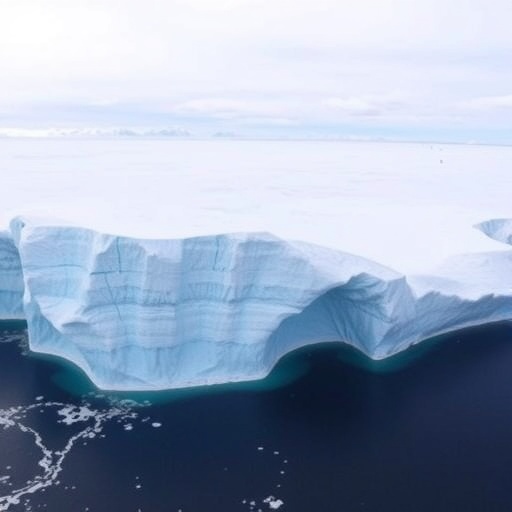
Recent findings published in Nature Geoscience have illuminated a previously unforeseen connection between the West Antarctic Ice Sheet (WAIS) dynamics and carbon uptake in the Southern Ocean, challenging established paradigms about iron fertilization and marine algae productivity. This groundbreaking study reveals that, contrary to prevailing assumptions, greater inputs of iron-rich sediments from icebergs do not necessarily enhance marine algae growth, primarily due to the chemical state of the iron delivered during past interglacial periods.
Central to this discovery is the role of iron as a micronutrient essential for phytoplankton proliferation in the nutrient-limited waters surrounding Antarctica. Historically, scientists have hypothesized that increased iron availability would stimulate algae growth, thereby augmenting the ocean’s capacity to sequester atmospheric carbon dioxide (CO₂). This process is integral to the global carbon cycle and has profound implications for climate modulation. However, sediment core analyses extracted from over three miles below the ocean surface in the Pacific sector of the Southern Ocean have painted a nuanced picture that complicates this narrative.
The research team, led by Torben Struve at the University of Oldenburg and conducted in partnership with the Columbia Climate School’s Lamont-Doherty Earth Observatory, scrutinized the mineralogical composition and bioavailability of iron deposited over successive glacial-interglacial cycles. Contrary to expectations, they observed a temporal mismatch whereby sediment iron peaks corresponded predominantly with warmer interglacial intervals rather than colder glacial periods, when iron-rich dust input was traditionally considered more impactful.
Crucially, the iron associated with icebergs originating from the WAIS exhibited a highly weathered chemical form, significantly reducing its solubility and thus its accessibility to marine phytoplankton. This finding reshapes our understanding of how iron speciation governs biogeochemical feedback loops in polar oceans, revealing that not all iron is equal in stimulating biological carbon uptake. The implications are profound: accelerated melting and retreat of the WAIS could reduce Southern Ocean productivity by introducing iron in less bioavailable forms, potentially weakening the ocean’s role as a carbon sink.
Further geological context reveals the presence of ancient, weathered bedrock beneath the WAIS, which contributes to this novel iron signature. As the ice sheet fragmented during previous warm periods, vast numbers of icebergs transported these refractory iron minerals northward, depositing them in regions south of the Antarctic Polar Front. Such sedimentary evidence suggests that past ice sheet dynamics directly modulated iron input quality, independent of total iron quantity, thereby influencing regional carbon cycling.
This paradigm shift underscores the intricate feedback mechanisms linking cryospheric processes and ocean biogeochemistry. While prior models emphasized dust-borne iron as a major fertilizer during glacial maxima, this study highlights the dominant role of iceberg-borne, weathered iron during interglacials. It reveals the multifaceted nature of nutrient supply pathways and their coupled effects on global climate regulation, especially under scenarios of ongoing anthropogenic warming.
The methodological rigor involved high-resolution geochemical analyses of an extensively dated sediment core, leveraging advances in mineralogical characterization and trace element geochemistry. By comprehensively evaluating iron speciation and correlating it with paleoenvironmental proxies, the researchers could disentangle the complex interactions between glacial dynamics, ocean chemistry, and biological responses over tens of thousands of years.
Looking ahead, these findings portend significant consequences as the WAIS continues to experience thinning and retreat in the present day. The chemical nature of sediments entering the Southern Ocean is expected to mirror those observed in past interglacials, potentially diminishing the region’s biological productivity and its sequestration of atmospheric CO₂. Such a feedback mechanism may exacerbate greenhouse gas accumulation, thereby amplifying global warming trends through weakened oceanic carbon uptake.
Moreover, the study refines projections about the sensitivity of the WAIS to temperature changes, linking large-scale ice loss during the last interglacial period approximately 130,000 years ago to sediment deposition patterns now recovered from the ocean floor. This paleoceanographic perspective enriches our understanding of ice sheet behavior under climatic conditions analogous to those anticipated in coming decades, spotlighting the urgent need to integrate such feedbacks into predictive climate models.
In sum, this research represents a critical advancement in the geochemical and climatological sciences, prompting a reassessment of how polar ice-sheet melt influences marine biogeochemical cycles. It invites further interdisciplinary investigation into the mineralogical controls on nutrient bioavailability and reinforces the intricate dependencies between Earth’s cryosphere and its carbon reservoirs.
News Publication Date: 2-Feb-2026
Web References: DOI link
Cite Scienmag News
Violet Maxwell. (February 2, 2026). Surprising Climate Feedback Connects Antarctic Ice Sheet to Decline in Carbon Absorption. Scienmag. https://scienmag.com/surprising-climate-feedback-connects-antarctic-ice-sheet-to-decline-in-carbon-absorption/
Violet Maxwell. "Surprising Climate Feedback Connects Antarctic Ice Sheet to Decline in Carbon Absorption." Scienmag, 2 February 2026, https://scienmag.com/surprising-climate-feedback-connects-antarctic-ice-sheet-to-decline-in-carbon-absorption/. Accessed 3 September 2026.
Violet Maxwell. "Surprising Climate Feedback Connects Antarctic Ice Sheet to Decline in Carbon Absorption." Scienmag. February 2, 2026. https://scienmag.com/surprising-climate-feedback-connects-antarctic-ice-sheet-to-decline-in-carbon-absorption/


