


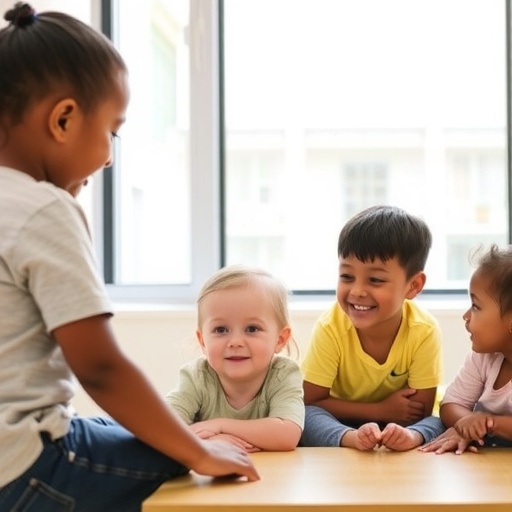
In the realm of early childhood education, the period of transitioning from home to educational settings or between different levels of schooling plays a critical role in the developmental trajectory of young children. Such transitions are not just logistical shifts; they intertwine with children’s emotional, social, and cognitive growth. Recent research by S.T. Vorkapić delves into the essential question of how the quality of these transitions can be enhanced by analyzing significant factors such as children’s attachment styles, temperamental characteristics, and the nature of their relationships with teachers. This exploration is particularly timely given the increasing awareness of the importance of emotional health and stability as foundational elements in educational success.
The idea of transition in early childhood education is multifaceted; it includes moving from home to preschool, from preschool to kindergarten, and eventually into primary school. Each of these transitions presents unique challenges and opportunities for children. Vorkapić identifies that the emotional and psychological adjustments during these periods can significantly influence children’s learning experiences and their overall adaptation to new environments. Understanding the specific influences of attachment and temperament during these critical times can offer educators and parents valuable insights into fostering resilience and adaptability in young learners.
Attachment theory offers a framework for understanding how children’s relationships with their caregivers contribute to their emotional and social development. Securely attached children tend to have better outcomes in various educational settings, displaying higher levels of engagement and lower levels of anxiety. Vorkapić’s analysis suggests that educators should be mindful of children’s attachment styles, incorporating strategies that support children’s emotional needs as they navigate transitions. By paying attention to the security of these attachments, educators can create a more supportive climate that enables children to thrive academically and socially.
In addition to attachment, temperament plays a crucial role in how children respond to changes in their environment. Each child’s temperament—reflecting their individual differences in emotional reactivity, self-regulation, and adaptability—affects their readiness to cope with new experiences. Vorkapić emphasizes the need for differentiated approaches in educational settings that cater to varying temperamental characteristics. For instance, an anxious child may require additional reassurance and gradual exposure to new situations, while a more outgoing child may benefit from social activities that encourage interaction and exploration.
The teacher-student relationship is another significant predictor of successful transitions in early childhood. Vorkapić underscores the importance of cultivating supportive and trusting relationships between educators and children. This relational aspect cannot be overstated; when children perceive their teachers as caring and attentive figures, they are more likely to engage actively in learning and feel secure in their new environments. Furthermore, teachers who are aware of their students’ attachment styles and temperamental traits can better tailor their interactions to meet the diverse needs of their classroom.
Interventions aimed at improving the quality of transitions often require collaboration among teachers, parents, and early childhood professionals. Vorkapić advocates for a holistic approach where the insights gained from understanding children’s individual needs are shared among all stakeholders involved in the transition process. This collaborative effort ensures that strategies are consistent across home and school settings, providing children with a seamless experience as they move between environments.
The findings presented by Vorkapić urge educators to assess not just the academic preparedness of children as they transition but also their emotional readiness. By focusing on the psychological aspects of transition, educators can better prepare children for the challenges of new educational settings. This entails not only preparing students academically but also equipping them with coping strategies and emotional tools necessary for navigating change, thus reinforcing their confidence and resilience.
Vorkapić’s work also highlights the significance of professional development for educators. Training programs that focus on understanding child development, attachment theory, and temperamental diversity can equip teachers with the necessary skills to create effective transitional practices in their classrooms. Ongoing professional development ensures that educators are up-to-date with the latest research and methodologies, which can significantly enhance the quality of early childhood education.
As the discourse around early childhood transitions continues to evolve, the need for further research in this area remains prominent. Vorkapić’s study opens the door for future investigations that examine the long-term effects of quality transitions on children’s academic and social outcomes. A deeper understanding of these dynamics can inform the development of policy initiatives aimed at bolstering support systems for both children and educators during these vulnerable times.
In summary, the quality of transitions in early childhood education is a complex interplay of emotional, social, and educational factors. Vorkapić’s insights remind us that by prioritizing children’s attachment, temperament, and relationships with teachers, we can create educational environments that foster positive transitions. This approach not only benefits children during their early years but sets a foundation for lifelong learning and personal development.
Ultimately, the strategies for improving the quality of transitions in early childhood education require a commitment from all stakeholders involved. Educators, parents, and policymakers must work in concert to develop practices that are tailored to the unique needs of young learners. By placing emphasis on emotional and relational factors alongside academic preparedness, we can enhance children’s educational experiences and promote a flourishing future for all children.
Cite Scienmag News
Courtney Benton. (February 2, 2026). Enhancing Early Childhood Transition Quality: Key Factors. Scienmag. https://scienmag.com/enhancing-early-childhood-transition-quality-key-factors/
Courtney Benton. "Enhancing Early Childhood Transition Quality: Key Factors." Scienmag, 2 February 2026, https://scienmag.com/enhancing-early-childhood-transition-quality-key-factors/. Accessed 4 September 2026.
Courtney Benton. "Enhancing Early Childhood Transition Quality: Key Factors." Scienmag. February 2, 2026. https://scienmag.com/enhancing-early-childhood-transition-quality-key-factors/


