


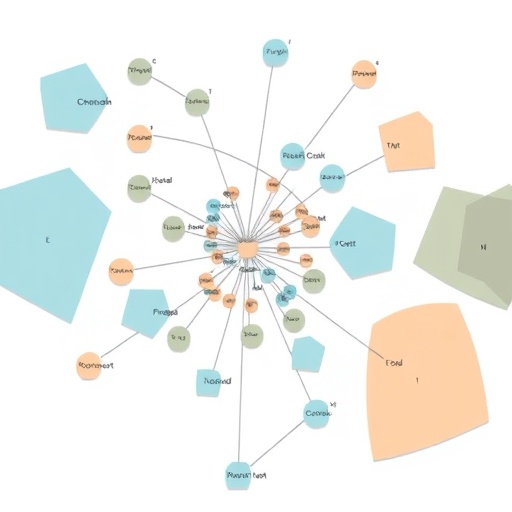
In recent years, the scientific community has grappled with the alarming rise of fraudulent research papers, often produced by entities known as “paper mills.” These operations manufacture low-quality or outright fake scientific studies on an industrial scale, casting a shadow over the integrity of academic publishing. Now, a groundbreaking machine learning tool developed at Queensland University of Technology (QUT) has shed light on the extent of this problem within cancer research, revealing that over 250,000 publications—approximately 10 percent of all cancer studies analyzed—bear the hallmarks of paper mill fabrication.
Led by Professor Adrian Barnett from QUT’s School of Public Health and Social Work and the Australian Centre for Health Services and Innovation (AusHSI), the research team applied advanced natural language processing techniques to scrutinize more than 2.6 million cancer research articles spanning from 1999 through early 2024. Their approach involved training a deep learning model known as BERT, specifically fine-tuned to detect subtle yet distinctive textual fingerprints characteristic of retracted articles that had previously been flagged for suspected fabrication.
This novel methodological framework capitalizes on the premise that paper mills frequently recycle boilerplate templates, creating distinctive patterns in phrasing, syntax, and manuscript structure. By leveraging BERT’s capability to perform contextual text analysis, the model distinguishes suspicious papers with impressive accuracy: it correctly identifies fraudulent-appearing manuscripts 91 percent of the time when validated against known examples. This approach is analogous to crafting a sophisticated spam filter tailored for detecting counterfeit scientific publications.
The investigation’s findings are stark and expanding. The proportion of cancer research papers flagged as suspicious surged dramatically over the last two decades, starting at around one percent in the early 2000s and peaking at an alarming 16.4 percent in 2022. Such trends indicate not only the increased activity of paper mills but also growing entrenchment within the scholarly record. Crucially, these fraudulent papers infiltrate a vast range of journals, including highly selective and prestigious outlets that traditionally enforce rigorous peer review standards.
Beyond sheer volume, the study offers essential insight into disciplinary and cancer subtype vulnerabilities. Fields such as molecular cancer biology and early-stage laboratory research exhibited disproportionately high densities of problematic manuscripts, suggesting that sectors with complex experimental methodologies and high publication pressures may be especially susceptible to paper mill exploitation. Specific cancer types, including gastric, liver, bone, and lung cancers, emerged as hotspots characterized by higher rates of fabricated work, potentially skewing subsequent research efforts and clinical directions.
The larger implications of this pervasive infiltration are profound. Cancer research informs clinical trials, drug discovery pipelines, and ultimately, patient care protocols. The presence of erroneous or fabricated studies within the evidence base risks diverting scientific inquiry, misinforming therapeutic strategies, and undermining trust in biomedical research. Professor Barnett emphasizes that combating this issue is paramount to safeguarding the translational impact of oncology research and accelerating genuine scientific progress.
Several leading scientific journals have already initiated pilot programs, integrating this machine learning screening tool within their editorial workflows. By flagging suspect manuscripts before peer review, editors can more efficiently allocate resources toward rigorous vetting, curtailing the inadvertent publication and dissemination of paper mill products. This preemptive measure marks a significant advancement in editorial quality control, leveraging artificial intelligence to uphold scholarly rigor under mounting publication pressures.
Looking ahead, Barnett and his collaborators plan to refine the model further, incorporating additional confirmed instances of fabricated publications to enhance detection specificity. Moreover, they intend to extend the tool beyond oncology into other research domains vulnerable to paper mill proliferation. Although the system diagnoses potential fabrication through textual analysis, the authors caution that flagged works should undergo thorough human review to corroborate findings and ensure fairness in ethical adjudications.
This landmark study, published in The BMJ, exemplifies the transformative potential of combining machine learning with bibliometric analysis to confront complex challenges in academic publishing. By exposing the invisible networks of paper mills, the research not only highlights the urgent necessity for improved detection mechanisms but also advocates for systemic changes in research evaluation and integrity assurance.
Above all, this innovation underscores a critical principle: as science becomes increasingly reliant on digital data and automated systems, it must also harness these technologies to defend its foundations. The development of a “scientific spam filter” represents a vital step in preserving the trustworthiness and reliability of cancer research literature, thereby protecting both the scientific enterprise and the patients depending on its findings.
Readers interested in exploring this breakthrough can access the full methodological report titled “Machine Learning-Based Screening of Potential Paper Mill Publications in Cancer Research: Methodological and Cross-Sectional Study” via The BMJ, providing an in-depth analysis of the dataset, algorithmic architecture, and validation procedures detailed by the QUT research team.
Cite Scienmag News
Nathaniel Bowman. (February 1, 2026). New Tool Reveals the Vast Spread of Fraudulent Research Impacting Cancer Science. Scienmag. https://scienmag.com/new-tool-reveals-the-vast-spread-of-fraudulent-research-impacting-cancer-science/
Nathaniel Bowman. "New Tool Reveals the Vast Spread of Fraudulent Research Impacting Cancer Science." Scienmag, 1 February 2026, https://scienmag.com/new-tool-reveals-the-vast-spread-of-fraudulent-research-impacting-cancer-science/. Accessed 5 September 2026.
Nathaniel Bowman. "New Tool Reveals the Vast Spread of Fraudulent Research Impacting Cancer Science." Scienmag. February 1, 2026. https://scienmag.com/new-tool-reveals-the-vast-spread-of-fraudulent-research-impacting-cancer-science/


