

In the ongoing battle against cardiovascular disease, which remains the foremost cause of mortality across the United States, a bold new initiative is launching at Florida International University (FIU) this Heart Month. The FIU-Florida Heart Research Foundation Center for Innovation in Cardiovascular Health has been established with the ambitious goal of catalyzing groundbreaking advances in heart disease research, clinical education, and technological innovation. With a transformative $11.7 million endowment from the Florida Heart Research Foundation, this interdisciplinary center uniquely integrates expertise from biomedical engineering, clinical medicine, artificial intelligence, computer science, public health, nursing, and biological sciences. The vision is clear: to elucidate the core mechanistic drivers of cardiovascular pathologies and effectively translate these discoveries into clinically impactful interventions, ultimately improving patient outcomes both locally and globally.
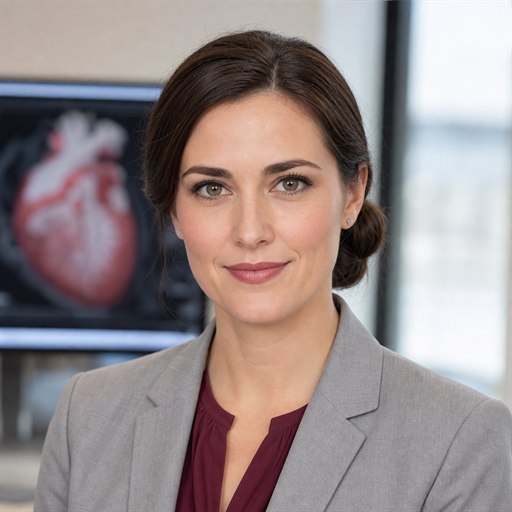
Joshua Hutcheson, a biomedical engineering professor at FIU’s College of Engineering and Computing and an American Heart Association Fellow, stands at the helm as the center’s inaugural director. Hutcheson emphasized the unprecedented scale and multidisciplinary collaboration that defines this initiative. “No entity within the state has undertaken a venture with this degree of integration,” he explained. “By uniting engineers, clinicians, data scientists, and public health specialists around a common mission, we exponentially accelerate innovation. This convergence of talent and timing creates fertile ground for transformative breakthroughs in cardiovascular health.” The center’s cohesion across multiple scientific and clinical domains represents a novel model for advancing cardiovascular medicine, blending cutting-edge AI methodologies with regenerative medicine and population health strategies.
At the heart of the center’s research agenda are innovations in artificial intelligence to refine diagnostic accuracy and create predictive screening tools for early detection of cardiovascular disease. Leveraging vast datasets and sophisticated machine learning algorithms, the team is developing automated systems to analyze complex cardiac signals, such as heart sounds captured via digital stethoscopes. One significant achievement stems from Hutcheson and FIU Research Assistant Professor Valentina Dargam, who have pioneered an AI-powered algorithm capable of identifying pathological heart sounds with remarkable precision. Such advancements promise to democratize access to cardiovascular diagnostics, providing low-cost, scalable solutions capable of deployment in diverse clinical settings, including underserved communities.
In parallel, regenerative tissue engineering represents another pillar of the center’s innovation portfolio. Researchers are utilizing bioengineering approaches to design biomaterials and stem cell therapies that enhance myocardial repair following injury. These efforts aim to address the substantial clinical challenge posed by heart failure and irreversible cardiac damage post-myocardial infarction. By deciphering microenvironmental cues and molecular pathways involved in tissue regeneration, FIU’s scientists strive to create therapeutics that not only halt but reverse cardiac deterioration, a frontier that holds the potential to revolutionize cardiovascular care.
The center also targets the complex interplay of risk factors contributing to cardiovascular disease progression, including diabetes, obesity, and hypertension, especially as Florida’s demographic landscape shifts towards an aging population. Integrating public health perspectives with advanced biostatistical modeling, the researchers focus on understanding social determinants and biological drivers of disease. This holistic approach embraces precision medicine paradigms, tailoring preventive strategies and treatment algorithms to individual risk profiles, thereby enhancing efficacy and reducing health disparities.
Educational outreach and workforce development constitute foundational aspects of the center’s mission. Recognizing the need to cultivate next-generation scientists and clinicians versed in interdisciplinary cardiovascular research, the center funds summer internships for high school students, fellowships for undergraduates and graduate students, and seed grants to empower early-career faculty investigating innovative cardiovascular solutions. This comprehensive pipeline not only strengthens academic-industry linkages but also ensures sustained innovation through mentorship and collaborative networks, fostering a vibrant ecosystem aligned with the evolving landscape of heart health research.
FIU President Jeanette M. Nuñez highlighted the broader significance of the center’s launch, describing it as a “defining moment” for both the university and cardiovascular science in Florida. By strategically uniting diverse disciplines, the center is positioned to drive discovery at an unprecedented scale, channeling those insights into real-world clinical applications. “We are uniquely equipped to tackle complex challenges with rigor and innovation, ultimately delivering tangible health benefits,” she remarked. This commitment underscores the importance of academic institutions as catalysts for translational medicine, bridging basic research and patient-centered outcomes.
The partnership between FIU and the Florida Heart Research Foundation has a proven track record dating back to 2018, resulting in seminal discoveries such as the identification of a small molecule with the potential to reduce and, in some cases, reverse late-stage vascular calcification, a key contributor to cardiovascular morbidity. These foundational findings have laid the groundwork for the center’s expansive research program, underscoring the strategic value of sustained funding and interdisciplinary collaboration in advancing cardiovascular therapeutics.
Nancy Cavalie, executive director of the Florida Heart Research Foundation, lauded the center and FIU team’s work as exemplary. Cavalie emphasized that the establishment of the center is a natural evolution of longstanding collaboration and reflects a shared dedication toward saving lives through innovative research. This external affirmation signals strong alignment between academia, nonprofit philanthropy, and clinical stakeholders, fostering a unified front against cardiovascular disease.
As the incidence of cardiovascular disorders is expected to climb in Florida due to demographic shifts and increasing prevalence of metabolic comorbidities among younger populations, the imperative for new, multifaceted solutions grows ever more urgent. The FIU center positions itself as a hub for pioneering research, addressing these emerging challenges through a synthesis of engineering, medicine, data science, and health policy. This integrated framework holds promise not only for mitigating disease burden within Florida but also for creating scalable models transferrable to other regions facing similar public health crises.
To explore further details on the FIU-Florida Heart Research Foundation Center for Innovation in Cardiovascular Health, interested readers can visit their official website at cich.fiu.edu, which offers insights into ongoing projects, faculty profiles, and collaboration opportunities. Additionally, a comprehensive media asset repository, including images for public dissemination, is available online to assist journalists and stakeholders in promoting awareness about this pioneering research initiative.
Web References: https://cich.fiu.edu/, https://brandfolder.com/s/9k4p47cp7jppj9kpnq4ng23
Cite Scienmag News
Frances Kline. (February 1, 2026). Innovative Research Center Combines AI, Engineering, and Medicine to Combat Heart Disease. Scienmag. https://scienmag.com/innovative-research-center-combines-ai-engineering-and-medicine-to-combat-heart-disease/
Frances Kline. "Innovative Research Center Combines AI, Engineering, and Medicine to Combat Heart Disease." Scienmag, 1 February 2026, https://scienmag.com/innovative-research-center-combines-ai-engineering-and-medicine-to-combat-heart-disease/. Accessed 5 September 2026.
Frances Kline. "Innovative Research Center Combines AI, Engineering, and Medicine to Combat Heart Disease." Scienmag. February 1, 2026. https://scienmag.com/innovative-research-center-combines-ai-engineering-and-medicine-to-combat-heart-disease/


