

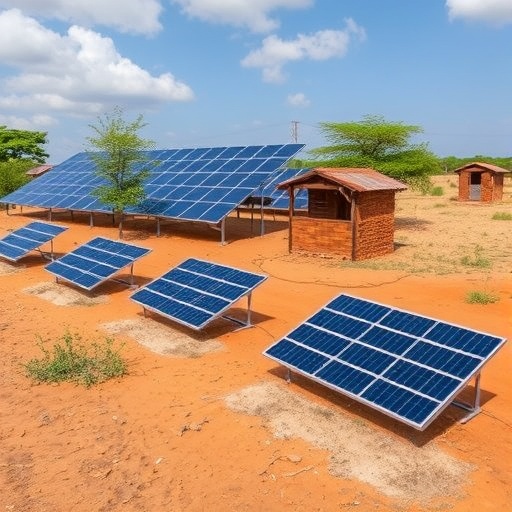
The potential for photovoltaic systems in Sub-Saharan Africa has seen a robust increase in interest in recent years. As global energy demands climb, the necessity for sustainable energy solutions has never been more critical. This growth in interest is buoyed by the abundant sunlight available in many regions of Sub-Saharan Africa, making it an ideal candidate for solar energy solutions. However, despite the favorable conditions for solar energy generation, the region still faces significant barriers related to environmental, technical, and policy constraints.
A recent study authored by Kichonge and Mwakapoma sheds light on the complex dynamics that impact the performance of photovoltaic systems across Sub-Saharan Africa. The research effectively highlights that while the technical capabilities to harness solar energy are available, various external factors play a crucial role in determining how effectively these systems can be implemented and utilized. Understanding these constraints is fundamental to unlocking the region’s solar energy potential.
In terms of environmental challenges, the researchers cite various factors that can influence the efficiency of photovoltaic systems. Dust accumulation on solar panels is one major issue, particularly in arid and semi-arid regions. Frequent sandstorms can significantly diminish the amount of sunlight that reaches solar panels, thereby reducing their overall efficiency. The study suggests that regular cleaning of solar panels is essential, although not always feasible, especially in remote areas where infrastructure may be lacking.
The impact of climate variability cannot be overlooked either. Sub-Saharan Africa is often subjected to extreme weather conditions, ranging from intense rainfall to prolonged droughts. Such variability not only affects the operational capacity of solar systems but also poses long-term risks to their sustainability. As climate patterns become increasingly unpredictable due to global warming, it remains critical for stakeholders to develop adaptive strategies that can enhance the resilience of solar energy solutions in the region.
On the technical front, the study emphasizes the importance of selecting appropriate photovoltaic technologies. There is a myriad of solar technologies available, each with unique advantages and disadvantages. The authors suggest that local conditions—such as geographic location, sunlight intensity, and market readiness—should predominantly guide the choice of technology. Furthermore, the integration of energy storage solutions can alleviate some of the unpredictability associated with solar energy generation, providing a buffer for users when sunlight availability fluctuates.
One of the significant barriers to the adoption of photovoltaic systems in Sub-Saharan Africa is the high initial capital investment. Many households and small businesses find it challenging to afford the upfront costs associated with purchasing and installing solar systems, even though they offer long-term savings on energy costs. As such, financing models need to be developed that can make solar energy accessible, particularly for lower-income households. The study discusses innovative financing mechanisms, such as pay-as-you-go schemes, which have proven successful in other regions.
In addition to financial barriers, the researchers also address the policy environment surrounding renewable energy implementation. Adequate policies and regulatory frameworks are essential for creating a conducive environment for solar energy adoption. This includes incentives for investments in renewable energy, streamlined permitting processes, and assured grid access for solar energy producers. The lack of cohesive policies can hinder private investments, which are crucial for scaling up solar energy deployment across the region.
Public awareness and education about the benefits of solar energy are also pivotal in stimulating demand. The study argues that many potential users lack knowledge about solar technologies and their long-term advantages, resulting in hesitancy to invest in these systems. Educational campaigns that emphasize the economic and environmental benefits of photovoltaic systems could lead to increased acceptance and adoption among communities. As more people become informed about sustainable energy solutions, the demand for solar systems will likely rise.
Kichonge and Mwakapoma also investigate the role of partnerships in accelerating the expansion of photovoltaic systems in Sub-Saharan Africa. Collaboration among governments, non-governmental organizations, and the private sector can lead to the sharing of resources, expertise, and best practices. Such partnerships can pave the way for innovative solutions that address the unique challenges faced in different parts of the region. The collective effort can facilitate a more robust approach toward overcoming technical and policy constraints that currently prevail.
Another crucial aspect of the study is its focus on the social implications of solar energy access. The researchers argue that enhancing access to photovoltaic systems can lead to a multitude of socioeconomic benefits, including job creation, improved health outcomes, and reduced energy poverty. Communities that gain access to reliable energy sources can see improvements in education, healthcare, and overall quality of life. It resonates with the Sustainable Development Goals, underscoring the necessity of achieving energy equity for all.
As the global energy landscape transforms with increasing emphasis on sustainability, Sub-Saharan Africa stands at a vital intersection. The collaborative efforts of stakeholders, together with sound policies and innovative financing solutions, hold the promise of unlocking the solar energy potential that resides in the region. The ongoing research by Kichonge and Mwakapoma not only sheds light on the current challenges but also fosters hope for a future where solar energy becomes a cornerstone of sustainable development in Sub-Saharan Africa.
The performance of photovoltaic systems in this region may very well define how the world views renewable energy’s potential in resource-constrained environments. As highlighted through various environmental, technical, and policy considerations, the pathway to successful implementation requires a multipronged approach that embraces innovation, collaborative efforts, and strong governance. The findings encourage further exploration into adaptive measures and inspire policymakers to prioritize renewable energy infrastructure as a means to drive economic growth while addressing urgent climate challenges.
In conclusion, Kichonge and Mwakapoma’s research serves as a critical reminder of the interplay between technology, environment, and policy in the realm of renewable energy. It urges various stakeholders to think strategically about how to harness sunlight’s power effectively, despite the multifaceted barriers that exist. The transition toward sustainable energy solutions is vital for Sub-Saharan Africa’s future, as the region has the potential to become a leading example of renewable energy innovation on a global scale.
The call for action is clear: to overcome environmental challenges, leverage technology appropriately, create conducive policies, and enhance public awareness—all while fostering collaborative efforts that pave the path toward an energy-sustainable future. Only then can the long-awaited dreams of energy access for all in Sub-Saharan Africa be transformed into a tangible reality.
Subject of Research: Photovoltaic system performance in Sub-Saharan Africa
Article Title: Photovoltaic system performance in Sub-Saharan Africa under environmental, technical and policy constraints
Article References:
Kichonge, B., Mwakapoma, S. Photovoltaic system performance in Sub-Saharan Africa under environmental, technical and policy constraints.
Discov Sustain (2026). https://doi.org/10.1007/s43621-026-02701-3
Image Credits: AI Generated
DOI: 10.1007/s43621-026-02701-3
Keywords: Photovoltaic systems, Solar energy, Sub-Saharan Africa, Environmental impact, Technical constraints, Policy challenges, Renewable energy, Socioeconomic benefits.


