


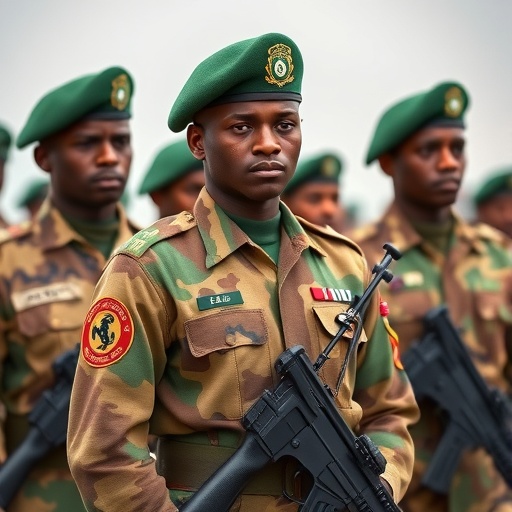
Psychiatric morbidity is a critical concern within military populations worldwide, as it encompasses a range of mental health disorders that can significantly affect the well-being and operational effectiveness of troops. A recent study conducted by Salihu, M.J., Makanjuola, A.B., and Sulyman, D. dives deep into this pivotal subject, focusing specifically on the Nigerian army personnel. By evaluating the socio-demographic and occupational factors that contribute to psychiatric morbidity, the research provides unique insights into the differences experienced by combatant and non-combatant roles within the military framework.
In military life, the psychological impacts of deployment and combat exposure are not uniformly distributed. This study sheds light on the complex interplay of various factors—both demographic and occupational—that shape the mental health outcomes for service members. Combatants often face frontline exposure to violence and trauma, while non-combatants might struggle with different stressors, such as burnout and operational demands specific to their roles. This nuanced perspective is vital for understanding how mental health support can be tailored to meet the unique needs of different personnel within the military.
The researchers utilized a comparative study design, which enabled them to analyze psychiatric morbidity among combatant and non-combatant personnel effectively. By involving a substantial sample size of Nigerian army members, this research adds valuable data to the existing literature on military mental health. The study applied quantitative measures alongside qualitative assessments, resulting in a more holistic view of how psychiatric disorders manifest among these groups.
One of the key findings highlighted in the study is the alarming rates of psychiatric morbidity found among combatants. Due to the nature of their duties, these personnel are often exposed to severe stressors that can lead to conditions such as PTSD, anxiety disorders, and depression. The trauma experienced during combat situations can have long-lasting effects, affecting both personal and professional aspects of their lives. As a consequence, understanding these challenges is paramount to developing targeted interventions and support systems within the military.
In contrast, the study also found significant psychiatric morbidity within non-combatant roles, though the causal factors differed from those experienced by their combatant counterparts. Non-combatants may face occupational stressors including workload, job satisfaction, and the psychological impact of being in a support role during conflicts. These insights challenge the traditional view that reserves mental health issues predominantly to combat experiences, illustrating that non-combatants are equally at risk and require appropriate mental health resources.
Socio-demographic elements such as age, rank, and education level also emerged as crucial components influencing psychiatric health. The study revealed that younger personnel and those with lower ranks tended to report higher levels of morbidity, possibly due to the relative lack of experience and coping strategies. Conversely, more seasoned individuals appeared to have better resilience, thus allowing them to manage the stresses of military life more effectively.
Another significant aspect discussed in the study is the role of social support systems in mitigating psychiatric morbidity. Those personnel who reported strong connections with peers, family, and friends demonstrated significantly lower levels of psychological distress. This finding underscores the importance of fostering environments within the military that promote strong interpersonal relationships, which can serve as protective factors against mental health challenges.
Furthermore, the implications of this study extend beyond immediate military contexts. As the data on psychiatric morbidity among military personnel becomes more robust, there is an increasing understanding of how these issues transcend into civilian life. Many veterans often return to society carrying the invisible scars of combat; thus, addressing their mental health needs is essential for promoting overall community well-being.
To combat the rising concerns of psychiatric morbidity, military establishments must implement comprehensive mental health programs. The insights gained from Salihu and colleagues’ research can play a significant role in shaping such initiatives. By prioritizing mental health awareness and resources, militaries can reduce stigma, promote mental health literacy, and encourage seeking help among personnel, regardless of their roles.
Integrating mental health support within regular training programs is another recommendation derived from this research. It emphasizes that equipping service members with strategies to cope with stressors could bridge the gap between experiencing distress and receiving care. Preventative measures can play a pivotal role in addressing psychiatric morbidity before it escalates into more severe conditions.
Overall, the findings from this comprehensive research by Salihu et al. serve as a wake-up call for military organizations. The need to recognize and address psychiatric morbidity among service members cannot be overstated. The dichotomy between combatant and non-combatant roles necessitates customized health strategies that acknowledge these differences, ultimately paving the way towards healthier military environments and improved mental health outcomes.
As the study paves the way for ongoing conversations about mental health in military settings, it remains essential to continue to research and adapt strategies that respond to evolving needs within the ranks. Developing a robust infrastructure for mental health support will be critical in ensuring that personnel can thrive mentally, emotionally, and socially—in and out of uniform.
This research contributes significantly to the understanding of military psychiatric morbidity in Nigeria and serves as a model for further investigations globally. By focusing on the socio-demographic and occupational factors at play, it aligns with a growing body of work that seeks to amplify mental health issues facing those who serve our nations.
By leveraging the insights gleaned from this study, military technical teams and mental health professionals alike can develop more comprehensive, empathetic approaches to managing mental health concerns, ultimately leading to better outcomes for service members and their families.
Salihu, M.J., Makanjuola, A.B., Sulyman, D. et al. Socio-demographic and occupational factors associated with psychiatric morbidity among Nigerian army personnel: a comparative study of combatant and non-combatant roles.
Discov Psychol (2026). https://doi.org/10.1007/s44202-026-00604-y
Cite Scienmag News
Glenn Wilkins. (January 31, 2026). Psychiatric Issues in Nigerian Army: Roles Examined. Scienmag. https://scienmag.com/psychiatric-issues-in-nigerian-army-roles-examined/
Glenn Wilkins. "Psychiatric Issues in Nigerian Army: Roles Examined." Scienmag, 31 January 2026, https://scienmag.com/psychiatric-issues-in-nigerian-army-roles-examined/. Accessed 3 September 2026.
Glenn Wilkins. "Psychiatric Issues in Nigerian Army: Roles Examined." Scienmag. January 31, 2026. https://scienmag.com/psychiatric-issues-in-nigerian-army-roles-examined/


