


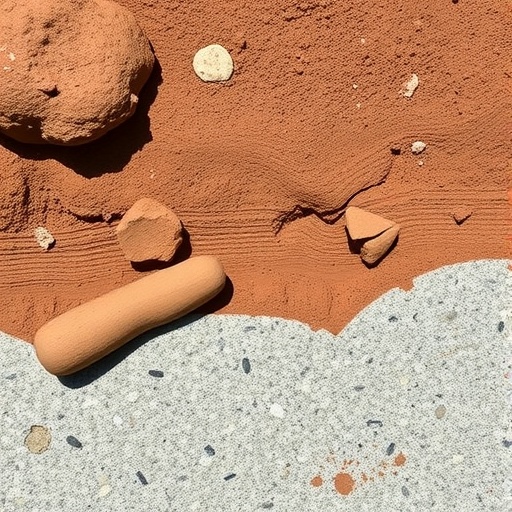
In a groundbreaking study that promises to reshape the future of construction materials, researchers have focused their attention on Agbani clay, a local natural resource, aiming to enhance its structural properties through innovative methods. This research explores the possibility of fortifying Agbani clay with granite, analyzing how these enhancements could lead to more sustainable building practices while addressing regional engineering challenges. The unveiling of properties and potential toxicity associated with this composite material presents significant implications for building services and environmental safety.
The choice of Agbani clay as the primary material for this study stems from its geographical abundance and frequent application in construction within the region. Clay is known for its versatility, but alone, it often lacks the necessary strength and durability for modern engineering demands. By integrating granite, a notably robust material, researchers aimed at creating a composite that stands to perform better under various load conditions while potentially reducing environmental impacts associated with traditional materials.
Granite is a widely available igneous rock that possesses exceptional compressive strength and durability, making it an ideal candidate for enhancing the structural integrity of weaker materials like clay. The research meticulously investigates the proportions of granite mixed with Agbani clay to achieve optimal performance. Through systematic experimentation, key parameters such as compressive strength, tensile strength, and deformation characteristics were recorded, leading researchers to uncover the exact ratios that yield the best results.
Among the various tests conducted, compressive strength assessments revealed that the integration of granite significantly bolstered the clay’s resistance to load, confirming initial hypotheses. The results suggest a potential increase in strength that is beneficial for construction projects, particularly in regions prone to heavy rains, soil erosion, and other geological conditions that traditionally compromise building stability.
In addition to structural enhancements, the study scrutinizes the environmental implications of using Agbani clay mixed with granite. Environmental impact assessments are crucial in the current climate of heightened awareness about sustainability in construction. The research team meticulously analyzed the toxicity levels of the composite material, understanding that any developed material must not only perform well structurally but also pose minimal risk to human health and the environment.
The health considerations associated with building materials cannot be overstated. Heavy metals and toxic substances can leach from construction materials into the surrounding environment, leading to long-term ecological damage. By rigorously testing the toxicity of granite-augmented Agbani clay, the researchers aimed to ensure that the resulting composite would meet safety regulations and contribute positively to sustainable construction practices.
As a part of the characterization process, various analytical methods were employed to assess the physical and chemical properties of both pure Agbani clay and the granite-enhanced composite. Advanced techniques, such as X-ray diffraction and scanning electron microscopy, allowed for an in-depth examination of the microstructure of the materials. This granular analysis provided insights into how the addition of granite alters the material properties at a molecular level, facilitating a more informed approach to its applications in the building industry.
The revelations of this research extend beyond mere material science. They encompass a broader dialogue about the future of building materials in the face of rapid urbanization and the pressing need for environmentally responsible practices. As cities continue to grow, the demand for durable and sustainable materials will only escalate. Incorporating local resources like Agbani clay, combined with enduring materials like granite, builds a strong case for localized sourcing of construction materials.
The implications of these findings stretch across both economic and social dimensions. By sourcing and utilizing locally available materials, communities can reduce their reliance on imported construction resources, which often come with a heavy environmental cost. The potential for job creation in local mining and manufacturing sectors is another aspect that merits attention, as economic development often coincides with sustainable practices.
Furthermore, as nations grapple with climate change impacts, this research supports the shift towards greener construction strategies that prioritize material sustainability and safety. The exploration of alternative composites not only provides viable avenues for enhancing structural performance but also aligns with global targets for reducing carbon emissions associated with traditional building practices.
As the study gains attention from the scientific community and industry stakeholders, it sparks a movement towards rethinking our approach to construction materials. Engaging in discussions about innovative mixtures that utilize local resources is imperative for forging a path towards sustainable building practices. The methodologies, findings, and implications present a robust framework for future research in the field.
In summary, the integration of granite into Agbani clay marks a significant advance in material engineering, promising not only improved structural capabilities but also a commitment to environmental preservation. This study heralds a new chapter in sustainable construction, urging both researchers and practitioners to rethink traditional methods and consider the invaluable resources found in their own backyards. The potential for such materials to shift the landscape of construction away from unsustainable practices is immense, suggesting that the future of building is not only about strength but also about responsibility towards our planet.
As we look to the future, the importance of research like this cannot be overstated. It is through ongoing exploration and innovation that we can hope to meet the challenges of the coming decades. The collaborative efforts presented in this work pave the way for a new era of construction that prioritizes both performance and sustainability — a legacy that will echo through future generations in the realms of building services and beyond.
Egole, C.P., Chinonso, O.U., Onuoha, C. et al. Strengthening of Agbani clay with granite and characterization of its properties and toxicity for applications in building services.
Environ Sci Pollut Res (2026). https://doi.org/10.1007/s11356-025-37372-6
Cite Scienmag News
Violet Maxwell. (January 29, 2026). Enhancing Agbani Clay with Granite: Properties and Safety. Scienmag. https://scienmag.com/enhancing-agbani-clay-with-granite-properties-and-safety/
Violet Maxwell. "Enhancing Agbani Clay with Granite: Properties and Safety." Scienmag, 29 January 2026, https://scienmag.com/enhancing-agbani-clay-with-granite-properties-and-safety/. Accessed 4 September 2026.
Violet Maxwell. "Enhancing Agbani Clay with Granite: Properties and Safety." Scienmag. January 29, 2026. https://scienmag.com/enhancing-agbani-clay-with-granite-properties-and-safety/


