


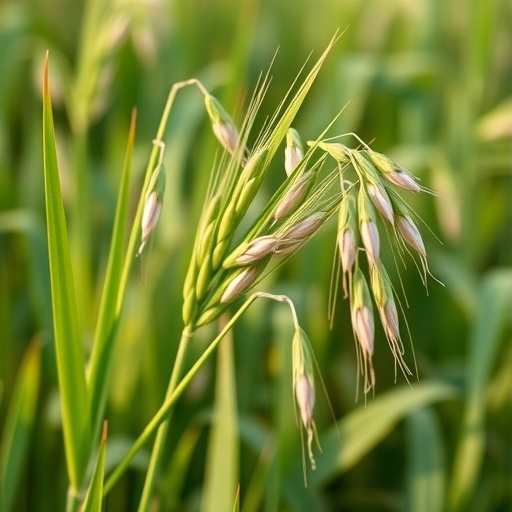
In a groundbreaking study published in BMC Genomics, researchers Li, Liu, and Zhao have undertaken a comprehensive analysis of the NHX gene family in oats, known scientifically as Avena sativa L. This investigation not only sheds light on the complexities of the NHX genes but also highlights their potential impacts on agricultural practices and crop improvement. By delving into the genomic landscape, the study opens new avenues for enhancing oat’s resilience to environmental stresses, which is paramount in today’s changing climate.
The NHX gene family is recognized for its role in ion transport and cellular pH homeostasis, which are critical processes in plant physiology. The identification and profiling of this gene family in oats signal a significant step toward understanding its unique adaptive mechanisms. Previous research has documented the importance of these genes in various plant species, yet this study marks the first extensive genome-wide analysis focusing on oats. Such knowledge not only enriches plant genomic databases but also provides a foundation for future genetic engineering efforts aimed at enhancing oat varieties.
The methodology adopted in the study encompassed sophisticated bioinformatics tools and techniques that allowed for the effective identification of NHX gene sequences within the oat genome. Utilizing transcriptomic data, the researchers were able to profile the expression levels of these genes under different environmental conditions. This approach not only ensured a comprehensive understanding of the NHX gene family’s diversity but also its functional relevance in stress responses such as salinity, drought, and nutrient deficiency.
One of the most remarkable findings is the differential expression patterns of the NHX genes when subjected to various abiotic stresses. By analyzing the expression profiles, the researchers discovered that certain NHX genes were upregulated in response to high salinity, indicating their crucial role in mitigating salt stress. This adaptive mechanism highlights the potential for selective breeding programs that focus on these genes, potentially leading to the development of oat varieties that can thrive in less-than-ideal soil conditions.
Moreover, the study provides insights into the evolutionary history of the NHX gene family, elucidating how these genes have diverged across species. By comparing oat’s NHX genes with those of other monocots, the researchers explored evolutionary conservation and diversification. Such comparative genomics offers a broader context, revealing how particular gene variants contribute to species-specific adaptations. This understanding is vital for crop scientists looking to engineer resilience in cereals, which are staples in human diets worldwide.
Further analysis revealed that several NHX genes were situated within syntenic regions adjacent to other stress-responsive genes. This clustering suggests a coordinated regulation of stress responses, which could be harnessed through molecular breeding techniques. The interplay between these genes could be a key factor in developing multi-stress resilient oat varieties, unlocking the potential for increased yield stability in fluctuating climates.
In addition to genomic identification, the study emphasizes the importance of functional characterization through experimental validation. Advanced techniques such as CRISPR-Cas9 gene editing could be utilized to assess the roles of specific NHX genes and their contributions to salt tolerance. The application of such technologies can reposition oat as a crop of significant value, particularly in regions where saline soils are becoming increasingly common due to climate change.
As the implications of NHX gene exploration unfold, it is important to consider the agronomic traits that growers prioritize. Traits such as drought tolerance, disease resistance, and nutritional content are vital for consumer acceptance and market success. The interrelatedness of NHX genes with these traits offers an integrated approach to crop improvement, where enhanced adaptability goes hand-in-hand with maintaining yield quality.
Furthermore, the researchers have initiated discussions on the future of genomic selection in oats, leveraging the insights gained from their NHX gene study. The continuous advancements in genomic technologies provide an unprecedented opportunity to accelerate breeding cycles and develop robust oat varieties in a fraction of the time it took previously. The prospect of incorporating favorable NHX gene variants into breeding programs promises not only to boost productivity but also to support sustainable agricultural practices.
Public interest in oats has seen a resurgence, driven by their recognized health benefits and versatility. As demand increases, there will be a pressing need to ensure that production methods are sustainable and resilient. The ongoing research into the NHX gene family is thus timely, as it aligns with global efforts to secure food systems while addressing the challenges posed by environmental changes.
In conclusion, the landmark study conducted by Li, Liu, and Zhao represents a significant advancement in our understanding of the NHX gene family in oats. As researchers continue to unravel the complexities of plant genetics, the translational potential for enhancing crop resilience cannot be overstated. The ultimate goal remains clear: to harness genetic knowledge for the benefit of future food security in the face of an uncertain climatic landscape.
The ongoing journey through genomic research illustrates the blend of science and agriculture, where detailed genetic insights pave the way for innovative agricultural practices. With the foundation laid by studies such as this, the future of oat cultivation looks brighter, harnessing nature’s own strategies to tackle the challenges ahead.
Li, Y., Liu, M., Zhao, W. et al. Genome-wide identification and expression profiling of the NHX gene family in oat (Avena sativa L.).
BMC Genomics (2026). https://doi.org/10.1186/s12864-026-12519-y
Cite Scienmag News
Juliet Wilcox. (January 29, 2026). Discovering NHX Gene Family in Oats. Scienmag. https://scienmag.com/discovering-nhx-gene-family-in-oats/
Juliet Wilcox. "Discovering NHX Gene Family in Oats." Scienmag, 29 January 2026, https://scienmag.com/discovering-nhx-gene-family-in-oats/. Accessed 4 September 2026.
Juliet Wilcox. "Discovering NHX Gene Family in Oats." Scienmag. January 29, 2026. https://scienmag.com/discovering-nhx-gene-family-in-oats/


