


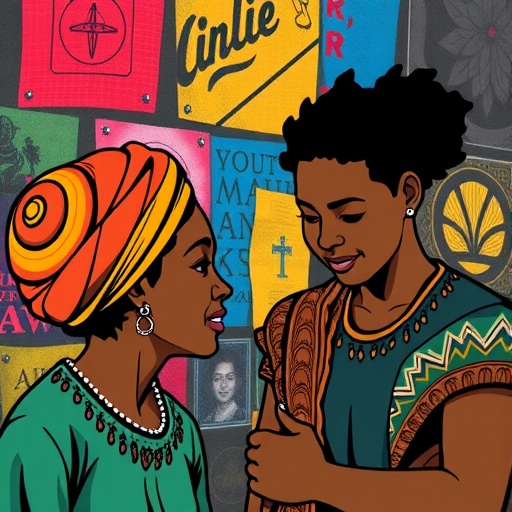
In today’s increasingly interconnected world, the digital landscape has revolutionized the way individuals communicate, share information, and engage with various cultures. In particular, university students represent a unique demographic that is often more susceptible to the influences of misinformation and cultural misunderstandings. Recent research conducted by Sultan and Saleh delves into the intertwining topics of multicultural competence and anti-hoax disposition among university students. Their findings shed light on how these crucial competencies can shape the way students navigate the vast information available online.
Multicultural competence, at its core, refers to an individual’s ability to understand, appreciate, and interact effectively with individuals from diverse cultural backgrounds. In an era where globalization is the norm and digital communication transcends geographical boundaries, this competence is more important than ever. University students, often at the forefront of social change and innovation, are expected to harness this competence in their daily interactions, both in academic settings and wider social contexts.
The proliferation of digital information often brings with it a torrent of misinformation, or “hoaxes.” This phenomenon is particularly problematic amid increasingly sophisticatedways in which fake news and misleading narratives spread online. Sultan and Saleh’s research suggests that building an anti-hoax disposition—a critical attitude toward deception and falsehoods—should be an essential part of university curricula. Such an approach not only safeguards students against falling victim to misleading narratives but also empowers them to challenge falsehoods when they encounter them.
As students delve into their academic lives, they are inundated with a wealth of information across various digital platforms: social media, news websites, and educational forums alike. The challenge is to discern credible sources from dubious ones, a skill that many lack initially. Sultan and Saleh’s study indicates that a strong grounding in multicultural competence can heighten awareness around issues of misinformation, as students become more critical of not just the content they consume but the context in which that content exists.
Furthermore, the emotional intelligence garnered through multicultural competence enhances students’ ability to empathize with individuals from different backgrounds. This empathetic lens can lead to increased collaboration and dialogue among peers, allowing for more meaningful exchanges of ideas. Consequently, students who demonstrate high levels of multicultural competence and anti-hoax disposition are more likely to contribute positively to a campus culture that prioritizes informed discussions.
Technology also plays a key role in this dialogue. As the digital landscape continues to evolve, so too do the tools available for students to critically assess the veracity of the information they consume. Advanced algorithms and machine learning techniques are now employed to detect misinformation and alert users to potential inaccuracies. Sultan and Saleh highlight that incorporating these technological advancements into educational programs could significantly enhance students’ ability to navigate the complexities of information in an interconnected world.
In coherence with the growing emphasis on digital literacy, universities must implement robust training programs tailored to address these issues. Such programs should aim not only to cultivate critical thinking but also to foster comprehensive understanding of multicultural perspectives. By providing students with access to a myriad of cultural contexts, they can hone their analytical skills while simultaneously gaining insights into the experiences of others.
Moreover, the research by Sultan and Saleh is timely, given the escalating concerns surrounding misinformation, especially during critical events like elections, public health crises, and social movements. By fostering an environment of multicultural competence alongside anti-hoax disposition, universities can effectively prepare students to be conscientious consumers of information and proactive global citizens.
The benefits of these educational initiatives extend beyond university walls. As students graduate and transition into workplaces, their ability to effectively communicate with diverse populations becomes invaluable. In a world where workplace diversity grows every day, employers increasingly seek individuals who possess excellent intercultural communication skills and a nuanced understanding of varied perspectives—a direct result of the cultivation of multicultural competence.
In summary, Sultan and Saleh’s research underscores the imperative role of multicultural competence and anti-hoax disposition in shaping the 21st-century student. By fostering these attributes, universities can not only equip students with the necessary tools to combat misinformation but also enrich their educational experiences and workplace readiness.
Through unrelenting dedication to researching the intersection of culture and technology, Sultan and Saleh have provided valuable insights that should prompt a reevaluation of current educational frameworks. Their findings advocate for a comprehensive understanding of how digital literacy interlinks with multicultural competence, ultimately contributing to a more informed and equitable society—a goal worthy of pursuit for both educators and students alike.
The challenges presented by misinformation demand an active and engaged student body capable of discerning truth from falsehood. This is where the convergence of multicultural competence and anti-hoax disposition becomes critical. With institutions of higher learning taking proactive measures to integrate these themes into their curricula, we may foresee a future where students are better equipped to face the complexities of the digitally-driven world.
In conclusion, understanding multicultural competence and developing an anti-hoax disposition are not mere academic exercises; they are essential skills for navigating life in a diverse and information-saturated society. The implications of Sultan and Saleh’s study extend far beyond university campuses, as they contribute to the broader context of fostering a culture of critical inquiry and global understanding.
By underscoring the importance of these competencies, their work highlights a path forward for educators, policymakers, and students alike. This aligns with an urgent need, ensuring that individuals are not only adept consumers of information but also responsible citizens who can engage in meaningful discourse within a vibrant, interconnected community.
With a clear understanding of these dynamics, universities can pave the way for an era of enlightened communication and cultural exchange, ultimately yielding a generation of students prepared to tackle the challenges of a rapidly changing world.
Sultan, Rapi, M. & Saleh, M. Understanding multicultural competence and anti-hoax disposition among university students in the digital landscape. Discov Educ (2026). https://doi.org/10.1007/s44217-026-01177-7
Cite Scienmag News
Courtney Benton. (January 29, 2026). Cultivating Multicultural Competence and Truth-Bias in Students. Scienmag. https://scienmag.com/cultivating-multicultural-competence-and-truth-bias-in-students/
Courtney Benton. "Cultivating Multicultural Competence and Truth-Bias in Students." Scienmag, 29 January 2026, https://scienmag.com/cultivating-multicultural-competence-and-truth-bias-in-students/. Accessed 4 September 2026.
Courtney Benton. "Cultivating Multicultural Competence and Truth-Bias in Students." Scienmag. January 29, 2026. https://scienmag.com/cultivating-multicultural-competence-and-truth-bias-in-students/


