


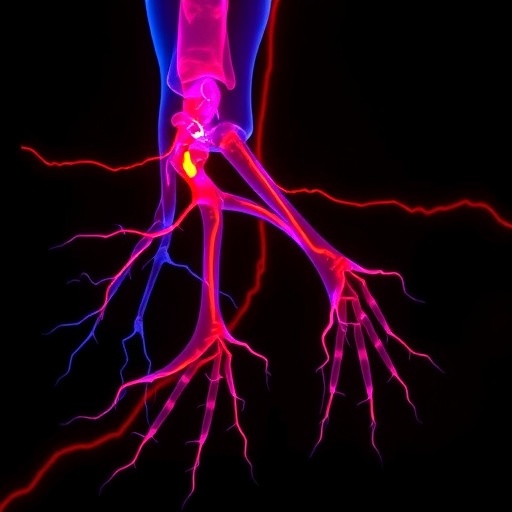
In an intriguing study published in the journal Angiogenesis, researchers have unveiled a significant advancement in our understanding of how MY-1 contributes to the healing process in ischemic hindlimbs. This groundbreaking research highlights the critical role of MY-1 in facilitating angiogenesis, a vital process in the formation of new blood vessels that is often impaired in ischemic conditions. With a focus on the intricate mechanisms involved, this study sheds light on how MY-1 regulates the stability of CDC42 through its interaction with PSMD14, thereby influencing vascular growth and repair.
Angiogenesis is a complex biological process essential for not only wound healing but also various pathological conditions including ischemia. The formation of new blood vessels allows for improved oxygen delivery and nutrient supply, which are crucial for tissue survival and recovery. Given the prevalence of ischemic diseases, including peripheral artery disease and heart attacks, understanding the molecular players that facilitate angiogenesis is of paramount importance. The research team led by Ding, Zhang, and Zeng has opened new avenues for potential therapeutic interventions targeting MY-1.
MY-1, a relatively lesser-known protein previously linked with cell signaling pathways, has emerged as a central figure in promoting angiogenic responses. The study meticulously delves into the molecular interactions that take place during the angiogenic process, particularly how MY-1 modulates the activity of CDC42, a member of the Rho family of GTPases. This engagement is crucial, as CDC42 is known to play a pivotal role in cytoskeletal dynamics and the regulation of cell morphology, both of which are essential for the migration of endothelial cells during new blood vessel formation.
Furthermore, the researchers elucidate the role of PSMD14, a component of the 26S proteasome, in stabilizing CDC42. The degradation of proteins via the proteasome is a fundamental cellular process that dictates the availability of various signaling molecules. By regulating the degradation of CDC42, MY-1, in conjunction with PSMD14, ensures that the levels of this important GTPase are sufficient for promoting endothelial cell migration and proliferation, which are critical for effective angiogenesis.
An important aspect of the study is its methodology; the researchers employed a variety of in vitro and in vivo models to illustrate the effects of MY-1 on angiogenesis. They utilized animal models of hindlimb ischemia to assess the physiological implications of MY-1 activity in real-world scenarios. These models demonstrated a clear enhancement in blood flow and capillary density in ischemic limbs treated with agents that promote MY-1 expression, suggesting that targeting MY-1 could be a viable therapeutic strategy for ischemic diseases.
The significance of this study extends beyond mere academic curiosity; it poses a potential paradigm shift in treatment approaches for ischemic conditions. Current strategies often focus on managing symptoms or providing palliative care rather than addressing the underlying cause—insufficient blood supply. By enhancing angiogenesis through the manipulation of MY-1 and its regulatory circuit, new interventions could emerge that not only alleviate symptoms but also provide a more lasting solution to ischemic tissue repair.
As the research community digests these findings, there linger questions regarding the translational aspects of this study. The prospect of developing pharmacological agents to enhance MY-1 activity is enticing, yet it necessitates a deeper understanding of the long-term effects such interventions might have. Would the modulation of MY-1 lead to unintended vascular overgrowth or potentially malignant transformations? Such considerations highlight the need for careful evaluation in future clinical studies.
In summary, the work by Ding, Zhang, and Zeng represents a significant step forward in our comprehension of angiogenesis, particularly within the context of ischemic disease. By uncovering the molecular machinery behind MY-1’s action and its interaction with CDC42 and PSMD14, the researchers lay the groundwork for future exploration and therapeutic developments. This study holds profound implications for those suffering from ischemic conditions, offering hope for innovative treatments that could dramatically alter disease outcomes.
The intricate networks of cellular signaling that govern angiogenesis and tissue repair are becoming clearer, thanks to such compelling research. As scientists continue to unravel the complexities of these pathways, the potential to devise effective interventions grows, ultimately enhancing our ability to repair damaged tissues and improve patient quality of life. The excitement surrounding MY-1 and its role in angiogenesis is just the beginning, as the field awakes to the possibilities of harnessing this knowledge for clinical advancements.
With ongoing investigations and upcoming research leveraging the pathways illuminated by this study, the role of MY-1 in vascular biology promises to unveil even more mysteries. There is an eagerness among researchers to see how these findings can be translated into real-world applications for patients battling ischemic diseases. The journey from discovery to treatment may be intricate, but with every study, the path becomes more illuminated.
In conclusion, this research not only enhances our understanding of angiogenesis but also exemplifies the collaborative nature of modern scientific inquiry. The findings of Ding, Zhang, and Zeng highlight the importance of interdisciplinary approaches in uncovering the molecular mechanisms that define health and disease. As we stand on the cusp of new therapeutic innovations, the implications of this study resonate well beyond the laboratory, potentially revolutionizing the management of ischemic conditions in the clinical arena.
Cite Scienmag News
Nathaniel Bowman. (January 27, 2026). MY-1 Enhances Angiogenesis in Ischemic Hindlimbs via CDC42. Scienmag. https://scienmag.com/my-1-enhances-angiogenesis-in-ischemic-hindlimbs-via-cdc42/
Nathaniel Bowman. "MY-1 Enhances Angiogenesis in Ischemic Hindlimbs via CDC42." Scienmag, 27 January 2026, https://scienmag.com/my-1-enhances-angiogenesis-in-ischemic-hindlimbs-via-cdc42/. Accessed 4 September 2026.
Nathaniel Bowman. "MY-1 Enhances Angiogenesis in Ischemic Hindlimbs via CDC42." Scienmag. January 27, 2026. https://scienmag.com/my-1-enhances-angiogenesis-in-ischemic-hindlimbs-via-cdc42/


