


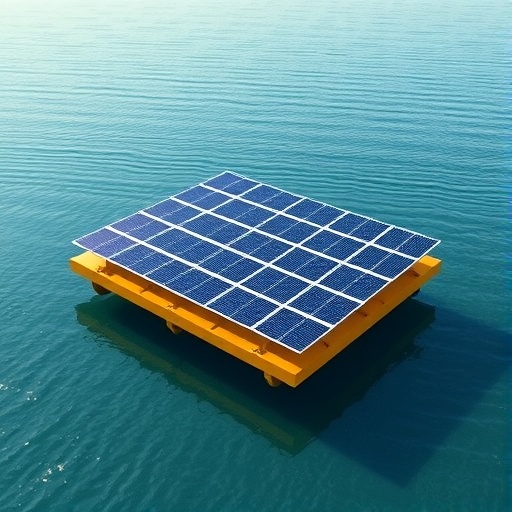
As the world rapidly accelerates its transition to renewable energy sources, the synthesis of solar fuels emerges as a pivotal technology for creating sustainable, storable, and transportable energy carriers. These fuels could serve as net-zero chemicals, drastically reducing the carbon footprint associated with conventional energy and chemical production. Solar fuel synthesis harnesses sunlight to drive chemical transformations, producing practical fuels like hydrogen or carbon-based compounds that can integrate seamlessly with existing infrastructure. However, realizing its full potential on a global scale demands innovative approaches not only in chemistry and materials science but also in deployment strategies.
One of the most significant hurdles facing solar fuel technologies is the extensive land area required for large-scale installations. Traditional solar fuel production facilities, often modeled after photovoltaic farms, need vast tracts of land to install solar collectors and reactors. This imposes substantial challenges, as arable land—the kind used for agriculture—becomes increasingly valuable and scarce. Additionally, competition for land with housing developments and natural reserves leads to conflicts with environmental and social priorities. Political and economic barriers can further complicate land acquisition and use, particularly in densely populated or geopolitically sensitive regions.
Against this backdrop, a growing body of research is turning to the untapped potential of open water bodies for solar fuel synthesis. Shifting from terrestrial to aquatic platforms could sidestep many land-based limitations. Lakes, reservoirs, coastal zones, and even offshore water bodies represent vast, underutilized spaces that can host solar fuel technologies without disturbing critical terrestrial ecosystems or human activities. This perspective envisages a new paradigm where floating solar fuel systems become a vital component of the sustainable energy transition, blending cutting-edge chemical synthesis directly with innovative engineering solutions.
The concept of floating solar technologies is inspired in part by the remarkable rise of floating photovoltaics (FPV) over the last decade. FPV installations have demonstrated clear economic, ecological, and operational advantages compared to conventional ground-mounted solar panels. These platforms reduce evaporation from water bodies, minimize land use conflicts, and harness natural cooling effects from water to improve solar conversion efficiencies. Translating these benefits to the realm of solar fuel synthesis opens exciting avenues for deploying integrated chemical reactors on floating structures that can capture sunlight and convert it efficiently into chemical energy.
Within this emerging field, one can distinguish two primary categories of floating solar fuel technologies. The first involves floating platforms that carry arrays of photovoltaic cells coupled to electrocatalytic reactors, integrated to produce fuels like hydrogen or carbon monoxide from water and carbon dioxide. These platforms may be moored in relatively calm waters such as lakes or coastal regions, allowing for centralized fuel production in proximity to demand centers or logistics hubs. The second category is self-floating devices that incorporate solar absorbers, catalysts, and reaction chambers into compact units capable of autonomous floating and operation directly on water surfaces. This approach promises unparalleled scalability and mobility, potentially allowing solar fuel to be generated where it is most needed.
From a techno-economic perspective, floating solar fuel systems could unlock a range of benefits. By circumventing land scarcity issues, these floating systems can be deployed in diverse geographical locations, including areas where land acquisition costs or regulatory hurdles are prohibitive. The natural cooling provided by water bodies also enhances the stability and efficiency of photoelectrochemical devices, mitigating overheating that commonly degrades performance on land. Furthermore, the proximity of floating systems to water reduces transportation costs and complexities associated with supplying feedstocks like water and carbon dioxide, which can sometimes be limiting factors for land-based installations.
Beyond operational and economic advantages, floating solar fuel technologies align with broader sustainability goals. By enabling chemical synthesis on water, these systems may reduce environmental disturbances in sensitive terrestrial habitats, safeguard farmland from competing land uses, and contribute to improved water management. For example, large-scale floating installations can help suppress algal blooms by shading water bodies and moderating temperature variations. Additionally, integrating solar fuel synthesis with aquaculture or water treatment could create symbiotic circular economies that bolster local communities and ecosystems.
Nevertheless, significant technical challenges remain before floating solar fuel devices can become commercially viable. Researchers must optimize the durability of materials in aquatic environments, addressing corrosion, biofouling, and mechanical stresses from waves and currents. The complexity of assembling multifunctional reactors on dynamic floating platforms demands interdisciplinary collaborations spanning chemistry, materials science, fluid mechanics, and systems engineering. Furthermore, ensuring safe and efficient handling and storage of produced fuels on water bodies requires innovative containment and transportation solutions.
Despite these challenges, initial prototypes have demonstrated promising results, showcasing the feasibility of compact photoelectrochemical devices and modular floating systems. Advances in catalyst design have improved the selectivity and rates of solar-driven reactions, while progress in buoyant materials and platform engineering supports field deployment. Pilot projects deploying floating photovoltaics with integrated chemical synthesis modules highlight the potential to transition these concepts from lab-scale demonstrations to real-world applications within the next decade.
Looking forward, the decentralized nature of floating solar fuel production could revolutionize energy access in remote or off-grid regions. Island communities, coastal cities, and inland areas with abundant water resources could produce clean fuels locally, reducing dependence on imported fossil fuels. Additionally, mobility conferred by self-floating devices might enable on-demand fuel synthesis in emergency or disaster relief scenarios, adding resilience to energy systems worldwide.
Policy frameworks and investment landscapes must evolve to support the development and deployment of floating solar fuel technologies. Governments and stakeholders should consider incentivizing floating solar initiatives, integrating them into climate action plans, and facilitating collaborative innovation through public-private partnerships. Addressing regulatory issues concerning water use rights, environmental impact assessments, and safety standards will be essential to unlocking broad adoption.
In conclusion, the convergence of solar fuel chemistry with floating platform engineering presents a compelling pathway toward sustainable chemical production on open water bodies. This approach promises to overcome the land-related constraints hampering traditional solar fuel deployment and to furnish societies with versatile, decarbonized energy carriers. As research progresses, floating solar fuel synthesis may well redefine how humanity harnesses and stores solar energy, fostering a more resilient, equitable, and environmentally harmonious energy future.
The promise of floating solar fuels extends beyond mere technological novelty. By integrating chemical transformations directly in aquatic environments, these innovations exemplify circular chemistry approaches aimed at closing material loops and reducing waste. The strategic utilization of water surfaces—often overlooked in energy infrastructure—highlights a paradigm shift toward multifunctional platforms that blend energy production, environmental remediation, and resource conservation.
As this field matures, interdisciplinary collaborations will be crucial to address environmental, social, and technical dimensions. Engaging stakeholders from academia, industry, policy, and communities can accelerate knowledge transfer and deployment, ensuring technologies meet real-world needs and constraints. Ultimately, floating solar fuel systems offer a visionary blueprint for a solar-powered circular economy that transcends terrestrial bottlenecks and embraces the planet’s untapped water expanses.
The path ahead is challenging but filled with promise. Innovations in materials design, reactor architecture, and system integration will drive increased efficiency, scalability, and robustness. Real-world pilot projects and demonstration facilities must verify performance metrics and inform iterative improvements. With sustained research investment and strategic partnerships, floating solar technologies for sustainable chemical synthesis could soon move from pioneering laboratory concepts to transformative components of the global energy landscape.
Cite Scienmag News
Faith Mcneil. (January 27, 2026). Floating Solar Powers Sustainable Chemical Production on Water. Scienmag. https://scienmag.com/floating-solar-powers-sustainable-chemical-production-on-water/
Faith Mcneil. "Floating Solar Powers Sustainable Chemical Production on Water." Scienmag, 27 January 2026, https://scienmag.com/floating-solar-powers-sustainable-chemical-production-on-water/. Accessed 4 September 2026.
Faith Mcneil. "Floating Solar Powers Sustainable Chemical Production on Water." Scienmag. January 27, 2026. https://scienmag.com/floating-solar-powers-sustainable-chemical-production-on-water/


