


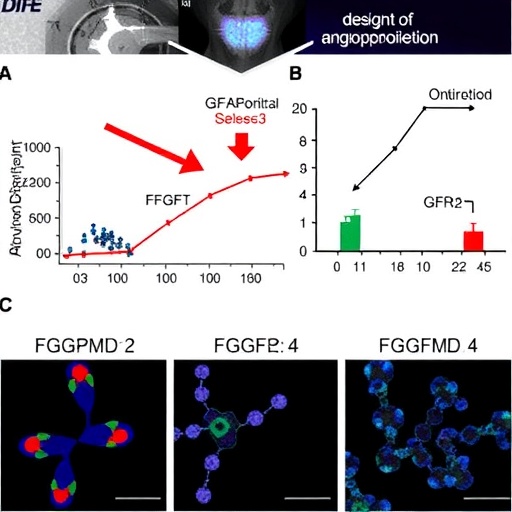
A groundbreaking study has emerged from the collaborative efforts of researchers including M. Sim, H. Ohnuki, and S. Durell, which has identified a critical molecular interaction that plays a pivotal role in wound healing processes. This research, published in the journal Angiogenesis, focuses specifically on Angiopoietin-2 (Ang-2) and its interaction with the fibroblast growth factor receptor 2 (FGFR2). Understanding this relationship is vital, as it reveals how Ang-2 impedes FGF-FGFR2 signaling, thus delaying the crucial phase of cutaneous wound healing via the inhibition of angiogenesis.
The mechanism by which Ang-2 influences wound healing is multifaceted and significant. Traditionally, wound healing is viewed as a cascade of biological events that culminate in the regeneration of damaged tissues. A critical part of this process is angiogenesis, the formation of new blood vessels from pre-existing ones, which is essential for supplying nutrients and oxygen to healing tissues. The study’s findings underscore the importance of FGFR2 signaling in this process and illustrate how Ang-2 disrupts this signaling pathway, leading to impaired angiogenesis and delayed healing.
The research meticulously analyzed the binding affinity of Ang-2 to FGFR2 through a series of in vitro and in vivo experiments. Utilizing advanced biochemical assays, the authors determined that Ang-2 binds with high specificity to the FGFR2, which effectively blocks the binding of fibroblast growth factors (FGFs) that are necessary for initiating the angiogenic process. This binding does not merely hinder FGF-FGFR2 interactions but also leads to downstream signaling disruptions that can considerably affect the wound healing environment.
Moreover, the implications of these findings extend beyond theoretical models, as they provide a potential therapeutic target for chronic wounds. By inhibiting Ang-2 or blocking its interaction with FGFR2, it may be possible to enhance blood vessel formation in wound sites, accelerating the healing process for patients notoriously plagued by slow-healing wounds, such as those with diabetes or vascular diseases. Given that chronic wounds represent a significant medical challenge, understanding the role of Ang-2 provides a new avenue for developing effective treatments.
The results were further validated using genetically modified mice that overexpressed Ang-2, which were observed to experience significantly delayed wound healing compared to their wild-type counterparts. These experiments have reinforced the hypothesis that Ang-2 acts as a negative regulator of angiogenesis and wound healing. Through a combination of molecular biology techniques and comprehensive wound healing assays, the researchers managed to draw compelling correlations between elevated levels of Ang-2 and impaired healing outcomes.
It’s essential to recognize the broader significance of this research within the context of existing literature on wound healing. Previous studies had established the individual roles of FGF and FGFR2 in promoting angiogenesis, but the intricate regulatory mechanisms involving Ang-2 remained less understood. The current research provides a unifying perspective, illustrating how certain factors can inhibit angiogenic responses, thereby creating a balance between pro- and anti-angiogenic influences that dictate healing efficacy.
Additionally, the findings may pave the way for clinical interventions tailored to circumvent the inhibitory effects of Ang-2. For instance, it opens up possibilities for monoclonal antibody therapies designed to block Ang-2, potentially restoring the effectiveness of FGF signaling in patients. These interventions could have a transformative impact on practice standards for managing chronic wounds, enhancing healing responses, and significantly improving the quality of life for patients.
As with many scientific endeavors, the implications of this research extend into potential future directions. Understanding the signaling cascades influenced by Ang-2 and its interaction with FGFR2 may lead to the identification of additional targets within the angiogenic pathway. This could greatly enhance the ability to manipulate wound healing processes therapeutically, offering multifaceted approaches to treatment that go beyond simply inhibiting Ang-2.
Moreover, insights derived from this research may also spark interest in exploring related proteins and their regulatory roles in angiogenesis. There is a treasure trove of angiogenic factors that remain to be thoroughly investigated, which could yield new discoveries regarding the complexity of wound healing and vascular biology.
This innovative study represents a significant advance in the understanding of the molecular complexities governing wound healing. The findings not only illuminate the detrimental effects of Ang-2 on angiogenesis but also herald a new understanding of how therapeutic targeting of this pathway could transform the management of chronic wounds.
In conclusion, the work led by Sim, Ohnuki, and Durell contributes substantially to the field of regenerative medicine. By elucidating the mechanism whereby Ang-2 interferes with FGFR2 signaling, researchers have laid the groundwork for potential new therapies aimed at enhancing wound healing.
Ultimately, as research continues to evolve, the challenge will be translating these discoveries into effective clinical applications. Only time will tell how these insights will shape future therapeutic strategies and improve outcomes for individuals suffering from impaired wound healing.
Cite Scienmag News
Nathaniel Bowman. (January 27, 2026). Angiopoietin-2 Disrupts Wound Healing via FGFR2 Inhibition. Scienmag. https://scienmag.com/angiopoietin-2-disrupts-wound-healing-via-fgfr2-inhibition/
Nathaniel Bowman. "Angiopoietin-2 Disrupts Wound Healing via FGFR2 Inhibition." Scienmag, 27 January 2026, https://scienmag.com/angiopoietin-2-disrupts-wound-healing-via-fgfr2-inhibition/. Accessed 3 September 2026.
Nathaniel Bowman. "Angiopoietin-2 Disrupts Wound Healing via FGFR2 Inhibition." Scienmag. January 27, 2026. https://scienmag.com/angiopoietin-2-disrupts-wound-healing-via-fgfr2-inhibition/


