


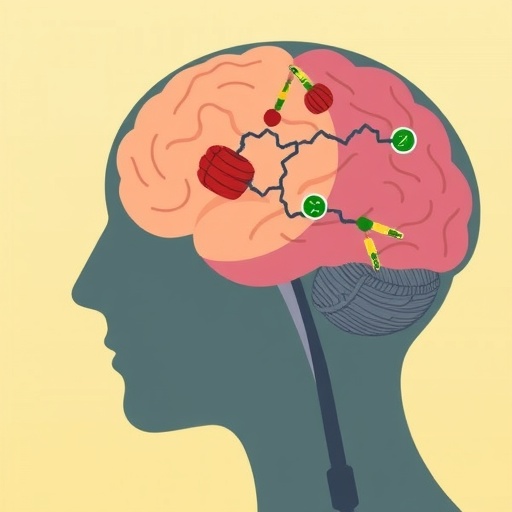
In a groundbreaking study, researchers have uncovered vital information regarding the susceptibility of the locus coeruleus, a key region in the brain, to Alzheimer’s disease, particularly focusing on the influence of sex differences. This research delves into the intricate relationship between gut health and brain function, suggesting that dysbiosis—or an imbalance in the gut microbiome—may contribute significantly to the development of cognitive decline seen in Alzheimer’s patients. The implications of these findings could pave the way for novel probiotic therapies aimed at mitigating the impact of this devastating disease.
Alzheimer’s disease, a progressive neurological disorder characterized by the decline of cognitive functions, affects millions worldwide, with a notable variation in incidence and severity based on sex. Initial findings suggest that men and women may experience different pathways of neurodegeneration, highlighting the necessity for sex-specific research in understanding the underlying mechanisms of Alzheimer’s disease. The locus coeruleus plays a pivotal role in cognitive processes and is vulnerable to neurodegeneration early in the disease’s progression, making it a focal point for understanding Alzheimer’s pathology.
The study by Stapleton and colleagues emphasizes that gut dysbiosis—associated with an unhealthy balance of gut bacteria—can trigger inflammatory responses that may exacerbate the degenerative process in the brain. This relationship establishes a fascinating link between gastrointestinal health and neurological outcomes, reinforcing the notion that the gut-brain axis is a critical area of investigation for future Alzheimer’s therapies. By exploring how gut health influences brain function, researchers aim to uncover new therapeutic interventions to combat this debilitating disease.
In examining the effects of sex on locus coeruleus vulnerability, the research team conducted thorough examinations on male and female subjects to pinpoint differential responses to the disease. They discovered that alterations in gut microbiota composition are distinct between sexes, indicating that men may be more susceptible to certain inflammatory pathways activated by gut dysbiosis. This finding underscores the importance of considering biological sex when developing treatment strategies and interventions for Alzheimer’s disease.
Probiotic interventions emerge as a potential rescue strategy in this context. By restoring a healthy balance of gut microbiota, these therapies could mitigate the inflammation that contributes to cognitive decline related to the locus coeruleus. The researchers conducted a series of experiments that demonstrated how specific probiotics positively affected brain function and reduced markers of neuroinflammation in their animal models. Such results offer hope that probiotic treatments could be further developed for human applications, targeting the gut-induced pathways of Alzheimer’s disease.
The role of inflammation in the pathogenesis of Alzheimer’s disease has been well-documented; however, the exact interactions between gut health and neuroinflammation require further exploration. The current study provides a framework for understanding these connections, highlighting how disruptions in gut microbiota can incite systemic inflammatory responses affecting the brain. By elucidating this intricate relationship, Stapleton et al. aim to inspire further studies that can harness probiotics as a viable intervention for neurodegenerative diseases.
Additionally, the researchers emphasize the necessity for more extensive clinical trials to determine the efficacy of probiotics in human subjects suffering from Alzheimer’s disease. While animal studies showcase promising results, translating these findings to effective human therapies remains a critical step. Future research must also investigate the best strains of probiotics and their dosing, as well as how sex differences can inform personalized treatment plans for those affected by cognitive decline.
The implications of this study extend beyond just Alzheimer’s disease, potentially opening avenues for understanding other neurodegenerative disorders influenced by gut health. As the research landscape evolves, the intersection of microbiome health and neurobiology will undoubtedly remain a significant area of interest, prompting further investigation into how our dietary choices and lifestyle can influence brain health.
Adopting a holistic approach that considers both gut microbiome dynamics and the neuroinflammatory processes could revolutionize the way we approach neurodegeneration. As discussions surrounding lifestyle modifications gain traction, such as adopting a diet rich in fermented foods, it becomes clear that public health initiatives could also play a vital role by disseminating knowledge about gut-brain health.
The critical role of sex differences in neurodegenerative diseases cannot be overstated. This study reinforces the call for more gender-specific research, which can illuminate the unique vulnerabilities that exist between male and female patients suffering from Alzheimer’s disease. Many clinical trials in the past have failed to consider these differences adequately, potentially skewing results and hindering effective treatment design.
In conclusion, the findings from Stapleton and colleagues not only provide a deeper understanding of Alzheimer’s disease but also advocate for a paradigm shift in how we view treatment strategies. By integrating knowledge of the microbiome into therapeutic frameworks, researchers may unlock new pathways for managing this complex disease. As we anticipate further studies and clinical trials, the potential for probiotics as a meaningful intervention offers a beacon of hope for millions affected by cognitive decline.
The connection between gut health and brain function may very well be one of the most significant discoveries of our time in the field of neurodegenerative research. As this paradigm continues to evolve, the focus on personalizing treatments based on sex-specific responses will be crucial. By bridging the gap between nutritional science and neurobiology, we may soon witness transformative approaches to Alzheimer’s disease management.
The urgency of addressing Alzheimer’s disease grows as the global population ages, and understanding the factors that contribute to its progression becomes increasingly critical. With ongoing advancements in microbiome research and an enhanced understanding of the locus coeruleus vulnerabilities, there is hope that we may develop more effective interventions to halt or potentially reverse the cognitive losses associated with this relentless disease.
Amidst the challenges posed by Alzheimer’s disease, interdisciplinary collaboration between microbiologists, neuroscientists, and clinicians could enhance the development of new therapeutic strategies. By pooling insights from diverse fields, we can make significant strides toward understanding and combating the multifaceted nature of neurodegeneration.
In light of these findings, the research community looks forward to continued exploration into the intricate interplay of gut microbiota, sex differences, and brain health, as the pursuit of effective treatments remains paramount in the fight against Alzheimer’s disease.
Cite Scienmag News
Cassandra Pierce. (January 27, 2026). Alzheimer’s Vulnerability: Gut Dysbiosis and Probiotic Rescue. Scienmag. https://scienmag.com/alzheimers-vulnerability-gut-dysbiosis-and-probiotic-rescue/
Cassandra Pierce. "Alzheimer’s Vulnerability: Gut Dysbiosis and Probiotic Rescue." Scienmag, 27 January 2026, https://scienmag.com/alzheimers-vulnerability-gut-dysbiosis-and-probiotic-rescue/. Accessed 3 September 2026.
Cassandra Pierce. "Alzheimer’s Vulnerability: Gut Dysbiosis and Probiotic Rescue." Scienmag. January 27, 2026. https://scienmag.com/alzheimers-vulnerability-gut-dysbiosis-and-probiotic-rescue/


