


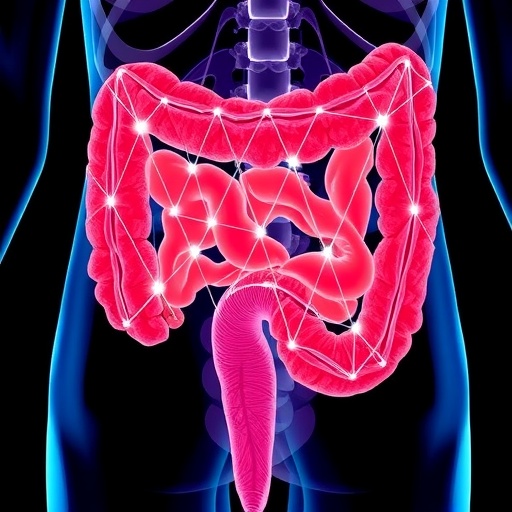
A groundbreaking study published in “Molecular Cancer” sheds light on the intricate mechanisms underlying colorectal cancer progression, focusing on a newly identified positive-feedback loop involving EIF4A3, circPTGR1, and miR-4725-5p. This research provides significant insights into how these molecular players interact to affect critical signaling pathways such as FAK/AKT, which are known to be involved in cancer cell proliferation, survival, and metastatic potential.
In the ever-evolving landscape of cancer research, identifying the roles of non-coding RNAs and their interactions with protein-coding genes has become an area of keen interest. Among the many factors influencing colorectal cancer, the study highlights the role of EIF4A3, a member of the eukaryotic initiation factor 4A family. This protein is crucial for the regulation of cap-dependent translation initiation, a process integral to cancer cell growth and invasion.
The researchers employed a variety of biochemical and molecular biology techniques to elucidate the role of EIF4A3 in colorectal cancer. Through meticulous experimentation, they demonstrated that EIF4A3 levels were significantly upregulated in colorectal cancer tissues compared to normal adjacent tissues. This raised a crucial question: how does EIF4A3 enhance malignancy in colorectal cancer?
To investigate this further, the team focused on circPTGR1, a circular RNA that has gained attention for its potential role as a regulator of gene expression. Their data indicated that circPTGR1 acts as a molecular sponge for miR-4725-5p, thereby preventing the degradation of this microRNA. This interaction suggests that circPTGR1 plays a pivotal role in maintaining the stability of miR-4725-5p levels, which in turn can modulate various signaling pathways associated with cancer progression.
In their experiments, the authors found a pronounced positive feedback loop between EIF4A3 and circPTGR1. When EIF4A3 expression increased, there was a corresponding rise in circPTGR1 levels. This feedback loop is crucial because it helps to create an environment that fosters tumor progression. The authors posit that this loop may provide a therapeutic target, as disrupting it could hinder colorectal cancer growth and metastasis.
The study’s findings also extended to the role of the FAK/AKT signaling pathway, which is frequently activated in various cancers, including colorectal cancer. FAK (Focal Adhesion Kinase) is an important player in cell adhesion and migration, while AKT is a key component involved in cell survival. The upregulation of EIF4A3 and circPTGR1 was linked to increased FAK and AKT activity, underscoring their involvement in promoting aggressive cancer phenotypes.
Moreover, the work underscores the importance of miR-4725-5p, as it appears to act as a tumor suppressor in this context. The authors provided compelling evidence that elevated levels of this microRNA could inhibit cell proliferation and promote apoptosis in colorectal cancer cell lines. This insight adds another layer to our understanding of how the interplay between various RNAs can dictate cancer behavior.
As the research progresses, the implications for therapy become more apparent. With the identification of the EIF4A3/circPTGR1/miR-4725-5p loop, targeted therapies could be developed to disrupt these interactions. The potential to inhibit this positive feedback loop offers a novel approach to treating colorectal cancer, particularly in patients who exhibit high levels of EIF4A3 expression.
The study not only enhances our understanding of the molecular underpinnings of colorectal cancer but also paves the way for future research into the development of RNA-based therapeutics. This could revolutionize the treatment landscape for colorectal cancer and other malignancies driven by similar molecular mechanisms.
Additionally, the researchers called for further studies to explore the potential use of biomarkers derived from these findings. Identifying specific levels of EIF4A3, circPTGR1, and miR-4725-5p in patient samples could serve as important prognostic indicators, aiding in the stratification of patients based on their risk of disease progression.
Collectively, this research emphasizes the importance of understanding molecular interactions in cancer. The discovery of the EIF4A3/circPTGR1/miR-4725-5p feedback loop opens up new avenues for therapeutic intervention and highlights the complex yet fascinating nature of cancer biology. The hope is that with continued investigation, we will be able to provide more effective strategies for combatting colorectal cancer, ultimately improving patient outcomes.
As new technologies and methodologies emerge, the potential to leverage these findings for clinical applications remains promising. The challenge will be to translate these insights into actionable treatments that can be used in diverse patient populations facing colorectal cancer. However, the roadmap laid out by this study serves as a crucial stepping stone towards that goal.
In conclusion, the exploration of this positive-feedback loop elucidates substantial molecular dynamics that aid in colorectal cancer progression. Continued research in this domain could significantly advance our capabilities in oncology, fostering innovations that extend beyond colorectal cancer to other forms of malignancy driven by similar regulatory mechanisms.
Dong, Y., Ding, YH., Yang, X. et al. EIF4A3/circPTGR1/miR-4725-5p positive- feedback loop promotes colorectal cancer progression via FAK/AKT signaling pathway.
Mol Cancer (2026). https://doi.org/10.1186/s12943-025-02537-x
Cite Scienmag News
Nathaniel Bowman. (January 26, 2026). Feedback Loop Drives Colorectal Cancer Through FAK/AKT. Scienmag. https://scienmag.com/feedback-loop-drives-colorectal-cancer-through-fak-akt/
Nathaniel Bowman. "Feedback Loop Drives Colorectal Cancer Through FAK/AKT." Scienmag, 26 January 2026, https://scienmag.com/feedback-loop-drives-colorectal-cancer-through-fak-akt/. Accessed 5 September 2026.
Nathaniel Bowman. "Feedback Loop Drives Colorectal Cancer Through FAK/AKT." Scienmag. January 26, 2026. https://scienmag.com/feedback-loop-drives-colorectal-cancer-through-fak-akt/


