


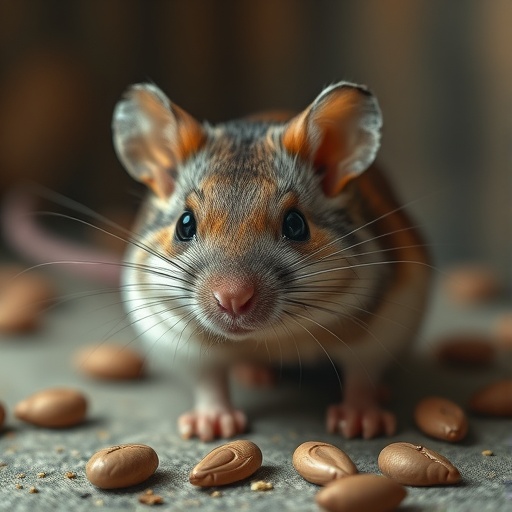
In a groundbreaking study published by Lee and colleagues in 2026, the researchers delve deep into the neuroscience of anxiety and depression through the lens of genetically modified mice. This research centers on the neuronal growth regulator 1 (Ngr1) molecule, a critical player in the neural developmental processes. The study is pivotal as it highlights the sex-specific differences observed in anxiety and depressive behaviors in Ngr1-knockout mice, marking a significant advancement in our understanding of gender disparities in mental health disorders.
The researchers employed Ngr1-knockout mice to investigate how the absence of this gene affects anxiety-like and depression-like behaviors differently in male and female specimens. Previous studies have shown that various neurobiological mechanisms underpin anxiety and depression, suggesting a complex interplay between genetic, environmental, and hormonal factors. By focusing on Ngr1, this study contributes valuable insights into the biological underpinnings of these psychological conditions and reinforces the importance of considering sex as a biological variable in research.
In their experimental design, the team evaluated both behavioral and physiological changes in the modified mice. Standardized tests, including the elevated plus maze and the forced swim test, were utilized to assess anxiety and depressive behaviors. These tests allow researchers to quantify the levels of anxiety by observing the willingness of the mice to explore open spaces or their propensity to exhibit signs of helplessness. The results revealed striking differences between male and female mice, indicating that male Ngr1-knockout mice displayed an increase in depressive-like behaviors, while female counterparts exhibited heightened anxiety levels.
The implications of these findings are profound, particularly in the context of psychiatric research and treatment approaches. Historically, a male-centric model has dominated much of the biomedical research landscape, often at the expense of understanding female health outcomes. This study emphasizes the necessity for a more integrative approach that encompasses both sexes to tailor mental health interventions effectively. It also highlights the need for gender-sensitive frameworks in clinical settings to better address the unique challenges faced by individuals suffering from anxiety and depression.
The biological mechanisms that may underlie the observed sex differences in anxiety and depressive behaviors are still not fully understood. However, they may be attributed to hormonal influences and different developmental trajectories for male and female brain structures. For example, fluctuations in estrogen and testosterone levels during critical developmental stages may influence neurodevelopment and susceptibility to these mental health disorders differently in males and females. The Ngr1 gene has been implicated in neuroplasticity and synaptic function, which could further elucidate these differential outcomes.
As societal awareness of mental health issues continues to grow, studies like this propel forward the conversation around sex differences in psychological disorders. The findings from Lee et al. serve as a clarion call for more nuanced research that incorporates genetic, biological, and environmental dimensions of mental health. Future investigations will undoubtedly be drawn from these results to explore potential therapeutic targets that can be differentiated by sex.
Moreover, the implications extend beyond laboratory findings. Mental health professionals can glean valuable insights from this research that enhance the precision of diagnostic and therapeutic approaches. A better understanding of how genetic variations impact mental health outcomes could lead to innovative treatment modalities tailored specifically for men and women. For example, therapies that target the Ngr1 pathways may yield different results based on patient sex, paving the way for more personalized mental health care.
The study also opens avenues for exploring preventative strategies that account for such biological differences. If we can identify specific genetic predispositions linked to anxiety and depression in males versus females early in life, it may be possible to implement preventive measures that significantly alter the trajectory of these mental health challenges. Interventions in childhood, guided by genetic screening, might lead to improved outcomes for those at risk.
As scientists and mental health professionals work together to unveil the complexities inherent in psychiatric disorders, the significance of studies like that of Lee et al. becomes all the more apparent. Such research promotes an inclusive understanding of diseases that have, for too long, been generalized under male-centric models. Disentangling these complexities is not only essential for scientific progress but also for the stigmatization of mental health issues that disproportionately affect women.
In essence, the work of Lee and colleagues underscores a vital shift in contemporary neuroscience and mental health research. Their findings reinforce the idea that treatments and interventions must evolve as our understanding of neurobiological differences deepens. As we anticipate future discoveries based on this foundational work, the field stands at a critical juncture where the merging of genetic research with clinical applications can lead to revolutionary changes in mental health care delivery.
As the studies continue and more data emerges, it is imperative for the scientific community to keep examining these variables to facilitate broad-spectrum understanding and effective treatment for anxiety and depression. In a world where dimensions of mental health are being increasingly recognized, the contributions of such research offer a glimpse into a future where personalized medicine is not just a concept, but a practical reality.
Ultimately, the exploration into sex-specific differences in anxiety and depressive behaviors not only shines a light on the necessity for targeted research but also fosters a deeper appreciation for the complexities of the human brain. It is a promising step toward a more sophisticated understanding of mental health disorders, offering hope for innovative solutions that future studies may reveal. In conclusion, as we look forward to continued dialogue and research in this area, we must remain vigilant in our pursuit of knowledge that promotes mental well-being across all segments of the population.
Lee, S.R., Yoon, E., Baek, S. et al. Sex-specific difference on anxiety- and depressive-like behavior in neuronal growth regulator 1-knockout mice.
Biol Sex Differ (2026). https://doi.org/10.1186/s13293-025-00816-2
Cite Scienmag News
Glenn Wilkins. (January 26, 2026). Sex Differences in Anxiety and Depression: Mouse Study. Scienmag. https://scienmag.com/sex-differences-in-anxiety-and-depression-mouse-study/
Glenn Wilkins. "Sex Differences in Anxiety and Depression: Mouse Study." Scienmag, 26 January 2026, https://scienmag.com/sex-differences-in-anxiety-and-depression-mouse-study/. Accessed 3 September 2026.
Glenn Wilkins. "Sex Differences in Anxiety and Depression: Mouse Study." Scienmag. January 26, 2026. https://scienmag.com/sex-differences-in-anxiety-and-depression-mouse-study/


