


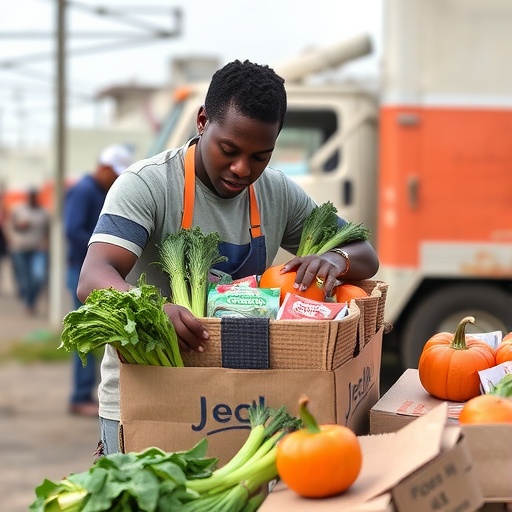
In recent years, the issue of food waste has garnered increased attention, prompting a wave of research into sustainable practices aimed at minimizing surplus food within urban settings. A groundbreaking study conducted by den Broeder, Lazer, Gisasola-Maiztegi, and their colleagues sheds light on the myriad challenges associated with surplus food redistribution. This investigation delves into the coping mechanisms employed by cities across the globe to address this burgeoning crisis while offering innovative solutions to enhance food equity and sustainability in urban environments.
Surplus food redistribution refers to the practice of transferring excess food from producers and retailers to those in need. This endeavor is not only essential for mitigating food waste but also critical for addressing consumer food insecurity, particularly in metropolitan areas. The complexity of urban landscapes poses unique challenges to these redistribution efforts, necessitating a comprehensive understanding of the intricate dynamics at play.
One of the prominent challenges identified in the study is the logistical barrier that many cities encounter. Urban areas, teeming with population density and infrastructural constraints, often make it difficult for surplus food to reach its intended recipients without significant hurdles. The research highlights the role of transportation, storage, and distribution inefficiencies that can hinder successful redistribution efforts. These logistical obstacles are compounded by varying regulations governing food safety and distribution, leading to fragmentation in the existing food system.
Moreover, the research unveils a critical barrier in the form of stakeholder engagement. Successful surplus food redistribution hinges on collaboration among various stakeholders, including food businesses, non-profits, and local governments. However, fostering this collaboration is often fraught with challenges. Distrust among stakeholders, competing interests, and differing priorities can create a fragmented environment that stifles effective communication and coordination. The study emphasizes the need for collaboration frameworks that can bridge these gaps and foster trust among participants in the food redistribution network.
In addition to these logistical and collaboration hurdles, the researchers also explore the complexities of public perception and cultural attitudes towards surplus food. Many urban residents harbor misconceptions about surplus food and its safety, impacting their willingness to participate in redistribution programs. The study reveals that educational campaigns aimed at shifting public perception and de-stigmatizing surplus food can play a transformative role in enhancing engagement and participation. By reframing surplus food as a valuable resource rather than waste, cities can cultivate a culture of sharing and mutual support.
The research also evaluates existing coping mechanisms that cities have employed to address these challenges. For instance, some municipalities have implemented technology-driven platforms that connect food donors with local organizations or individuals in need. These innovative solutions leverage data analytics to optimize delivery routes, reducing waste and enhancing efficiency. Furthermore, the proliferation of apps designed to facilitate surplus food redistribution is highlighted as a promising avenue for addressing logistical challenges, making it easier for both donors and recipients to participate in the food recovery process.
Additionally, the study discusses policy interventions that can support surplus food redistribution efforts. Government incentives and subsidies for businesses that actively participate in surplus food recovery can bolster engagement and encourage large-scale participation. The researchers argue for a comprehensive policy framework that integrates food recovery into the broader sustainability goals of cities. By aligning institutional goals with the principles of food justice and sustainability, urban areas can work towards more effective surplus food initiatives.
A critical insight from the study underscores the importance of context-specific solutions. The research advocates for tailored approaches that consider the unique characteristics of each urban environment. Factors such as local demographics, infrastructure, and existing food systems must be carefully evaluated when designing redistribution initiatives. By recognizing that one-size-fits-all solutions are rarely effective, cities can develop nuanced strategies that align with the needs and capacities of their communities.
The authors also emphasize the potential of community-based initiatives in enhancing surplus food redistribution efforts. Local organizations often possess a deep understanding of the communities they serve, enabling targeted outreach and engagement efforts. Community-led food recovery initiatives can foster a sense of ownership and accountability among residents, amplifying the impact of redistribution efforts. Collaboration with grassroots organizations can also create pathways for addressing the root causes of food insecurity, ensuring that surplus food reaches those who need it most.
In conclusion, the study by den Broeder and colleagues provides a comprehensive analysis of the multifaceted challenges confronting surplus food redistribution at the city level. Through a combination of logistical strategies, stakeholder engagement, policy interventions, and community-based approaches, cities can work towards a more sustainable and equitable food system. The pressing nature of food waste and insecurity necessitates immediate action and innovation in urban food systems. By embracing collaborative solutions and fostering a culture of understanding around surplus food, cities can usher in a new era of sustainability that ultimately benefits all members of the community.
This research not only highlights the challenges but also maps out a path forward, ensuring that surplus food can be effectively redirected towards those who need it most, thereby fostering a resilient and compassionate urban society.
den Broeder, C., Lazer, L., Gisasola-Maiztegi, N. et al. Challenges, coping mechanisms, and solutions in surplus food redistribution efforts at the city level. Discov Sustain (2026). https://doi.org/10.1007/s43621-025-02289-0
Cite Scienmag News
Violet Maxwell. (January 25, 2026). Overcoming Obstacles in Urban Food Redistribution Efforts. Scienmag. https://scienmag.com/overcoming-obstacles-in-urban-food-redistribution-efforts/
Violet Maxwell. "Overcoming Obstacles in Urban Food Redistribution Efforts." Scienmag, 25 January 2026, https://scienmag.com/overcoming-obstacles-in-urban-food-redistribution-efforts/. Accessed 5 September 2026.
Violet Maxwell. "Overcoming Obstacles in Urban Food Redistribution Efforts." Scienmag. January 25, 2026. https://scienmag.com/overcoming-obstacles-in-urban-food-redistribution-efforts/


