


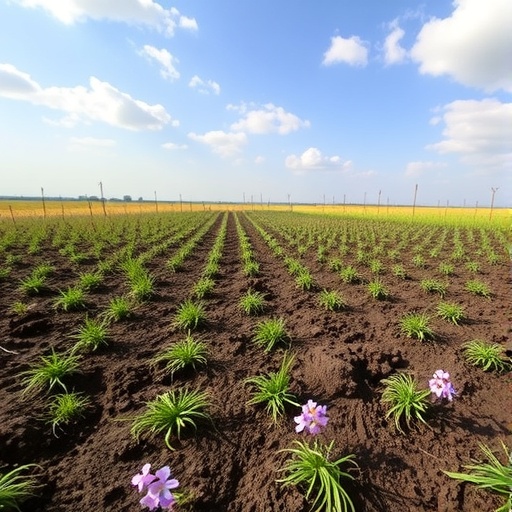
In recent years, the looming threat of per- and polyfluoroalkyl substances, commonly referred to as PFAS, has garnered significant attention from environmental scientists and policymakers. These synthetic compounds are notorious for their persistence in the environment and their adverse effects on human health and ecosystems. A groundbreaking study published by Wang, G., Mo, M., and Wang, Y. in Frontiers in Environmental Science and Engineering delves into the occurrence and region-specific distribution of both legacy and novel PFAS in grassland soils of remote pastoral areas in China. This research not only highlights the alarming prevalence of these substances but also sheds light on potential sources and the implications for environmental health.
PFAS are often dubbed “forever chemicals” due to their chemical stability and resistance to conventional degradation processes. Their usage spans a variety of industries, primarily due to their unique properties, such as water and grease resistance. In agricultural settings, especially those involved in livestock rearing, PFAS contamination can emerge from multiple sources, including the use of treated wastewater in irrigation and the application of contaminated fertilizers. The significance of understanding the regional distribution of these substances cannot be overstated, particularly as it pertains to safeguarding human health and the integrity of food sources.
The study conducted by Wang et al. meticulously analyzed grassland soil samples across various regions in China, a nation that is home to some of the largest pastoral areas globally. The researchers employed an array of sophisticated analytical techniques to quantify the levels of both legacy and novel PFAS compounds. The results were startling: even in remote areas where industrial activity is ostensibly limited, these harmful substances were found in alarming concentrations. This raises pressing questions about how far-reaching the impacts of PFAS pollution extend, transcending industrialized zones and contaminating seemingly pristine environments.
One of the most compelling aspects of this research is the delineation between legacy and novel PFAS. Legacy PFAS, such as perfluorooctanoic acid (PFOA) and perfluorooctanesulfonic acid (PFOS), have been widely studied and are known for their dire health impacts, including links to cancer and immune disorders. Novel PFAS, on the other hand, are compounds that have emerged more recently and may possess unique properties and unknown toxicity profiles. The study highlights that some of these novel substances are now being detected in grassland soils, indicating that they may become the next wave of environmental contaminants if not monitored and regulated.
The geographic specificity of PFAS distribution as shown in the study is particularly illuminating. Researchers discovered that certain areas exhibited markedly higher concentrations of these substances, often correlating with nearby agricultural practices and livestock farming. The implications of this geographic variance are significant, suggesting that local policies and practices must be adapted to address the unique challenges posed by PFAS contamination in different regions. It underscores the necessity for regional risk assessments that take into account local agriculture, soil composition, and hydrology.
Furthermore, the research puts forth potential sources of PFAS contaminations, including the application of biosolids on farmland and the runoff from urban areas. These findings bear weighty implications for nutrient management practices and necessitate a reevaluation of waste treatment and disposal methods. A nuanced understanding of how PFAS enter agricultural landscapes will be crucial in crafting effective mitigation strategies and policy reforms that safeguard soil health and, by extension, public health.
In response to the persistent environmental dilemma posed by PFAS, there is a growing call for regulatory frameworks and remediation technologies that can effectively address and reduce the proliferation of these harmful substances. The study authored by Wang et al. contributes significantly to this discourse by providing empirical data that can inform policymakers and environmental agencies. With the stakes so high, it is imperative that comprehensive action is taken to tackle PFAS within existing and future environmental regulations.
The need for collaborative efforts spanning academia, industry, and governmental bodies is more pressing than ever. As scientific inquiry unveils the complexities surrounding PFAS, stakeholders must band together to develop innovative solutions and technologies aimed at soil decontamination and pollution prevention. Education and awareness initiatives will also play a pivotal role in equipping the agricultural community with the necessary knowledge to minimize PFAS exposure and implement safer farming practices.
In conclusion, the extensive research conducted by Wang, Mo, and Wang serves as a clarion call to the global community regarding the widespread issue of PFAS contamination in remote pastoral regions. As agriculture continues to adapt and evolve, it is crucial to incorporate environmental considerations into the planning and execution of farming practices. The impact of PFAS on agriculture is not confined to the soil; it has far-reaching implications for food security, public health, and the environment at large. With concerted efforts, we can strive towards a future where food systems are both productive and sustainable, free from the insidious grip of toxic substances.
This groundbreaking study not only sheds light on an urgent environmental crisis but also opens the door for further exploration and understanding of PFAS in various ecosystems worldwide. Thus, as we look to the future, let us take heed of the implications and work collectively to forge a healthier environment that prioritizes both human health and ecological integrity.
Cite Scienmag News
Violet Maxwell. (January 25, 2026). Legacy and Novel PFAS in China’s Grassland Soils. Scienmag. https://scienmag.com/legacy-and-novel-pfas-in-chinas-grassland-soils/
Violet Maxwell. "Legacy and Novel PFAS in China’s Grassland Soils." Scienmag, 25 January 2026, https://scienmag.com/legacy-and-novel-pfas-in-chinas-grassland-soils/. Accessed 4 September 2026.
Violet Maxwell. "Legacy and Novel PFAS in China’s Grassland Soils." Scienmag. January 25, 2026. https://scienmag.com/legacy-and-novel-pfas-in-chinas-grassland-soils/


