


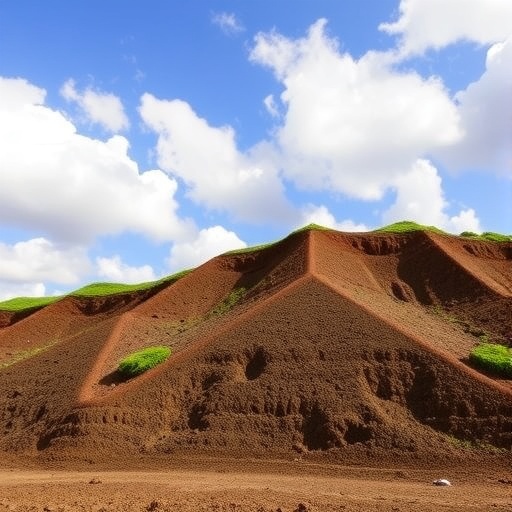
In a groundbreaking study, researchers Andualem and Hassen delve deep into the interrelationships among land cover change, slope gradient, and soil physicochemical properties within the Gelda catchment of Northwestern Ethiopia. This research is particularly crucial as it addresses the increasing challenges posed by climate change and land degradation, which have significant implications for local ecosystems and the livelihoods of communities that depend on agriculture. The findings presented in this research not only enhance the scientific understanding of these critical environmental issues but also pave the way for effective land management strategies that are essential for sustainable development in the region.
The Gelda catchment, a historically rich yet ecologically fragile area, has undergone significant transformations over the years, primarily due to anthropogenic activities such as agriculture, deforestation, and urban expansion. This ongoing land cover change has profound impacts on the physical and chemical characteristics of soil, which in turn affects agricultural productivity and environmental stability. The researchers aimed to quantitatively assess these impacts, providing comprehensive insights that can inform policymakers and stakeholders.
One of the pivotal aspects of this research is the attention to slope gradients, which play a critical role in determining soil erosion, runoff patterns, and nutrient distribution. The study meticulously measures various gradients across the Gelda catchment and correlates these with soil properties such as pH, organic matter content, and nutrient availability. It becomes evident that as slope gradients increase, the capacity of the soil to retain water and nutrients diminishes, leading to detrimental effects on crop yields and soil health.
Furthermore, the impact of land cover change on soil physicochemical properties is analyzed in detail. The researchers found that areas converted to intensive agricultural practices exhibit stark differences compared to regions with natural vegetation. These changes lead to a reduction in biodiversity, alteration of soil structure, and an overall decline in soil fertility. By emphasizing the need to maintain vegetative cover, the study supports the notion that sustainable land use practices can mitigate negative environmental impacts.
The methodology employed by the researchers is robust and multi-faceted, involving both field studies and laboratory analyses. Soil samples were collected from various locations within the catchment, representing different land uses and slopes. These samples were subjected to detailed physicochemical analyses to quantify parameters such as nitrogen content, phosphorus levels, and organic matter percentage. Such rigorous data collection is fundamental in bolstering the credibility and reliability of the findings.
The implications of these findings extend beyond academic interest; they are crucial for local farmers who depend on soil health for their livelihoods. By accurately characterizing the effects of land cover change and slope gradients, the research provides practical advice on soil management practices that can help enhance fertility and sustain production levels. This represents a vital resource for the agricultural community in the Gelda catchment and neighboring regions.
In light of these revelations, the study also calls for urgent action in terms of land management policies. It advocates for a return to more sustainable practices that emphasize the preservation of natural vegetation and the implementation of terracing on steeper slopes. By adopting such measures, it is possible to not only improve soil health but also protect the environment from the adverse effects of erosion and nutrient leaching.
Moreover, the authors urge further research into the long-term effects of climate change on land cover and soil properties. As weather patterns continue to shift, it becomes increasingly important to understand how these changes will interact with local ecosystems. This study offers a pivotal starting point for future investigations, suggesting that continued monitoring and evaluation of the Gelda catchment system will be essential in adapting to emerging challenges.
As the global community grapples with the implications of environmental degradation and climate change, the work of Andualem and Hassen serves as an important reminder of the interconnectedness of land use and soil health. Their study is not merely a scientific contribution; it is a clarion call for sustainable practices and thoughtful stewardship of natural resources.
The findings also have broader implications for environmental policy beyond Ethiopia. This research underscores the necessity of integrating scientific knowledge into land use planning and environmental management strategies worldwide. As the lessons learned from the Gelda catchment can be applied to various contexts globally, it reinforces the need for collaborative efforts to combat land degradation and promote ecological resilience.
In conclusion, the research conducted in the Gelda catchment illuminates critical connections between land cover changes, slope gradients, and soil physicochemical properties. It serves as a valuable resource for stakeholders focused on achieving sustainable development outcomes. As we face mounting environmental challenges, the insights gained from this study are poised to contribute significantly to an evidence-based approach to land management, which is critical not only for local ecosystems but also for global environmental health. Sustainable land use practices, as informed by solid research, will be key to mitigating the impacts of climate change while ensuring food security for future generations.
Andualem, Z.A., Hassen, E.E. Effects of land cover change and slope gradient on soil physicochemical properties in the Gelda catchment, Northwestern Ethiopia.
Environ Sci Pollut Res (2026). https://doi.org/10.1007/s11356-025-37386-0
Cite Scienmag News
Alan Morgan. (January 25, 2026). Impact of Land Cover and Slope on Soil Properties. Scienmag. https://scienmag.com/impact-of-land-cover-and-slope-on-soil-properties/
Alan Morgan. "Impact of Land Cover and Slope on Soil Properties." Scienmag, 25 January 2026, https://scienmag.com/impact-of-land-cover-and-slope-on-soil-properties/. Accessed 4 September 2026.
Alan Morgan. "Impact of Land Cover and Slope on Soil Properties." Scienmag. January 25, 2026. https://scienmag.com/impact-of-land-cover-and-slope-on-soil-properties/


