


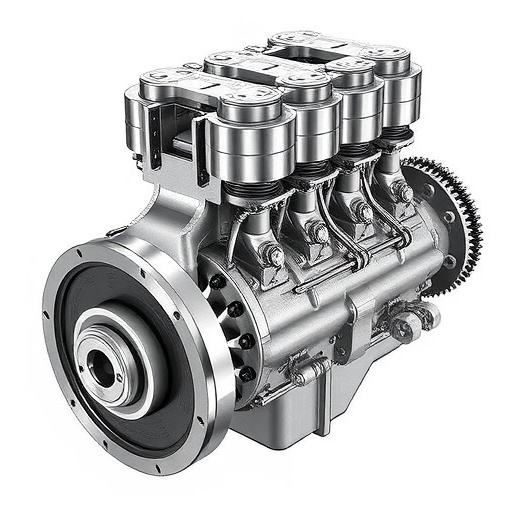
In recent years, the automotive industry has witnessed significant advancements in engine technology, particularly with the rise of dual-fuel engines. These innovative engines, which can operate on two types of fuel, offer several advantages in terms of efficiency and emissions reduction. A prominent area of research that has emerged to enhance the performance of dual-fuel engines is the development of flexible camshaft technology. This technology aims to optimize the engine’s performance by adjusting the timing and duration of the engine’s valve openings, ensuring improved combustion efficiency and power output.
The research conducted by Abaskharon et al. delves deep into the effects of this flexible camshaft technology on dual-fuel engine performance, employing a phenomenological combustion model. This model serves as a critical analytical tool, allowing researchers to simulate and understand the complex interactions occurring within the combustion chamber. By leveraging this technology, the researchers aim to provide insights into how flexible camshafts can modify the flow dynamics and combustion processes, ultimately leading to enhanced engine performance.
One of the key features of flexible camshaft technology is its ability to adjust the cam profile in real-time. This adaptability is crucial in dual-fuel engines, where different fuels may require varying combustion conditions to achieve optimal performance. For example, when switching from traditional fuels to alternative options like natural gas, the combustion characteristics can change significantly. The flexible camshaft can help mitigate these variations by modifying the valve timing and lift, ensuring more consistent combustion regardless of the fuel used.
Moreover, the study examines the intricate relationship between combustion parameters and engine performance metrics. By focusing on parameters such as pressure, temperature, and fuel-air mixture ratios, the researchers aim to quantify the improvements in engine output. This level of analysis is not only relevant for understanding the mechanics of dual-fuel engines but also for practical applications in designing more efficient and cleaner engines for the future.
As the research progresses, the findings highlight the potential for significant reductions in carbon emissions associated with dual-fuel engines equipped with flexible camshafts. With global targets for emissions reductions becoming increasingly stringent, technologies that can enhance the environmental performance of internal combustion engines will play a vital role in the automotive sector. The integration of flexible camshaft technology represents a promising step toward meeting these objectives by maximizing the efficiency of fuel use and minimizing harmful emissions.
Another critical aspect of this research involves exploring the operational reliability of flexible camshaft-equipped dual-fuel engines. Understanding how these engines perform over extended periods and under various operating conditions is essential for determining their viability in real-world applications. This research not only seeks to optimize performance but also ensures that the engines maintain reliability and durability while operating on different fuel types.
In addition to performance and emissions, the economic implications of implementing flexible camshaft technology are also significant. As manufacturers continue to invest in research and development, the potential for cost savings through improved fuel efficiency cannot be overlooked. The continuous optimization of engine components, such as the camshaft, can lead to a more economically viable option for consumers and manufacturers alike.
The study also emphasizes the importance of collaboration between academia and industry. By working closely with automotive manufacturers, researchers can ensure that the technologies being developed are tailored to meet industry needs. This partnership is crucial in driving innovation and ensuring that new technologies can quickly transition from the lab to commercial vehicles, benefiting consumers and manufacturers.
As dual-fuel technology continues to evolve, the potential impact on energy consumption and sustainability is enormous. The shift towards more flexible engine systems could lead to a reduction in dependence on fossil fuels, promoting the use of cleaner alternative energies. This development aligns with global sustainability goals, reinforcing the automotive industry’s commitment to environmental stewardship.
With the ongoing exploration of flexible camshaft technology, the insights gained from studies like those conducted by Abaskharon et al. will undoubtedly influence future research directions. The automotive industry stands on the brink of a technological revolution that could redefine how we approach engine design and fuel utilization.
In summary, the interplay between flexible camshaft technology and dual-fuel engine performance showcases the potential for groundbreaking advancements in automotive engineering. As researchers continue to unravel the complexities of combustion processes and engine dynamics, the automotive landscape is poised for transformative change. The ultimate goal is to deliver engines that not only perform better but also make significant strides towards sustainability and environmental protection.
By pushing the boundaries of current technology and embracing innovative engineering solutions, the automotive industry can continue to lead the charge in creating efficient, powerful, and environmentally friendly vehicles that meet the needs of future generations.
Abaskharon, M., Cepelak, S., Henke, B. et al. Effect of flexible camshaft technology on dual-fuel engine performance using phenomenological combustion model.
Automot. Engine Technol. 8, 239–253 (2023). https://doi.org/10.1007/s41104-023-00138-8
Cite Scienmag News
Denise Maddox. (January 25, 2026). Impact of Flexible Camshaft on Dual-Fuel Engine. Scienmag. https://scienmag.com/impact-of-flexible-camshaft-on-dual-fuel-engine/
Denise Maddox. "Impact of Flexible Camshaft on Dual-Fuel Engine." Scienmag, 25 January 2026, https://scienmag.com/impact-of-flexible-camshaft-on-dual-fuel-engine/. Accessed 3 September 2026.
Denise Maddox. "Impact of Flexible Camshaft on Dual-Fuel Engine." Scienmag. January 25, 2026. https://scienmag.com/impact-of-flexible-camshaft-on-dual-fuel-engine/


