


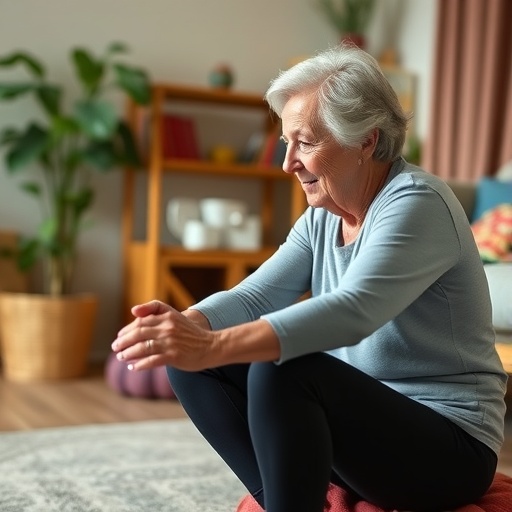
As the global population continues to age, the quest for effective health interventions tailored to older adults becomes increasingly vital. A recent study conducted by Alsowail, Malkova, Ryde, and colleagues provides an insightful exploration into the realm of home-based resistance exercise, a topic that has garnered significant attention due to its potential benefits for this demographic. Their research, set to be published in BMC Geriatrics in 2026, investigates the enablers and barriers that older adults face when engaging in resistance exercise post a structured program.
Resistance exercise is recognized for its critical role in enhancing muscle strength, balance, and overall physical function, which inevitably leads to improved quality of life in older individuals. However, the transition from a supervised environment to unsupervised home exercise presents unique challenges. The authors utilized reflexive thematic analysis, a qualitative approach that allows for a nuanced exploration of participants’ experiences and insights. This methodology is particularly effective as it invites a deeper understanding of the subjective perspectives of older adults, making their findings both relatable and actionable.
The aging process brings about a variety of physiological changes that can affect mobility and strength. Many older adults are at risk of sarcopenia, a condition characterized by the loss of muscle mass and strength due to aging. The implications of sarcopenia are profound, as they can lead to increased frailty, falls, and a subsequent decline in overall health. Resistance exercise has been identified as a critical intervention to combat these age-related declines, yet motivation to engage in such exercise independently is often lacking.
Motivation, or the lack thereof, serves as a central theme in the study’s findings. The participants articulated various motivations for pursuing home-based resistance exercise, including the desire for autonomy and the ability to integrate fitness into their daily routines. The convenience of exercising within the comfort of one’s home can facilitate adherence, suggesting that reducing barriers related to accessibility might significantly enhance participation rates. However, motivation is multifaceted; while some participants expressed a strong intrinsic desire to maintain their health, others identified psychological barriers, such as fear of injury or feelings of inadequacy due to physical limitations.
The results were not solely pessimistic. Participants also highlighted several enablers that could foster an effective home-based resistance exercise routine. For instance, the presence of supportive family members or friends was frequently mentioned. Social support emerged as a critical component that not only boosts morale but also enhances accountability. The interplay between solitude, support, and the exercise environment creates a complex dynamic that can influence the persistence of older adults in maintaining an exercise regimen.
Participants also discussed the importance of having access to proper guidance. Many reported feeling overwhelmed by the plethora of exercise options available online and expressed a desire for more structured resources that could provide clear instructions and progressions to follow in their home routines. This indicates a latent demand for personalized, easy-to-follow exercise programs tailored specifically to their needs, which could be delivered digitally or through community-based initiatives.
Another crucial factor identified was the significance of setting achievable goals. Several participants recounted their experiences with structured exercise programs, emphasizing that beginning with smaller, manageable objectives yielded feelings of accomplishment that motivated them to continue. This is indicative of the psychology of behavior change, where incremental successes can lead to larger lifestyle adaptations over time. Crafting exercise plans that allow for gradual escalation in difficulty can make resistance training appear less daunting and more accessible.
Moreover, the study shed light on the role of technology in supporting home-based exercise. Many participants noted that wearable fitness trackers or mobile applications could not only track their progress but also serve as motivational tools. By using technology to monitor their achievements, older adults may feel more connected to their fitness journey, translating numbers and data into tangible results that foster pride and motivation.
Interestingly, the research also highlighted systemic barriers that extend beyond individual factors. Participants expressed frustration regarding the lack of community resources dedicated to supporting home-based exercise. While some older adults have access to organized fitness programs, many others do not, leading to a disparity in opportunities. Addressing this societal imbalance through community outreach or public health initiatives may be essential to promote equitable access to fitness resources.
As the study’s authors conclude, significantly more attention is needed to develop strategies that address the barriers and maximize the enablers identified. Public health officials, healthcare providers, and fitness professionals must collaboratively work toward creating environments that support older adults in their exercise endeavors. This includes not only providing accessible programs and resources but also fostering community connections that encourage peer support.
In summation, as our society grapples with the challenges posed by an aging population, the findings from this qualitative study offer valuable insights that could inform future interventions. Understanding the complex motivations and barriers faced by older adults is critical in designing effective exercise programs. By appreciating the nuanced perspectives provided by the participants, stakeholders in the health and fitness community can better equip older adults to engage in home-based resistance exercises, ultimately improving their health outcomes and quality of life.
Looking ahead, it is essential to facilitate a widespread cultural shift that embraces fitness and health as accessible for everyone, regardless of age. This will require ongoing research, community involvement, and a commitment to fostering supportive environments that enable older adults to thrive—both physically and mentally—in their pursuit of health.
With a forward-thinking approach, we can transform the landscape of fitness for older adults, allowing them not only to adapt to age-related changes but also to thrive in their golden years. Each step, whether taken alone or with the support of others, can lead to significant strides in enhancing the overall well-being of our aging population.
Alsowail, A.T., Malkova, D., Ryde, G.C. et al. Enablers and barriers toward home-based resistance exercise among older adults who completed a structured program: qualitative study using reflexive thematic analysis. BMC Geriatr (2026). https://doi.org/10.1186/s12877-026-06986-x
Cite Scienmag News
Julian W. (January 24, 2026). Exploring Home Resistance Exercise: Insights from Older Adults. Scienmag. https://scienmag.com/exploring-home-resistance-exercise-insights-from-older-adults/
Julian W. "Exploring Home Resistance Exercise: Insights from Older Adults." Scienmag, 24 January 2026, https://scienmag.com/exploring-home-resistance-exercise-insights-from-older-adults/. Accessed 29 August 2026.
Julian W. "Exploring Home Resistance Exercise: Insights from Older Adults." Scienmag. January 24, 2026. https://scienmag.com/exploring-home-resistance-exercise-insights-from-older-adults/


