


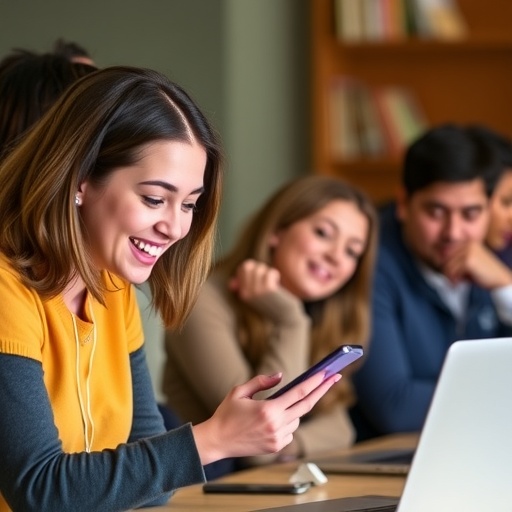
In recent years, the landscape of education has transformed dramatically, influenced significantly by advancements in technology and the omnipresence of social media. The integration of social media into the educational paradigm has opened new avenues for both students and educators. A recent study conducted by Mlambo has shed light on how first-year students perceive social media as a supplementary tool for teaching and learning. This exploration does not merely underscore an emerging trend; it illuminates the broader implications on pedagogical practices and student engagement.
Social media platforms have evolved far beyond their initial purpose of connecting people. They have now emerged as powerful instruments that can facilitate a more interactive and collaborative learning environment. The study highlights that students find social media appealing due to its accessibility and the sense of community it fosters. It allows them to engage with their peers and educators outside conventional classroom settings. This increased engagement can lead to improved learning outcomes and a heightened sense of belonging within the academic community.
One critical aspect the research delves into is the notion of interaction. Social media enables students to participate in discussions actively, share insights, and ask questions in real-time. This immediacy can be particularly beneficial for first-year students who may feel overwhelmed by the transition to higher education. The study suggests that platforms like Facebook, Twitter, and Instagram can help demystify complex subjects and promote collaborative learning among students, thereby boosting their confidence and competence.
Moreover, the ability to revisit shared content and discussions serves as a valuable resource for students. Unlike traditional learning methods, which often rely on static materials, social media allows for dynamic exchanges of information. The research found that students value the opportunity to access class notes, supplementary materials, and related resources through social media channels. This reinforces their learning and provides a more comprehensive understanding of the subjects at hand.
However, the study does not shy away from addressing potential downsides to this trend. While the advantages are clear, there are also concerns regarding distractions and the potential for misinformation. The researchers emphasize the importance of teaching students to navigate these challenges effectively. Encouraging a critical approach to the consumption of information can empower students to use social media responsibly, reaping its benefits while mitigating the risks.
In addition to enhancing communication, social media provides a platform for creative expression. The research highlights how students can share visual content, such as infographics and videos, to supplement traditional learning materials. This multifaceted approach caters to diverse learning styles, allowing students to engage with content in ways that resonate with them personally. Thus, education becomes not only about acquiring knowledge but also about expressing and exploring ideas in innovative and meaningful ways.
A noteworthy finding from the research is the influence of peer support. The study reveals that students increasingly rely on their peers for academic assistance and guidance, utilizing social media to form study groups and connect with classmates. This sense of community can alleviate feelings of isolation during the transition to college life. The collaborative learning fostered through social media aligns with contemporary educational theories, which advocate for peer-assisted learning and collaboration as key components of an effective educational experience.
Furthermore, Mlambo’s study indicates that educators are beginning to recognize the potential of social media as a pedagogical tool. The research found that instructors who engage with their students on these platforms can create a more inclusive and engaging learning environment. Educators who utilize social media not only extend their reach but also adapt to the preferences and behaviors of the digital-native generation, bridging the gap between traditional educational methods and modern communication styles.
As the educational institutions continue to evolve, the interaction between social media and education is expected to deepen. The study’s findings suggest that as first-year students become more comfortable using these platforms for learning, they will likely advocate for increased integration of technology into their educational experiences. This shift could lead to curricular changes that embrace digital literacy as a core competency in higher education.
Looking forward, the implications of this research extend beyond first-year students; they could inform best practices across all levels of education. By understanding students’ preferences and behavioral patterns, educational institutions can tailor their approaches to better serve the needs of their learners. The study highlights an opportunity for administrators and faculty to foster environments that leverage social media’s strengths while being mindful of its challenges.
In conclusion, Mlambo’s study serves as a call to action for educators and administrators alike. By recognizing the potential of social media as a supplementary tool for teaching and learning, education can be reimagined to become more nutritious and relevant for students. The insights gathered from first-year students provide a valuable perspective on the future of learning environments, suggesting that a blended approach that incorporates both face-to-face and digital interactions is key to preparing students for success in an increasingly interconnected world.
Looking ahead, it is clear that social media will continue to play an integral role in shaping educational practices. As both students and educators navigate this evolving landscape, their collective insights will be vital for harnessing the full potential of technology in education. By promoting collaboration, creativity, and critical thinking through social media, the learning experience can become richer, more diverse, and ultimately more effective in meeting the challenges of tomorrow’s world.
Mlambo, P.B. A descriptive study on social media as a supplementary tool for teaching and learning: first-year students’ perspectives.
Discov Educ (2026). https://doi.org/10.1007/s44217-026-01148-y
Cite Scienmag News
Courtney Benton. (January 24, 2026). Exploring First-Year Students’ Views on Social Media in Education. Scienmag. https://scienmag.com/exploring-first-year-students-views-on-social-media-in-education/
Courtney Benton. "Exploring First-Year Students’ Views on Social Media in Education." Scienmag, 24 January 2026, https://scienmag.com/exploring-first-year-students-views-on-social-media-in-education/. Accessed 3 September 2026.
Courtney Benton. "Exploring First-Year Students’ Views on Social Media in Education." Scienmag. January 24, 2026. https://scienmag.com/exploring-first-year-students-views-on-social-media-in-education/


