


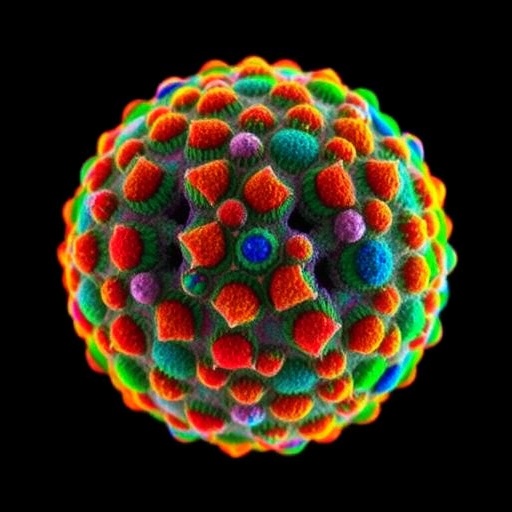
In the ever-evolving landscape of colorectal cancer research, a groundbreaking study conducted by a team led by Radloff et al. is redefining how scientists understand intratumoral heterogeneity. This pioneering work harnesses a single-cell derived spheroid model, shedding light on the intricate cellular diversity that exists within tumors. By focusing on this heterogeneity, the researchers aim to explore how different cellular environments affect the proteomic landscape and, consequently, the therapeutic response to treatments like 5-fluorouracil (5-FU).
Colorectal cancer, a leading cause of cancer-related deaths globally, presents unique challenges due to its heterogeneous nature. Traditional models often fail to capture the complex interactions and variations among tumor cells, leading to a lack of effective treatments for all patients. Radloff and colleagues sought to address this issue by developing a spheroid model derived from individual cancer cells. This innovative approach allows for a more accurate simulation of the tumor microenvironment, thereby enabling the examination of cellular behaviors that are typically overlooked in conventional two-dimensional culture systems.
The study demonstrates that the spheroid model not only mimics the three-dimensional architecture of tumors but also retains vital features of the tumor microenvironment, including the presence of various cell types and extracellular matrix components. By cultivating single cells in this spheroid format, the researchers can observe how these cells interact with their neighbors, providing insights into the cellular dynamics that drive tumor progression and response to therapy. This represents a significant advancement in cancer research methodologies, as it allows for more personalized approaches to treatment.
One of the critical findings of the study is the identification of proteomic changes across different cell types within the spheroids. The researchers utilized advanced proteomic techniques to analyze these variations, uncovering distinct protein expression profiles that correlate with therapeutic outcomes. The data reveal that certain proteomic signatures are linked to enhanced resistance or sensitivity to 5-FU, a widely used chemotherapeutic agent in colorectal cancer treatment. This knowledge is invaluable, as it paves the way for more tailored treatment strategies aimed at overcoming resistance.
As the research progressed, the team meticulously compared traditional cell lines with those derived from the spheroid model. Their findings indicate that cell lines show significant proteomic shifts when subjected to the spheroid culture conditions. This stark contrast highlights the limitations of standard monoculture systems and underscores the necessity for more sophisticated models that can better reflect the complexities of tumor biology. Without such models, scientists may struggle to uncover the mechanisms underlying drug resistance, which remains a significant hurdle in effective cancer treatment.
Additionally, the study emphasizes the importance of considering the tumor microenvironment in therapeutic design. The researchers found that the spatial organization of cells within spheroids plays a critical role in mediating drug response. Spatial cues and interactions among various cell types can influence the efficacy of chemotherapy, suggesting that future therapeutic strategies should account for the structural and biological context of tumors. This insight holds promise for developing more effective strategies that can bypass or overcome resistance mechanisms.
The implications of this research extend beyond understanding resistance mechanisms; they also touch upon the broader spectrum of tumor evolution and metastasis. By dissecting the heterogeneous cellular composition of tumors, Radloff and his team provide a framework for exploring how different cell populations contribute to tumor aggressiveness and treatment outcomes. These insights could lead to the identification of novel biomarkers that predict patient prognosis and response to therapy, ultimately aiding in the development of precision medicine strategies tailored to individual needs.
Recognizing the substantial potential of their findings, the researchers call for increased collaboration between basic scientists and clinical oncologists. The translation of laboratory discoveries into the clinic is essential for realizing the full benefits of the spheroid model. By fostering partnerships that bridge the gap between research and patient care, the scientific community can enhance the relevance of foundational studies and expedite the deployment of innovative therapeutic strategies.
Considering the growing body of evidence supporting the role of tumor heterogeneity in treatment resistance, Radloff et al. advocate for a paradigm shift in how cancer is treated. Their study encourages researchers and practitioners to move away from one-size-fits-all approaches, thereby promoting the adoption of personalized treatment regimens informed by the unique characteristics of each patient’s tumor. This approach could dramatically improve treatment outcomes and ultimately save lives by providing the most effective therapies tailored to individual patients.
In conclusion, the research led by Radloff and his colleagues marks a significant milestone in the quest to unravel the complexities of colorectal cancer. By employing a single-cell derived spheroid approach, they have unveiled critical insights into intratumoral heterogeneity and its implications for therapeutic response. As research continues to evolve, the findings of this study will likely serve as a cornerstone for future investigations aimed at combating cancer’s most formidable hurdles, paving the way for a new era of personalized medicine.
Radloff, H.S., Kohl, M., Sauer, T. et al. A single-cell derived spheroid approach to dissect intratumoural heterogeneity in colorectal cancer: cell lines show changes in proteomes and therapeutic response to 5-FU.
J Cancer Res Clin Oncol 152, 43 (2026). https://doi.org/10.1007/s00432-025-06418-0
Cite Scienmag News
Nathaniel Bowman. (January 24, 2026). Single-Cell Spheroids Reveal Colorectal Cancer’s Heterogeneity. Scienmag. https://scienmag.com/single-cell-spheroids-reveal-colorectal-cancers-heterogeneity/
Nathaniel Bowman. "Single-Cell Spheroids Reveal Colorectal Cancer’s Heterogeneity." Scienmag, 24 January 2026, https://scienmag.com/single-cell-spheroids-reveal-colorectal-cancers-heterogeneity/. Accessed 4 September 2026.
Nathaniel Bowman. "Single-Cell Spheroids Reveal Colorectal Cancer’s Heterogeneity." Scienmag. January 24, 2026. https://scienmag.com/single-cell-spheroids-reveal-colorectal-cancers-heterogeneity/


