


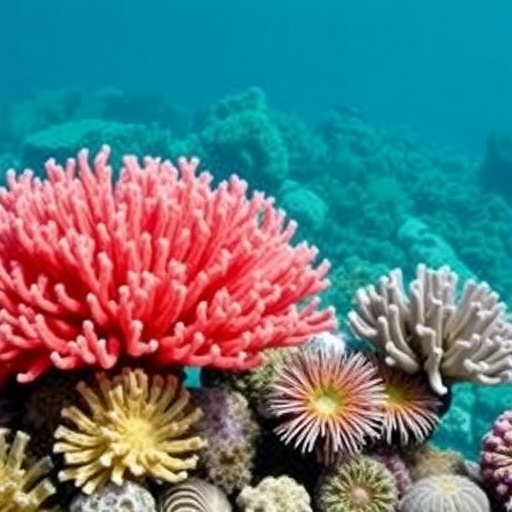
Heat stress in corals has emerged as a critical topic in contemporary marine biology, especially in the face of rising global temperatures and ocean acidification. Researchers from various disciplines are increasingly focused on the impacts of climate change on coral ecosystems, revealing alarming trends that could have profound implications for marine biodiversity and human livelihoods. Among these researchers, a team led by Lange, Maguer, and Reynaud has recently published a pivotal study that delves into the significant role of picoplankton-derived nitrogen in supporting heat-stressed coral reefs, a finding that might reshape our understanding of coral resilience in changing oceanic conditions.
Coral reefs are among the most diverse ecosystems on the planet, often referred to as the “rainforests of the sea.” They provide essential habitat for a myriad of marine species, contribute to coastal protection, and support fisheries that are crucial to the livelihoods of millions. However, the increasing incidence of coral bleaching due to thermal stress poses a dire threat to these ecosystems. As the oceans warm, corals expel the symbiotic algae known as zooxanthellae that live within their tissues, leading to a loss of color and, ultimately, the death of coral colonies if stressful conditions persist.
One intriguing aspect of the research by Lange and colleagues is the exploration of nutrient dynamics in heat-stressed coral systems. Traditionally, scientists believed that the nutrient availability during thermal stress was limited and that corals would struggle to obtain the resources necessary for survival. However, the study indicates that picoplankton, microscopic organisms that are abundant in seawater, may play a crucial role in the nutritional landscape of these reefs. These tiny organisms are at the base of the marine food web, and their availability to coral reefs may be pivotal during periods of environmental stress.
In the study, the researchers collected data from various locations, analyzing both coral health and the composition of picoplankton in the surrounding waters. They discovered that when coral reefs experience heat stress, the metabolic demands of the corals increase dramatically. To sustain their energy needs, corals often rely on external nutrient sources, particularly nitrogen, which is a crucial component of their growth and recovery mechanisms. The findings suggest that picoplankton-derived nitrogen could serve as a lifeline for corals during these tumultuous periods.
The research also investigated the mechanisms behind picoplankton uptake by corals under stress. Through a series of laboratory experiments and field observations, the authors demonstrated that corals have the ability to effectively assimilate nitrogen from various picoplankton species. This is a significant revelation, as it highlights the adaptability of corals and their potential to compensate for nutritional deficits during heat stress scenarios. By harnessing picoplankton as a nitrogen source, corals may improve their chances of survival and promote tissue recovery.
Moreover, the study underscores the importance of maintaining healthy picoplankton populations in marine ecosystems. Coastal managers and conservationists need to recognize the link between microbial communities and coral health, especially in light of nutrient loading from human activities. Excessive nutrient runoff can disrupt picoplankton dynamics, potentially exacerbating stress on coral systems. Therefore, strategies aimed at safeguarding the health of picoplankton communities could ultimately bolster coral resilience against climate change-induced stresses.
As the implications of this research unfold, the findings may influence conservation strategies aimed at coral reef preservation. By prioritizing the health of picoplankton populations, ecosystem managers could introduce a novel approach to enhancing coral resilience. This might involve restoring coastal habitats, managing nutrient runoff, and implementing marine protected areas that consider the broader microbial food web. By fostering a healthy environment that supports both coral and picoplankton populations, we might better equip these ecosystems to withstand the pressures of a warming ocean.
However, while the discoveries of Lange and his team open new avenues for understanding coral resilience, they also raise critical questions about the long-term impacts of climate change on marine ecosystems. Is the reliance on picoplankton-derived nitrogen sustainable, especially as environmental conditions continue to change? Can corals adapt quickly enough to shifting nutrient dynamics, or could these strategies only serve as temporary relief in the face of more significant stressors? Each of these questions underscores the complexity of coral ecosystems and the necessity for ongoing research in this field.
In addition, the study prompts further examination of other microbial relationships within coral reefs. While the focus has been primarily on nitrogen, the role of other nutrients and microbial communities, such as bacteria and archaea, needs to be addressed. Understanding these interactions will provide a more holistic view of coral biology and potential nutritional pathways, enhancing our ability to support reef health through informed conservation efforts.
This research stands as a testament to the resilience of life and its ability to adapt to challenging circumstances. While the future of coral reefs remains uncertain amid the pressures of global change, discoveries like those of Lange and his colleagues offer a glimmer of hope. They reveal that even amid heat stress, corals may possess strategies to leverage their surrounding environment, fostering the potential to survive, adapt, and maybe even thrive in a changing world.
As we move forward, it becomes increasingly clear that our understanding of marine ecosystems must evolve alongside the rapid changes occurring in our oceans. Initiatives that aim to mitigate climate impacts and promote ecosystem health are integral to conserving coral reefs. Only through comprehensive research and proactive management can we ensure that future generations will inherit the incredible beauty and biodiversity that coral reefs offer.
In conclusion, Lange, Maguer, and Reynaud’s research fills a critical gap in our knowledge of coral resilience during heat stress. Their findings on the role of picoplankton-derived nitrogen encourage a shift in the scientific narrative surrounding coral nutrition and ecosystem dynamics. By fostering a deeper understanding of these micro-organisms and their relationships with corals, we may unlock new pathways for conservation and management that will sustain these vital ecosystems for years to come.
Cite Scienmag News
Violet Maxwell. (January 24, 2026). Picoplankton Nitrogen: Key to Heat-Stressed Corals. Scienmag. https://scienmag.com/picoplankton-nitrogen-key-to-heat-stressed-corals/
Violet Maxwell. "Picoplankton Nitrogen: Key to Heat-Stressed Corals." Scienmag, 24 January 2026, https://scienmag.com/picoplankton-nitrogen-key-to-heat-stressed-corals/. Accessed 5 September 2026.
Violet Maxwell. "Picoplankton Nitrogen: Key to Heat-Stressed Corals." Scienmag. January 24, 2026. https://scienmag.com/picoplankton-nitrogen-key-to-heat-stressed-corals/


