


In the landscape of modern medicine, the need for comprehensive training in psychological first aid has become increasingly evident. This necessity arises amid a burgeoning recognition of mental health awareness, particularly in regions prone to crises and trauma. A recent study conducted by Bantjes, Geldenhuys, and Van Zyl illuminated this critical gap within the medical education framework in South Africa. Their research, titled “Developing, piloting, and evaluating a psychological first aid training for medical students,” explores innovative methods to bolster the skill set of future healthcare professionals.
The study extends beyond merely proposing a curriculum; it undertakes rigorous evaluation methodologies to understand the effectiveness and applicability of psychological first aid training among medical students. This research is not just an academic exercise; it’s a vital response to the psychological needs of communities that suffer from high rates of violence, trauma, and mental health issues. By focussing on preemptive education, the authors argue for a transformative approach that equips medical students with essential skills before they even enter the workforce.
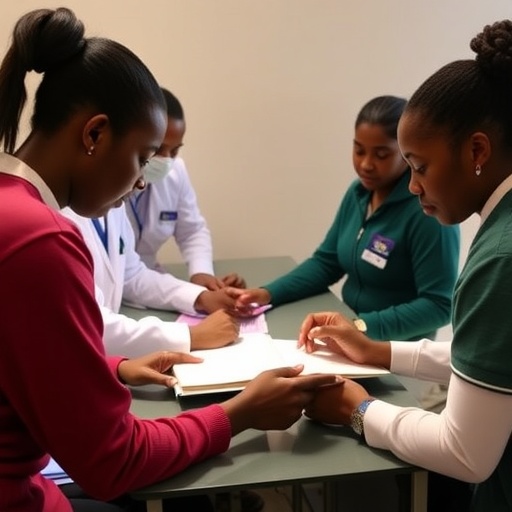
The training program designed by the researchers combines theoretical learning with practical application. It prepares students to address incidents of psychological distress or crises effectively. Participants engage in interactive workshops that delve deep into the various facets of psychological first aid, thereby fortifying their ability to assess individuals in need while providing immediate support. Such hands-on experiences are critical in developing the confidence and competencies necessary for real-world applications, especially in a culturally diverse nation like South Africa.
Through a systematic evaluation framework, the researchers collected data pre- and post-intervention, measuring not only the retention of knowledge but also changes in attitudes and confidence levels among participants. This evaluative component is crucial in establishing the efficacy of the training. It reflects a structured approach to educational innovation, underscoring the authors’ commitment to delivering a program grounded in empirically supported pedagogy.
In addition to enhancing medical students’ capabilities, the study shines a light on the broader implications for public health. A well-prepared physician who can recognize and respond to psychological distress can significantly reduce the long-term impacts of trauma on individuals and communities. The authors contend that such training is a necessary step in cultivating a more responsive healthcare system that can adapt to the mental health demands of the population.
Moreover, Bantjes and her team illuminate the cultural nuances inherent in psychological first aid. The training integrates local contexts and cultural sensitivities, ensuring that the proposed methodologies resonate with the communities that the medical students will serve. This aspect of the research emphasizes the importance of culturally competent care, stressing that understanding the patient’s background is key to delivering effective psychological support.
The urgency of implementing such training is underscored by alarming statistics highlighting the increasing burden of mental health disorders, often exacerbated by socio-economic factors. The South African context—marked by economic disparities and high unemployment rates—creates a fertile ground for increased incidences of mental health issues. Therefore, institutional support for implementing psychological first aid training within medical schools is not only beneficial but necessary.
One of the most compelling aspects of this research is the way it seeks to bridge theoretical knowledge with practical skill development. Students are not just expected to memorize facts about psychological first aid; they engage in scenarios that mimic real-life situations where they might provide aid. This kind of experiential learning is vital for entirely grasping the process, leading to long-term retention and practical application of the skills learned.
Evaluation results indicated significant improvements in students’ knowledge and confidence levels regarding psychological first aid practices. The data collected demonstrates a clear correlation between participation in the training program and an increased readiness to provide psychological support in crisis situations. This is encouraging not only for students but also for educators advocating for curricula that prioritize mental health education.
As the medical community continues to navigate the complex interplay between physical and mental health, studies like these underscore a crucial paradigm shift. The inclusion of psychological first aid into medical training represents a holistic approach to health care, one that recognizes the interconnectedness of mind and body. Such advancements are necessary to foster a generation of health professionals ready to tackle modern-day challenges.
In view of these findings, educational institutions must take proactive steps to incorporate psychological first aid training within their curricula. This approach aligns with global health strategies aiming to integrate mental health into primary care frameworks. To neglect such training would not only be a disservice to the upcoming medical personnel but also to the many patients who will benefit from their informed support.
The future of healthcare in South Africa hinges on the ability of medical graduates to adapt to the evolving demands of mental health care. As this research illustrates, fostering these essential skills in medical education pays dividends far beyond the classroom. By instilling the principles of psychological first aid in future physicians, we cultivate a healthcare system capable of meeting the psychological needs of the public.
The implications of this study resonate beyond South Africa, as educators and policymakers worldwide face similar challenges. The findings encourage a reevaluation of training programs, advocating for comprehensive training in mental health support for medical professionals everywhere. In an age where mental health concerns are becoming more visible, the call for integrated approaches to education is echoing loud and clear.
In conclusion, Bantjes, Geldenhuys, and Van Zyl’s study not only highlights the pressing need for psychological first aid training but provides a well-researched model for its implementation. This pioneering effort serves as both an inspiration and a blueprint for medical schools across the globe, ensuring that tomorrow’s healthcare professionals are not only physically competent but also psychologically equipped to foster a healthier world. As this field continues to evolve, it is incumbent on educational institutions to adopt these evidence-based practices that address the comprehensive needs of their communities.
Bantjes, J., Geldenhuys, M., Van Zyl, M. et al. Developing, piloting, and evaluating a psychological first aid training for medical students in South Africa.
BMC Med Educ (2026). https://doi.org/10.1186/s12909-026-08616-x
Cite Scienmag News
Courtney Benton. (January 24, 2026). Psychological First Aid Training for South African Medical Students. Scienmag. https://scienmag.com/psychological-first-aid-training-for-south-african-medical-students/
Courtney Benton. "Psychological First Aid Training for South African Medical Students." Scienmag, 24 January 2026, https://scienmag.com/psychological-first-aid-training-for-south-african-medical-students/. Accessed 4 September 2026.
Courtney Benton. "Psychological First Aid Training for South African Medical Students." Scienmag. January 24, 2026. https://scienmag.com/psychological-first-aid-training-for-south-african-medical-students/


