


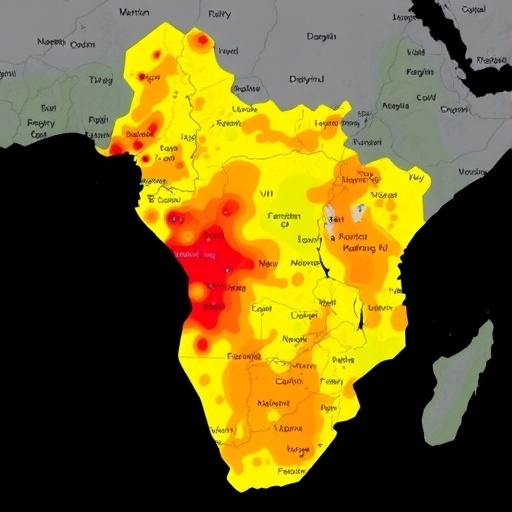
Background radiation constitutes a critical area of study within environmental science, particularly concerning public health and safety. The recent research aimed to expose the levels of background radiation stemming from uranium-238, thorium-232, and potassium-40 within selected locales in Ondo and Osun States of Nigeria. This geospatial assessment applies aeroradiometric techniques, a method known for its effectiveness in revealing subsurface radiation levels from natural sources, which can have significant implications for both human health and ecological stability.
The aeroradiometric technique consists of collecting radiation data using airborne detectors that measure gamma rays emitted from the Earth’s surface. With increasing global concerns regarding radioactive exposure and its repercussions on human health, the methodologies and results presented in this study are of paramount importance. By measuring concentrations of radium isotopes present in natural mineral deposits, researchers can better understand their geographical distribution and potential health risks associated with prolonged exposure.
In the study, the researchers meticulously identified various sampling locations across Ondo and Osun States, known for their diverse geological features. The choice of these regions was driven by the hypothesis that certain geological formations could harbor higher concentrations of naturally occurring radioactive materials. This hypothesis was not merely speculative; it was built upon previous geological surveys and analyses revealing significant radium deposits in specific areas of Nigeria, raising alarms regarding human safety and environmental integrity.
The significance of the isotopes investigated—uranium-238, thorium-232, and potassium-40—cannot be overstated. All three isotopes contribute to the natural background radiation levels encountered daily by humans and ecosystems. Uranium-238, for instance, is a long-lived isotope that undergoes a series of radioactive decay processes, eventually producing radon gas, a known health hazard. Exposure to radon, especially in poorly ventilated spaces, increases the likelihood of lung cancer, making it imperative to monitor areas like Ondo and Osun States where uranium may be prevalent.
On the other hand, thorium-232, another long-lived radioactive isotope, also contributes to the natural radiation dose received by individuals. This isotope decays at a slower rate compared to uranium, leading to prolonged environmental radioactivity. Potassium-40, while naturally occurring in various biological and geological materials, poses its own risks if present in elevated concentrations. Together, these isotopes form a triad that could potentially complicate radiation exposure scenarios, emphasizing the necessity for comprehensive environmental assessments.
The findings from the aeroradiometric survey revealed varying concentrations of these isotopes throughout the studied regions. Areas with heightened levels of background radiation not only pose direct risks to inhabitants but may also affect local agriculture and wildlife. Such evaluations are vital, especially for communities relying on agriculture or natural resources, as prolonged exposure to elevated radiation levels can impair crop yield and disrupt ecological balance, leading to wider societal implications.
Public health implications are deepened by the interactions between geological features and human activities. As urban development accelerates in regions like Ondo and Osun, the potential for increased radiation exposure through construction activities and land-use changes elevates concerns. The interplay between anthropogenic activities and natural radiation necessitates vigilant monitoring, ensuring that local populations are not unduly burdened by radiation exposure through agricultural practices or infrastructural developments.
Moreover, communication regarding these findings is crucial for community awareness. Understanding the potential health risks associated with background radiation fosters informed decision-making and encourages preventive measures among residents. As data from studies like this becomes public, local governments may need to implement policies to mitigate exposure risks, potentially involving land-use regulations, community education, or investment in radiological safety measures.
As we navigate the complexities of radioactive materials within our environments, public engagement becomes an essential aspect of scientific endeavors. By disseminating research findings effectively, scientists can engage with local communities to raise awareness about the significance of radiation monitoring. This engagement is instrumental in galvanizing public support for policies aimed at reducing exposure risks while promoting collaborative efforts to address environmental health challenges.
The methodologies utilized in this survey highlight the importance of innovative approaches in environmental research. Aeroradiometric techniques, combined with geospatial analysis, offer a robust framework for assessing radiation levels across diverse terrains. Insights derived from such studies could inform future investigations, potentially revealing new correlations between geological features and radioactive concentrations.
Furthermore, expanding this study’s scope to include socio-economic dimensions would enrich the discourse surrounding background radiation. By correlating radiation levels with demographic factors or health outcomes, researchers can unveil broader trends that underscore the interplay between environmental hazards and societal impacts. This comprehensive approach ensures that both scientific discussions and policy decisions are grounded in a multidimensional understanding of the issues at hand.
As environmental monitoring practices evolve, the incorporation of advanced technologies and methodologies will be paramount. Keeping pace with innovation and interdisciplinary collaboration will pave the way for effective environmental assessments in the future. The geospatial assessment conducted in Ondo and Osun States serves as a reminder of the urgent need to evaluate our habitats critically and prioritize research aimed at safeguarding public health and ecological integrity in the face of environmental challenges.
Moving forward, more sustained efforts will be essential for understanding the complexities of radioactive exposure and its implications for public health. Continued research, public engagement, and interdisciplinary collaboration will be key drivers in preventing and mitigating health risks associated with natural radiation sources. The scientific community, along with policy-makers, must actively work toward integrating research findings into actionable strategies that prioritize the health and well-being of vulnerable populations.
The implications of elevated background radiation are far-reaching, underscoring the significance of continued research in this area. As we strive to embrace a more profound understanding of our natural environment, studies like this serve as a foundation for promoting safety, health, and sustainability in communities across the globe.
In conclusion, the geospatial assessment of background radiation in Ondo and Osun States shines a crucial light on the need for rigorous environmental monitoring. By utilizing advanced aeroradiometric techniques, the research team has provided vital insights into the natural radiation levels in these regions. As society continues to evolve and adapt, understanding the interaction between geological features and human activities will be pivotal in ensuring safe and healthy environments for future generations.
Cite Scienmag News
Violet Maxwell. (January 24, 2026). Mapping Natural Radiation Levels in Ondo and Osun. Scienmag. https://scienmag.com/mapping-natural-radiation-levels-in-ondo-and-osun/
Violet Maxwell. "Mapping Natural Radiation Levels in Ondo and Osun." Scienmag, 24 January 2026, https://scienmag.com/mapping-natural-radiation-levels-in-ondo-and-osun/. Accessed 3 September 2026.
Violet Maxwell. "Mapping Natural Radiation Levels in Ondo and Osun." Scienmag. January 24, 2026. https://scienmag.com/mapping-natural-radiation-levels-in-ondo-and-osun/


