


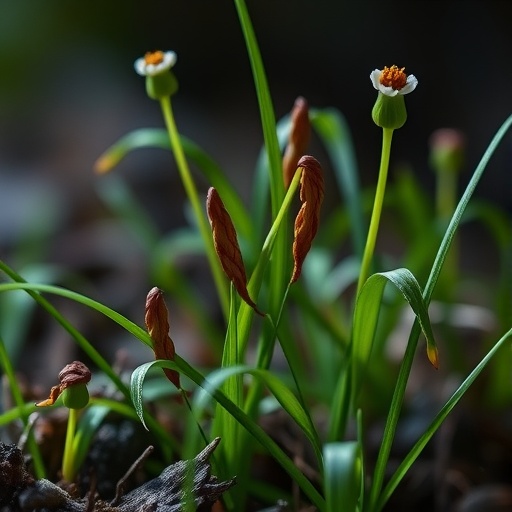
In a groundbreaking study set in Poland, researchers have delved into the intriguing world of dark septate endophytes (DSEs), a group of fungi that occupy plant tissues without causing disease. Conducted around Kalina Pound, this research examines how these endophytes can enhance the resilience of common grasses, specifically Lolium perenne L., against the toxic effects of polycyclic aromatic hydrocarbons (PAHs). These hydrocarbons are notorious environmental pollutants, primarily arising from industrial activities and the burning of fossil fuels. The significance of this research cannot be understated, as understanding the interaction between these fungi and PAHs could have substantial implications for environmental restoration and sustainability.
Dark septate endophytes are fascinating organisms that have garnered interest due to their unique ability to form symbiotic relationships with various host plants. This symbiosis is characterized by the fungi residing within the root or leaf tissues of plants, where they may provide a host of benefits. These include improved nutrient uptake, increased drought resistance, and enhanced growth under stressful conditions. The researchers from this study took a detailed look at DSE communities surrounding Kalina Pound, aiming to identify which species dominate this ecosystem and how they contribute to plant health amidst PAH exposure.
The research highlights the diversity of DSEs found in the region, showcasing their potential roles as bioindicators of soil health and environmental quality. By assessing the prevalence of these fungi in various habitats, the researchers could establish a link between DSE diversity and the capability of Lolium perenne to withstand the harmful effects of PAHs. This aspect of the study is particularly important given the widespread contamination of soils and waterways by these toxic compounds, which can negatively impact plant growth and soil integrity.
A notable aspect of DSEs is their ability to enhance plant stress tolerance. The study examined the physiological responses of Lolium perenne in the presence and absence of DSEs when subjected to PAHs. Preliminary findings suggest that these fungi facilitate better nutrient assimilation and support metabolic processes that bolster plant health. This fascinating interaction opens up new avenues for research into sustainable agricultural practices and bioremediation strategies, especially in areas heavily polluted by hydrocarbons and other toxic substances.
To properly assess the impact of DSEs on Lolium perenne, the research team conducted a series of controlled experiments. They analyzed both the growth metrics and physiological parameters of the grass species while monitoring the presence of PAHs in the soil. Results indicated that plants associated with diverse DSE populations exhibited significantly higher growth rates and overall vigor when compared to their counterparts devoid of these fungi. Such findings underscore the vital role that mycorrhizal associations play in promoting plant health and resilience in challenging environments.
Furthermore, the potential of DSEs to degrade or sequester PAHs within the plant tissues was evaluated. The study posits that the initial colonization of Lolium perenne by DSEs may lead to the breakdown of these hydrocarbons, thereby diminishing their toxicological effects on the plants. This finding could have profound implications for bioremediation efforts, suggesting a natural way to mitigate soil and plant contaminations, especially in urban and industrial regions.
The researchers also investigated the specific biochemical pathways activated in Lolium perenne in response to DSE colonization under PAH stress. Early results indicate that DSE-associations may stimulate the production of antioxidants and protective secondary metabolites, which serve to combat oxidative stress provoked by PAH exposure. This biochemical adaptability highlights the evolutionary significance of the symbiotic relationship, revealing how plants can develop strategies for survival in increasingly polluted environments.
The methodology employed in this research gives it a robust scientific foundation. Sample collection involved meticulous soil and plant tissue analyses using advanced molecular techniques to identify and characterize the diversity of DSEs present. Using both culture-dependent and culture-independent methods, the researchers were able to uncover the complex interactions occurring between plant roots and these fungi, indicating a rich tapestry of microbial life underlying the soil ecosystem.
In conclusion, the findings from this study mark an important contribution to our understanding of plant-fungi interactions, particularly in the context of environmental stressors like PAHs. The implications are far-reaching; not only do they shed light on natural recovery mechanisms in contaminated landscapes, but they also pave the way for innovative approaches to combating soil degradation and supporting sustainable agriculture. As researchers continue to explore the myriad benefits of dark septate endophytes, their potential as agents of change in restoring ecological balance becomes increasingly evident.
As the world grapples with environmental degradation and its attendant challenges, the insights gained from the investigation of DSEs could serve as a valuable resource. Not only do these findings underscore the necessity of protecting and restoring ecosystems, but they also urge scientists and policymakers to consider the biological tools at our disposal in the quest for sustainability. By harnessing the power of nature, we may yet find effective strategies to promote plant resilience and mitigate the adverse effects of anthropogenic pollutants.
In light of the increasing urgency surrounding climate change and pollution, the study represents a beacon of hope. It encourages a holistic understanding of ecological interactions and inspires further investigation into the myriad forms of life that play a critical role in maintaining environmental health. The next steps for researchers involve a deeper exploration into the practical applications of these findings, perhaps leading to field trials that could demonstrate the efficacy of DSEs in real-world scenarios.
Looking ahead, the importance of such research cannot be overstated. It challenges existing narratives about the limits of our ecological systems and emphasizes the interconnectedness of all life on Earth. As scientists continue to unravel the complexities of plant relationships with fungi like DSEs, we stand on the cusp of a new era in environmental science, where nature’s own strategies may hold the keys to sustainable solutions for our planet’s pressing challenges.
The urgent call to action is clear: we must actively engage with and protect these beneficial organisms if we are to safeguard our natural landscapes and ensure the health of future generations. Through such research endeavors, we highlight the need for a paradigm shift in how we approach conservation and restoration, underscoring the significant roles that fungi play in sustaining life on Earth.
By embracing a more inclusive definition of biodiversity that encompasses symbiotic relationships, researchers can unlock further innovations in improving plant health and resilience amidst climatic and anthropogenic pressures. The interdisciplinary approach taken by the researchers in this study serves as a model for future investigations into ecological dynamics and the importance of microbes in mitigating environmental stress.
This valuable research impresses upon us the urgency of promoting understanding and awareness around fungal symbionts and their undeniable impact on ecosystems. In the race to understand and adapt to climate change challenges, knowledge can be our best ally. As we stand united in this endeavor, let us continue to seek collaborative pathways that lead to a more sustainable and ecologically balanced world.
Cite Scienmag News
Violet Maxwell. (January 24, 2026). Boosting Grass Resilience via Dark Septate Endophytes. Scienmag. https://scienmag.com/boosting-grass-resilience-via-dark-septate-endophytes/
Violet Maxwell. "Boosting Grass Resilience via Dark Septate Endophytes." Scienmag, 24 January 2026, https://scienmag.com/boosting-grass-resilience-via-dark-septate-endophytes/. Accessed 3 September 2026.
Violet Maxwell. "Boosting Grass Resilience via Dark Septate Endophytes." Scienmag. January 24, 2026. https://scienmag.com/boosting-grass-resilience-via-dark-septate-endophytes/


